The common wisdom on digital accessibility in FinTech is that it’s a compliance checkbox. A necessary evil to avoid lawsuits and fines. None of that is wrong. But it’s incomplete.
The hard truth? Accessibility isn’t just about avoiding penalties; it’s a strategic lever for business growth. For FinTech, embracing accessibility unlocks new markets, fosters deeper customer loyalty, and drives product innovation.
1. The Untapped Market: Millions of Potential Customers
When you design for accessibility, you’re not just catering to people with disabilities. You’re opening your doors to a much broader audience.
Consider the aging population. Their needs often overlap with accessibility requirements: larger text, clear contrast, simple navigation. These users represent a significant and growing segment of financial consumers.
Then there are people with temporary impairments – a broken arm, a visual disturbance, or situational limitations like bright sunlight or noisy environments. These aren't niche cases; they're everyday occurrences.
By building accessible FinTech products, you gain a competitive edge by serving users others overlook. This isn't charity; it's smart business.
The Scope of the Opportunity
- Approximately 15% of the world's population lives with some form of disability.
- The global population aged 65 and over is projected to nearly double by 2050.
- Many users benefit from accessibility features without identifying as having a disability.
2. Building Trust and Loyalty: The Human Element in Finance
Financial services are built on trust. When your platform is difficult or impossible for someone to use, you erode that trust instantly.
Imagine a visually impaired user struggling to navigate your banking app, or an elderly person unable to read the fine print on a loan application. These aren't just user experience failures; they're trust failures.
Conversely, a FinTech product that is intuitive, easy to use, and accommodating for everyone builds immense goodwill. This translates directly into customer loyalty and positive word-of-mouth.
In an industry where switching costs can be high, loyalty is gold. Accessibility is a powerful, often overlooked, driver of that loyalty.
Key Drivers of FinTech Loyalty
- Reliability and security.
- Ease of use and intuitive design.
- Responsive customer support.
- Perceived fairness and transparency.
- Inclusive user experience.
3. Innovation Through Constraint: A Catalyst for Better Design
The principle of 'design by constraint' is well-established. When you impose limitations, you’re forced to think more creatively and find elegant solutions.
Accessibility guidelines, like those from the Web Content Accessibility Guidelines (WCAG), provide a framework of constraints that can spark innovation.
For example, the requirement for keyboard navigation forces a cleaner, more logical interface structure. High contrast requirements push designers to create visually striking, easy-to-read interfaces. Clear language requirements lead to more understandable product descriptions and instructions.
These aren't just technical hurdles; they are opportunities to build more robust, user-friendly, and ultimately more competitive products for everyone.
Accessibility Features Driving FinTech Innovation
- Clear and Concise Language: Simplifies complex financial terms, benefiting users with cognitive disabilities and non-native speakers alike.
- High Contrast & Scalable Text: Improves readability for users with low vision and anyone using a device in bright sunlight.
- Keyboard Navigation: Ensures users who cannot use a mouse can fully operate the application, benefiting power users and those with motor impairments.
- Predictable Navigation: Consistent layout and clear signposting reduce cognitive load, helping all users understand where they are and how to proceed.
4. Reducing Risk Beyond Compliance
While avoiding lawsuits is a primary driver, accessibility also mitigates other business risks.
An inaccessible product can lead to significant support costs. Users who can't figure out how to use your service will flood your support lines with basic questions. This drains resources and frustrates both customers and agents.
Furthermore, a product that alienates a segment of its potential user base is a product with a limited market reach and a higher risk of obsolescence.
Investing in accessibility upfront reduces these downstream risks, leading to a more stable, scalable, and resilient business.
Risks Mitigated by Accessibility
- Legal and regulatory penalties.
- High customer support overhead.
- Negative brand perception.
- Limited market penetration.
- Product obsolescence due to lack of inclusivity.
Where Revue Fits In
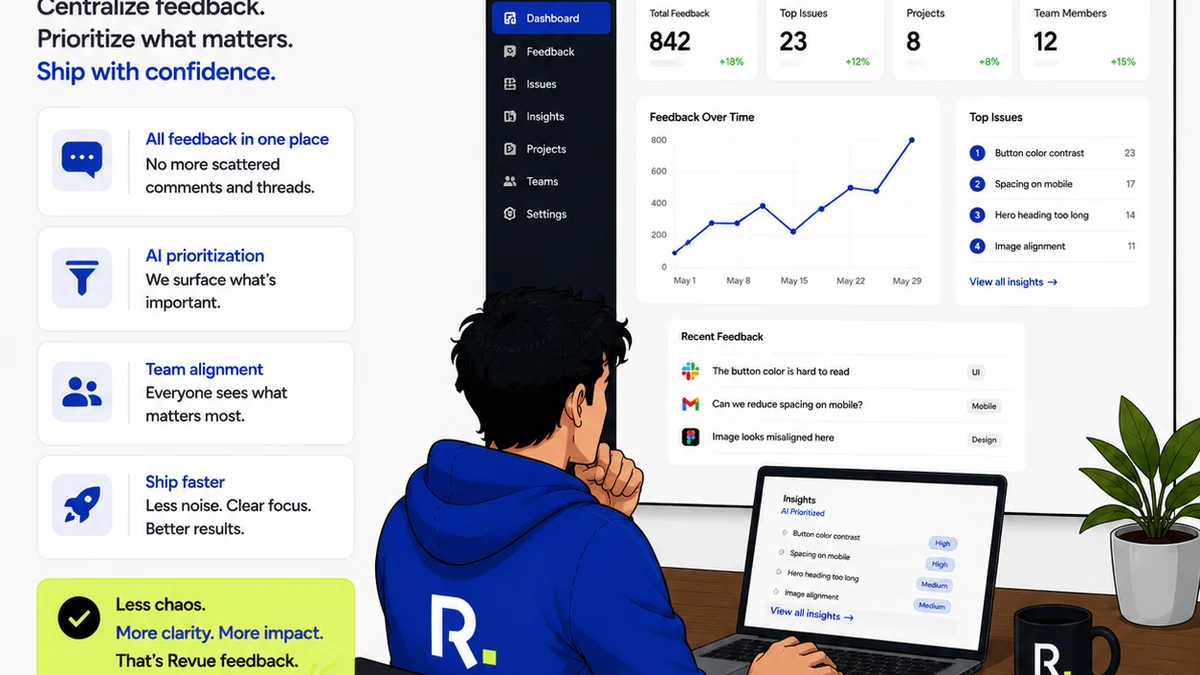
Managing the development of accessible FinTech products requires seamless collaboration and clear communication. This is where a centralized feedback and approval platform like Revue becomes invaluable.
When design and development teams are iterating on features, ensuring accessibility compliance can be complex. Tracking feedback from accessibility audits, user testing, and internal reviews in disparate channels leads to missed details and costly rework.
Revue provides a single source of truth for all creative feedback. Stakeholders can annotate directly on designs, mockups, or even live prototypes, highlighting specific accessibility concerns. Revision history is clear, and approval workflows ensure that accessibility requirements are not overlooked in the rush to launch.
By centralizing feedback and approvals, Revue helps ensure that accessibility is treated as a core requirement, not an afterthought, leading to higher quality, more inclusive products.
Final Thought
Is your FinTech product truly serving all your potential customers, or are you leaving growth on the table by overlooking accessibility?
The shift from viewing accessibility as a burden to recognizing it as a driver of innovation and customer loyalty is crucial for any FinTech aiming for long-term success.
Frequently asked questions
What is the primary business benefit of accessibility in FinTech?
Beyond compliance, the primary benefit is unlocking a significant untapped market of users, including the elderly and those with disabilities, leading to increased customer acquisition and loyalty.
How does accessibility drive innovation in FinTech products?
Accessibility guidelines act as design constraints, forcing teams to find creative solutions that often result in more intuitive, robust, and user-friendly features benefiting all users, not just those with specific needs.
Can accessibility reduce operational costs in FinTech?
Yes, by creating more intuitive and easier-to-use products, accessibility reduces the burden on customer support, lowering overhead costs associated with handling basic usability questions.
How does accessibility contribute to building trust in financial services?
An accessible FinTech platform demonstrates a commitment to inclusivity and user well-being, which are fundamental components of trust in financial services. Difficulty in using a platform erodes trust, while ease of use builds it.