Everyone talks about agency collaboration. They talk about synergy, teamwork, and shared vision. It sounds great. It sounds like the secret sauce to delivering amazing work.
None of that is wrong. But it’s incomplete.
The hard truth is that effective agency collaboration isn't about forced fun or fluffy mission statements. It’s about robust, repeatable processes that make it easy for people to do their best work together, even when they’re stressed, remote, or working on a tight deadline.
1. Collaboration Isn't a Feeling, It's a Workflow
Many agencies assume that if they hire talented people and put them in the same room (or Zoom), collaboration will just happen. That’s a dangerous assumption.
Talent needs structure. Creativity needs constraints. And even the most cohesive teams need clear operational frameworks to function optimally.
Think about it. What happens when:
- Feedback is vague or buried in email chains?
- Revision rounds aren't tracked, leading to duplicated effort?
- Approval statuses are unclear, causing bottlenecks?
- Team members aren't sure who owns what decision?
These aren't signs of a bad team. They're signs of a bad workflow. And that kills collaboration faster than anything else.
The Real Cost of Poor Collaboration
It’s not just about missed deadlines or slightly less-than-perfect work. Poor collaboration has tangible costs:
- Wasted hours chasing down information.
- Frustrated clients who see delays and confusion.
- Burnout among team members who feel disempowered.
- Eroded trust, both internally and with clients.
- Missed opportunities to innovate because ideas get lost in the shuffle.
This is where the operational reality bites. You can have the best creatives in the world, but if their tools and processes are a mess, their output will be a mess too.
2. Defining Roles and Responsibilities (The Boring, Essential Part)
Collaboration breaks down when people don't know who's doing what, or who has the final say. This isn't rocket science; it's fundamental project management. But it’s often skipped in creative fields because it feels too rigid.
Every project, every client, every deliverable needs clarity.
Clear Ownership Prevents Chaos
Before a project even kicks off, nail down:
- Project Manager/Lead: Who is the single point of contact for keeping things on track?
- Creative Lead: Who owns the overall creative vision and quality?
- Client Approver(s): Who has the authority to give final sign-off? (And are there backup approvers?)
- Subject Matter Experts: Who needs to provide input or sign-off on specific technical or strategic aspects?
- Deliverable Owners: Who is responsible for producing each specific piece of work?
This isn’t about micro-managing. It’s about providing guardrails so everyone knows their lane and how their work connects to the bigger picture.
The RACI Matrix: A Practical Tool
For more complex projects, consider using a RACI matrix (Responsible, Accountable, Consulted, Informed). It’s an old-school tool, but incredibly effective for mapping out who does what. It forces conversations about accountability that might otherwise be avoided.
- Responsible: Who does the work?
- Accountable: Who owns the work and its completion? (Usually one person)
- Consulted: Who needs to provide input before the work is done?
- Informed: Who needs to be kept up-to-date on progress?
When everyone understands their role and the roles of others, decision-making speeds up, and confusion evaporates.
3. Centralizing Feedback and Approvals: The Collaboration Nexus
This is where most agencies struggle the most. Feedback gets scattered across email, Slack, comment threads, and even verbal conversations. Approvals become a guessing game.
This isn't just inefficient; it's a recipe for misinterpretation and rework.
The Email Feedback Black Hole
You’ve seen it. A client sends feedback on a PDF attached to an email. Then they send another email with more feedback. Then someone on your team replies-all with a question, and the original feedback gets lost. The design team has to sift through a dozen emails to piece together the final direction.
This is a guaranteed way to introduce errors and waste hours.
The 'Single Source of Truth' for Creative Work
Effective collaboration demands a centralized hub for all communication related to a specific piece of creative work. This means:
- All feedback tied directly to the asset being reviewed.
- All revision requests clearly documented and linked to the original feedback.
- Clear approval status visible to all stakeholders.
- Version history so you can always refer back to previous iterations.
This eliminates ambiguity. It ensures everyone is working from the latest version and responding to the most current feedback. It transforms a chaotic process into a streamlined, transparent one.
Standardizing the Review Process
Don't leave review processes to chance. Define them:
- Who initiates the review?
- Who provides feedback?
- What is the turnaround time for feedback?
- How are revisions tracked?
- Who gives the final approval?
This structure reduces friction and ensures that feedback loops are productive, not paralyzing.
4. Communication Protocols: Clarity Over Volume
Agencies often fall into the trap of thinking more communication is always better. But it's the *quality* and *context* of communication that matter most.
Unfiltered chatter is noise. Focused, contextual communication is signal.
Beyond 'Reply All'
Your team needs clear channels for different types of communication.
- Urgent issues: A quick Slack message or a call.
- Project-specific discussions: A dedicated thread or comment section within your project management tool.
- Client feedback: A formal review and approval platform.
- General updates: A team meeting or a summary email.
Encourage team members to be concise and specific. Ask: 'What information does the recipient *need* to take action?'
Setting Client Communication Expectations
Clients appreciate clear boundaries. Let them know:
- Your standard response times.
- The best way to reach you for different needs.
- Your process for feedback and approvals (and why it’s designed for their benefit).
This proactive approach builds trust and manages expectations, preventing misunderstandings that can derail collaboration.
5. Tools and Technology: Enabling, Not Dictating
The right tools are critical enablers of good collaboration. The wrong ones can actively hinder it.
Many agencies cobble together a mix of free tools, project management software, email, and chat apps. This creates silos and makes it difficult to get a holistic view of a project.
The Pitfalls of Tool Sprawl
When information lives in multiple disconnected places:
- Important feedback gets missed.
- Files are duplicated or outdated.
- It’s hard to track who said what and when.
- Onboarding new team members becomes a nightmare.
This fragmented approach is the opposite of collaboration.
Choosing Tools Wisely
Look for tools that:
- Centralize feedback: All comments and annotations in one place, linked to the asset.
- Streamline approvals: Clear workflows and status tracking.
- Integrate seamlessly: Connect with your existing stack where possible.
- Provide visibility: Dashboards and reports for project status.
The goal is to reduce friction, not add another layer of complexity. Tools should support your processes, not define them.
Where Revue Fits In
This is precisely why Revue was built. We saw agencies drowning in fragmented feedback, struggling to manage revisions, and losing visibility on client approvals. It was clear that the operational backbone of collaboration was missing.
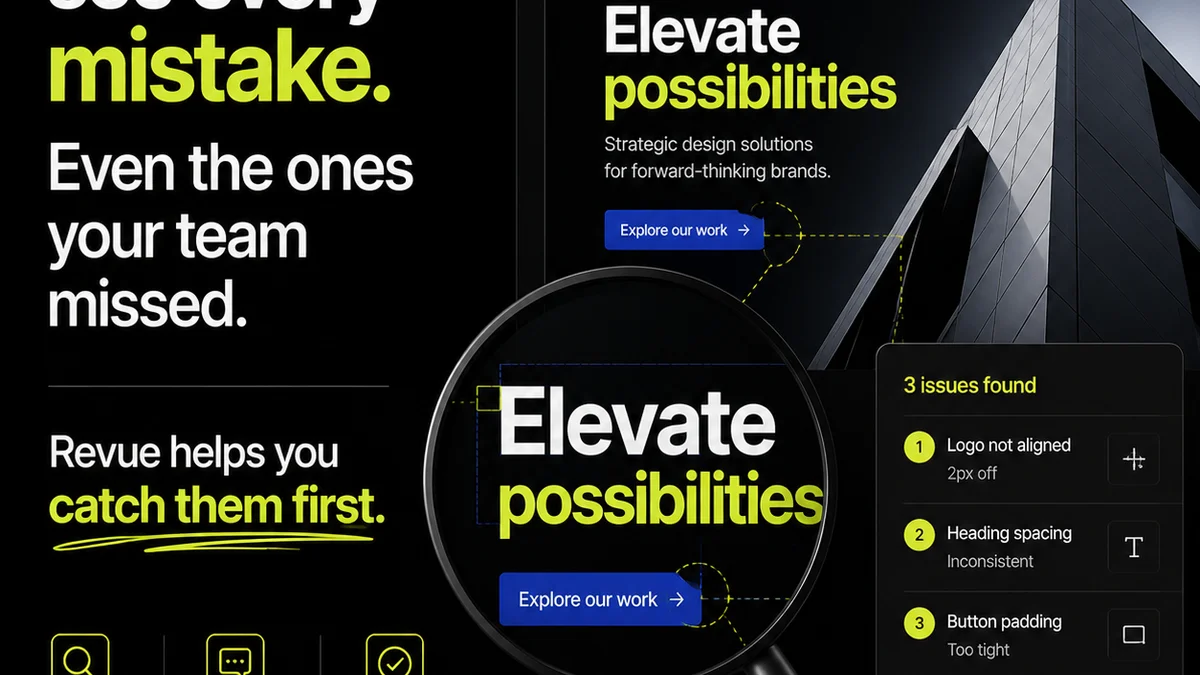
Revue provides that backbone. It centralizes client feedback directly on the creative assets, making it impossible to miss or misinterpret. You can manage multiple revision rounds with clear version control, ensuring everyone sees the latest iteration and understands the changes requested.
The approval workflow becomes transparent. Stakeholders know exactly where a project stands, and you have a clear audit trail. This operational clarity is the foundation for truly effective agency collaboration, freeing up your team to focus on creativity rather than administrative chaos.
Final Thought
True agency collaboration isn't a happy accident; it's the result of deliberate, well-designed processes. It’s about creating an environment where clarity, accountability, and efficient communication are the norm, not the exception.
Are your agency's workflows set up to foster collaboration, or are they quietly undermining it?
Frequently asked questions
What are the biggest challenges in agency collaboration?
The biggest challenges often stem from unclear roles and responsibilities, fragmented feedback across multiple channels (email, chat, etc.), lack of a centralized system for approvals, and poor communication protocols, all of which lead to confusion, delays, and rework.
How can we improve client feedback loops?
Improve client feedback by establishing a clear, standardized review process. Use a dedicated platform where feedback is tied directly to creative assets, ensuring clarity and reducing misinterpretation. Set expectations for response times and define who has final approval authority.
What is a RACI matrix and how is it useful for agencies?
A RACI matrix (Responsible, Accountable, Consulted, Informed) is a tool for clarifying roles on projects. It helps agencies define who performs tasks (Responsible), who owns the outcome (Accountable), who provides input (Consulted), and who is kept updated (Informed). This reduces confusion and ensures accountability.
How do technology tools impact agency collaboration?
The right technology can significantly enhance collaboration by centralizing feedback, streamlining approvals, and improving visibility. Conversely, using too many disconnected tools (tool sprawl) can create silos, lead to missed information, and hinder efficient teamwork.