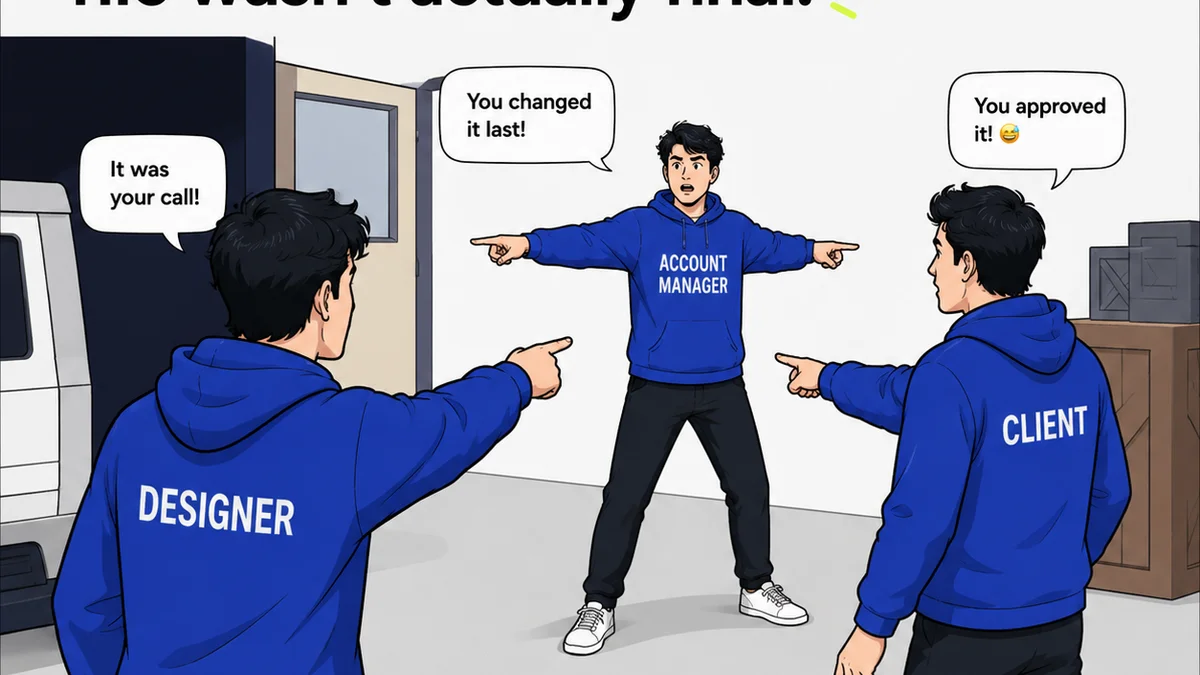
Everyone talks about checklists for creative operations. They’re usually lists of tasks: brief, design, review, revise, deliver. None of that is wrong. But it’s incomplete.
The hard truth? A true creative operations checklist isn't about individual tasks. It's about the underlying systems and processes that ensure quality, efficiency, and profitability. It’s about building a predictable, scalable machine, not just ticking boxes.
1. The 'Why': Beyond Just Getting It Done
You need to define what success looks like for each project. This goes beyond client approval.
Defining Project Success
What are the real goals?
- Brand alignment
- Audience resonance
- Measurable business impact (e.g., conversion rates, engagement)
- Technical performance (e.g., load times, accessibility)
- Internal team learning and growth
This clarity informs every decision downstream. Without it, you're just guessing.
The Cost of Ambiguity
Unclear goals breed scope creep and endless revisions. It’s the silent killer of agency profitability.
Quality vs. Speed
The eternal tension. A good ops checklist acknowledges this and builds in checkpoints to balance both.
2. The 'Who': Roles, Responsibilities, and Communication
Creative operations are people-driven. Your checklist must reflect this.
Clear Accountabilities
Who owns what? This needs to be crystal clear from project kickoff.
- Project Manager: timeline, budget, resources, communication hub
- Creative Director: creative vision, quality control, client liaison on creative
- Account Manager: client relationship, scope management, business objectives
- Designer/Developer: execution, technical feasibility
- QA Specialist: testing, adherence to specs
This isn't about micromanagement. It's about ensuring no critical handoffs are missed.
Communication Protocols
How will information flow? Where will feedback live?
Assume nothing. Define it.
- Internal team communication channels (Slack, Teams, etc.)
- Client communication protocols (email, calls, specific platforms)
- Feedback consolidation points (avoiding scattered email threads)
- Escalation paths for issues
If feedback lives in emails, Slack messages, and a client's random Google Doc, you have an ops problem.
3. The 'What': Briefing, Scoping, and Asset Management
The tangible elements of creative work need structure.
Robust Briefing Process
This is the foundation. A weak brief guarantees a shaky build.
- Mandatory fields: objectives, target audience, key message, deliverables, budget, timeline, brand guidelines, competitive landscape, success metrics.
- Briefing intake forms: Standardize this.
- Briefing workshops: For complex projects, bring stakeholders together.
A well-defined brief saves hours of rework later.
Accurate Scoping and Estimation
This requires historical data and honest capacity assessment.
- Task breakdown: granular enough for accurate time tracking.
- Resource allocation: matching skills to tasks.
- Contingency buffer: always build it in.
- Scope creep documentation: a process for handling out-of-scope requests.
Under-scoping is a direct hit to your bottom line.
Centralized Asset Management
Where do final assets live? Where do working files go?
- File naming conventions: consistent and logical.
- Folder structures: organized and accessible.
- Version control: clear tracking of revisions.
- Asset archival and retrieval: easy access for future use.
Wasting time hunting for files is a productivity drain.
4. The 'How': Workflow, Tools, and Quality Assurance
This is where the rubber meets the road. Efficient workflows are critical.
Standardized Workflows
Map out your process from start to finish. Visualizing this helps identify bottlenecks.
- Project kickoff
- Creative concepting
- Design/Development
- Internal review
- Client review
- Revisions
- Final QA
- Delivery
- Archival
Each stage needs clear inputs, outputs, and ownership.
Tool Stack Optimization
Tools should enable, not hinder. Are you using the right ones?
- Project management (e.g., Asana, Monday.com, Jira)
- Creative collaboration (e.g., Figma, Adobe Creative Cloud)
- Communication (e.g., Slack, Microsoft Teams)
- File storage (e.g., Google Drive, Dropbox, specialized DAM)
- Feedback and approval (e.g., Revue)
Integration is key. Disconnected tools create silos.
Rigorous Quality Assurance (QA)
This is non-negotiable. QA isn't just bug hunting; it's brand protection.
- Checklist for each deliverable type (e.g., website, ad campaign, social post).
- Adherence to brief and brand guidelines.
- Technical specifications (e.g., file formats, dimensions, code standards).
- Accessibility checks (WCAG guidelines are a good starting point).
- Cross-browser/device testing.
A broken pixel can break client trust.
5. The 'When': Timelines, Milestones, and Delivery
Time is your most valuable agency resource. Manage it ruthlessly.
Realistic Timeline Planning
Build timelines based on actual capacity, not wishful thinking.
- Factor in holidays, PTO, and potential sick days.
- Buffer time for unexpected issues.
- Communicate timelines clearly to clients and team.
Over-promising on delivery dates is a quick way to damage relationships.
Milestone Tracking
Break down large projects into manageable milestones. This provides visibility and allows for course correction.
- Define clear deliverables for each milestone.
- Regular check-ins on milestone progress.
- Client sign-off at key stages.
Milestones keep everyone aligned and motivated.
On-Time Delivery Protocols
What happens when a deadline is at risk?
- Early warning system: identify potential delays ASAP.
- Contingency plans: what can be done to get back on track?
- Client communication: proactive updates are essential.
Transparency about potential delays is better than a missed deadline.
Where Revue Fits In
Managing creative operations effectively means centralizing key aspects of the workflow. This is where a tool like Revue becomes indispensable.
Think about the chaos of scattered feedback. Emails, Slack messages, random annotations on screenshots – it’s a nightmare for version control and accountability. Revue brings all client feedback into one place, directly on the creative asset.
This means clear visibility into revisions. You can see exactly what was requested, what was changed, and who approved it. No more digging through endless email chains to understand the history of a revision.
Furthermore, Revue helps enforce your quality checks. By having a clear, documented history of feedback and approvals, you can ensure that all client requirements have been met before final delivery. It streamlines the entire review and approval cycle, reducing ambiguity and accelerating your project timelines.
Final Thought
Your creative operations checklist isn’t static. It’s a living document that evolves with your agency, your clients, and the projects you undertake. Are you just managing tasks, or are you building a robust, repeatable system for creative excellence and sustainable growth?
Frequently asked questions
What's the difference between a task list and a creative operations checklist?
A task list focuses on individual actions. A creative operations checklist, however, focuses on the underlying systems, processes, roles, and communication protocols that ensure those tasks are completed efficiently, consistently, and to a high standard, driving overall project success and agency profitability.
How often should an agency update its creative operations checklist?
Your checklist should be a living document. Review and update it at least quarterly, or whenever you implement significant new processes, tools, or encounter recurring project issues. Adaptability is key to effective operations.
Can a small agency benefit from a detailed operations checklist?
Absolutely. For small agencies, a well-defined checklist is crucial for establishing scalable processes early on. It prevents bad habits from forming and ensures consistency, even with a lean team.
What are the key components of a good creative brief?
A strong brief includes clear objectives, target audience definition, key message, desired deliverables, budget, timeline, brand guidelines, competitive context, and measurable success metrics. Anything less leaves too much room for interpretation.