The conventional wisdom for agency pricing in retail often boils down to two things: charge enough to cover your costs, and then add a bit more for profit. If you're a creative agency or an in-house design team, you've likely heard this advice countless times. It sounds simple, even foolproof.
But it's incomplete. Dangerously incomplete.
The hard truth is that pricing for retail creative services isn't just about covering your expenses. It's about understanding the unique pressures, timelines, and value propositions inherent in the retail sector. Retail clients demand speed, precision, and a direct impact on sales. Your pricing needs to reflect that reality, not just your internal overhead.
1. Understanding the Retail Client's Mindset
Retail clients operate on razor-thin margins and rapid product cycles. Their marketing budgets are often tied directly to sales performance. They're not buying creativity for its own sake; they're buying solutions that drive foot traffic, boost online conversions, and increase average order value.
This means your agency's work is often seen as a direct investment, not an expense. They expect a tangible ROI. This mindset shift is critical for effective agency pricing in retail.
Consider these common retail client priorities:
- Speed-to-market for new campaigns and product launches.
- Campaigns that demonstrably increase sales or brand awareness.
- Consistent brand representation across all touchpoints, from in-store displays to digital ads.
- Data-driven insights to optimize creative performance.
The Urgency Factor
Retail seasons, holiday rushes, and flash sales create intense pressure. Projects often have tight deadlines, requiring rapid turnaround. This isn't a negotiation point; it's the reality of their business.
The ROI Imperative
Retailers live and die by their numbers. They need to see how your creative work translates into measurable business outcomes. If you can't articulate this, your pricing will always be a point of contention.
2. Common Retail Pricing Models and Their Pitfalls
Many agencies default to standard pricing models. For retail, these often fall short because they don't account for the specific demands of the sector.
Cost-Plus Pricing
This is the most basic model: calculate all direct and indirect costs, then add a predetermined profit margin. For example, if a project costs $10,000 to execute, you might add a 20% margin to charge $12,000.
- Pros: Simple to calculate, ensures costs are covered.
- Cons: Ignores the value delivered, can lead to undercharging for high-impact work, doesn't account for the client's ability to pay or the market rate. Retail clients often see this as the agency just pushing their costs onto them.
Hourly Billing
Charging a fixed rate for every hour worked. This is prevalent but can be problematic in fast-paced retail environments.
- Pros: Straightforward for tracking time, flexible for scope changes.
- Cons: Punishes efficiency (the faster you are, the less you earn), creates uncertainty for the client regarding final costs, can lead to scope creep disputes. Retail clients may see this as an open-ended expense with no guaranteed outcome.
Project-Based (Fixed-Fee) Pricing
A single price is quoted for the entire project based on a defined scope of work. This is often preferred by retail clients for budget predictability.
- Pros: Clear budget for the client, incentivizes agency efficiency.
- Cons: Requires meticulous scope definition, risk of underestimating time/resources leading to losses, potential for scope creep disputes if not managed tightly.
Retainer Agreements
A fixed monthly fee for ongoing services, often used for continuous marketing or content creation needs.
- Pros: Predictable revenue for the agency, consistent support for the client, builds long-term relationships.
- Cons: Requires careful management to ensure the scope doesn't exceed the retainer value, can become stale if not actively managed and reviewed.
Why These Models Fail in Retail
The core issue is that these models often focus inward on your costs and time, rather than outward on the client's business objectives and the market value of your solution. Retail is a performance-driven industry. Your pricing needs to reflect that.
3. Value-Based Pricing for Retail Creatives
This is where agency pricing in retail gets strategic. Value-based pricing focuses on the perceived or estimated value your work delivers to the client's business, rather than just your costs.
For a retail client, value can be measured in several ways:
- Increased sales revenue.
- Improved conversion rates.
- Enhanced brand loyalty.
- Successful product launches.
- Reduced customer acquisition cost.
Calculating Perceived Value
This requires deep client understanding. You need to ask questions that uncover their business goals and the impact your creative will have.
Ask yourself:
- What is the potential revenue uplift from this campaign?
- How much is a new customer worth to this retailer over their lifetime?
- What is the cost of *not* doing this project effectively (e.g., missed holiday sales)?
Your pricing should capture a portion of this identified value. If your creative can demonstrably drive $100,000 in additional sales, charging $20,000 for that campaign is a bargain for the client, and a profitable engagement for you.
The Role of Data and Performance Metrics
Retail clients are data-obsessed. You need to be too. If you can present case studies or projections showing how your creative drives specific KPIs (Key Performance Indicators), you build a strong case for higher pricing.
This means tracking:
- Click-through rates (CTR) on digital ads.
- Conversion rates on landing pages.
- In-store traffic data correlating with campaign launches.
- Average order value (AOV) changes.
When you can tie your invoice to these metrics, you're no longer selling hours or deliverables; you're selling results.
4. Strategic Pricing Tactics for Retail Projects
Beyond the core model, several tactics can optimize your agency pricing in retail.
Tiered Packages
Offer different service levels at varying price points. A basic package might cover essential creative, a standard package adds strategic input, and a premium package includes advanced analytics and performance optimization.
Example Tiers for a Retail Campaign:
- Basic: Design of 5 digital ad creatives.
- Standard: Design of 5 digital ad creatives + A/B testing variations + basic performance reporting.
- Premium: Design of 5 digital ad creatives + A/B testing + ongoing optimization based on real-time data + comprehensive ROI analysis.
Phased Project Billing
For larger retail initiatives, break down the project into phases and bill at the completion of each. This aligns cash flow for both parties and allows for adjustments between phases.
Common phases:
- Discovery & Strategy
- Concept Development
- Creative Production
- Implementation & Launch
- Post-Launch Analysis & Optimization
Performance Bonuses / Incentives
Structure part of your fee around achieving specific, pre-agreed KPIs. This aligns your success directly with the client's.
Be cautious here. Ensure KPIs are:
- Measurable and attributable to your work.
- Realistic and achievable.
- Clearly defined in the contract.
This isn't about taking on all the risk, but about demonstrating confidence in your ability to deliver.
Bundling Services
Combine related services into a package deal. For instance, offer creative design, copywriting, and media placement as a bundled solution for a specific campaign cost.
Understanding Retail's Unique Costs
Retail projects often involve specific costs that need to be factored in:
- Rapid Prototyping: For packaging or POS displays.
- High-Volume Production: Printing thousands of flyers or creating numerous digital assets.
- Third-Party Fees: Stock photography, specific software licenses, influencer fees.
- Travel: For in-store audits or photo shoots.
- Rush Fees: Acknowledging the need for expedited service.
Don't bury these costs. Be transparent about them.
5. Where Revue Fits In
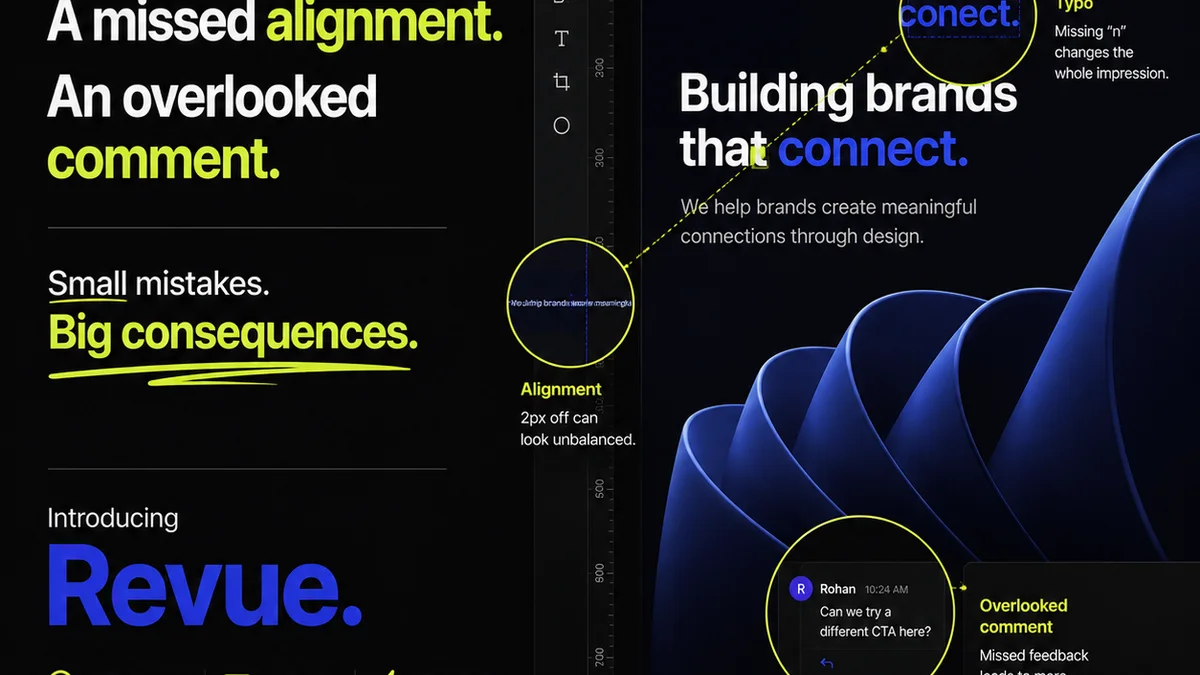
Managing the complexity of retail projects, especially those with tight deadlines and multiple stakeholders, demands efficient workflows. This is where a tool like Revue becomes indispensable for creative agencies and in-house teams.
Revue helps centralize client feedback, ensuring that all comments on creative assets—whether it's a new product display concept or a seasonal ad banner—are in one place. This eliminates the endless email chains and scattered documents that plague retail projects.
Revision and approval workflows are streamlined. You can easily track who has reviewed what, when they reviewed it, and what their feedback was. This provides crucial visibility for retail clients who need to sign off quickly.
Furthermore, Revue supports quality checks by providing a clear record of approvals and revisions. This audit trail is vital for accountability and ensuring that the final output meets all client specifications before launch.
By managing feedback and approvals effectively, Revue helps your team work faster and more accurately, directly impacting your ability to meet retail's demanding timelines and justify premium pricing based on delivered value.
6. Final Thought
Are you pricing your agency's services based on your internal costs, or on the external value you create for your retail clients? The distinction isn't semantic; it's the difference between surviving and thriving in a competitive market. Retail demands more than just good design; it demands results. Your pricing strategy must reflect that reality.
Frequently asked questions
What is the best pricing model for retail creative projects?
While cost-plus and hourly billing are common, value-based pricing is often most effective for retail. It aligns your fees with the tangible business results your creative work delivers, such as increased sales or conversions, which resonates strongly with retail clients.
How do I calculate the 'value' for value-based pricing?
Calculate value by understanding the potential impact of your work on the client's business. This includes potential revenue uplift, improved conversion rates, enhanced brand loyalty, or successful product launches. Quantify these benefits as much as possible.
What are the risks of fixed-fee pricing for retail clients?
The main risks are underestimating the scope, time, or resources required, leading to financial losses for the agency. It also requires meticulous scope definition upfront to avoid disputes over scope creep. Clear contracts and change order processes are essential.
How can I justify higher prices to retail clients?
Justify higher prices by demonstrating a clear ROI. Use data, performance metrics, and case studies to show how your creative work drives sales, improves efficiency, or achieves specific business objectives. Highlight your understanding of their unique retail challenges and timelines.
Should I include performance bonuses in my retail pricing?
Performance bonuses can be a great way to align your success with the client's. Ensure the Key Performance Indicators (KPIs) are measurable, directly attributable to your work, realistic, and clearly defined in the contract. This demonstrates confidence in your ability to deliver results.