Everyone talks about how agencies should price their services. Value-based pricing, cost-plus, retainers, project fees. It all sounds smart. Professional services pricing is complex, and getting it right is critical for agency success.
None of that is wrong. But it’s incomplete.
The hard truth? Most agencies get pricing wrong because they focus on the *what* and not the *why*. They chase the latest pricing trend without understanding the fundamental economics of their own operation. They’re pricing based on hope, not on data.
1. The Illusion of 'Standard' Pricing
There's no such thing as a universal 'best' agency pricing service. What works for a 5-person branding shop won't work for a 50-person digital marketing firm. Every agency is unique. Your niche, your talent, your overhead, your risk tolerance – it all matters.
Trying to copy another agency's pricing model is a fast track to undercharging or overpromising.
The Real Cost of Doing Business
Before you even think about *what* to charge, you need to know your true costs. This isn't just salaries. It's:
- Rent and utilities
- Software subscriptions (don't forget the hidden ones!)
- Tools and equipment
- Insurance and legal fees
- Training and development
- Marketing and sales expenses
- Taxes
- Employee benefits (health, retirement, PTO)
- *And* a buffer for unexpected downtime or client churn.
Calculate your fully burdened overhead rate per employee, per hour. This is your absolute floor. Anything below this is losing money, plain and simple.
2. The Hidden Costs of 'Scope Creep'
Scope creep is the silent killer of agency profitability. It’s when a project grows beyond its original agreed-upon boundaries, usually without a corresponding increase in budget or timeline.
Clients don't do this maliciously. They see opportunities. They have new ideas. They forget what was agreed upon.
Your job is to manage it. Not by saying 'no' rudely, but by having a system.
Why 'Good Enough' Isn't Good Enough for Scope
A poorly defined scope is an open invitation for creep. That’s why clear, detailed SOWs (Statements of Work) are non-negotiable. They should include:
- Specific deliverables
- Defined phases and milestones
- Clear approval processes
- Number of revision rounds included
- What constitutes out-of-scope work (and the associated cost/process for adding it)
This isn't about being difficult. It's about professional project management and protecting your team's time and your agency's bottom line.
3. The ROI of Your Pricing Model
Are you pricing for survival or for growth? Most agencies are stuck in survival mode, reacting to client demands and undercutting competitors.
A healthy pricing strategy should enable reinvestment. That means profit margins that allow you to:
- Invest in better tools and technology
- Attract and retain top talent with competitive salaries and benefits
- Fund your own marketing and business development
- Weather economic downturns
- Explore new service offerings
If your pricing model is so tight you can’t afford to do any of that, it’s not a pricing model. It’s a ticking clock.
Retainers vs. Projects: A Strategic Choice
Retainers offer predictable revenue and allow for proactive work. Projects offer defined scope and often higher per-project margins, but can be feast-or-famine. Neither is inherently 'better'. The best choice depends on your agency's capacity, client stability, and strategic goals.
The key is to understand the true profit potential and risk of each model for *your* agency.
4. The Psychology of Pricing
Pricing isn't just math; it's perception. Clients don't just buy services; they buy outcomes, confidence, and trust.
Your pricing communicates your value. If you price too low, clients might perceive your services as low-quality. If you price too high without justification, they'll walk away.
Communicating Value, Not Just Cost
How you present your pricing matters. Instead of just listing hours and rates, focus on the value delivered. Frame your proposals around the client's business objectives and how your services will achieve them.
- Highlight case studies and testimonials
- Show a clear understanding of their business challenges
- Articulate the ROI they can expect
- Offer tiered options that cater to different needs and budgets
This shifts the conversation from 'how much does it cost?' to 'what is this worth to my business?'
Where Revue Fits In
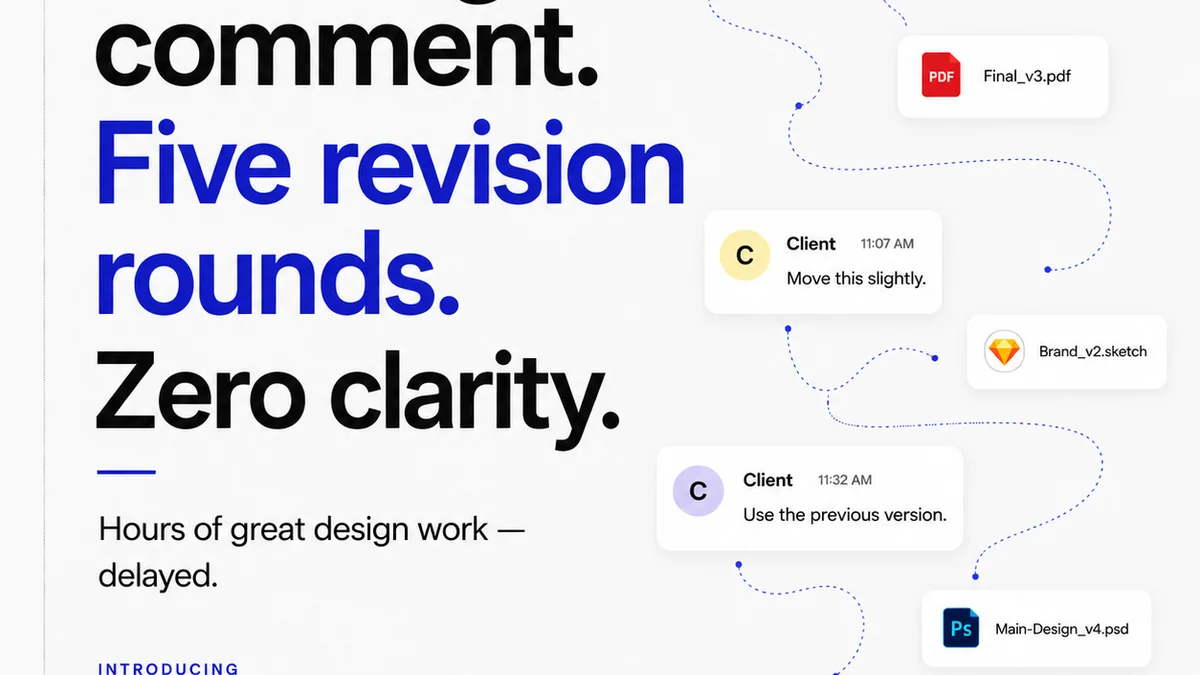
Managing client feedback, revisions, and approvals is where pricing strategies often break down. Uncontrolled feedback loops lead to scope creep, wasted hours, and frustrated clients – all of which erode your profit margins.
Revue centralizes client feedback, giving you a single source of truth for all creative assets and discussions. This visibility means:
- Clearer Revision Tracking: See exactly what feedback was given, by whom, and when. No more 'he said, she said'.
- Streamlined Approvals: Set up clear approval workflows to get sign-offs efficiently, preventing delays that cost money.
- Quantifiable Scope: Easily identify requests that fall outside the original scope, allowing for timely and professional scope adjustments.
- Quality Control: Ensure all feedback and revisions align with project goals before final delivery.
By bringing order to the chaos of creative feedback, Revue helps you protect your project timelines and budgets, directly supporting the profitability of your pricing strategy.
Final Thought
Are you pricing your services based on what you *think* the market will bear, or based on a deep understanding of your agency's true costs, capacity, and value? The difference isn't just academic; it's the line between surviving and thriving.
Frequently asked questions
What is the most common mistake agencies make with pricing?
The most common mistake is pricing based on guesswork or competitor rates rather than a thorough understanding of their own operational costs, overhead, and the true value they deliver. This often leads to undercharging and eroding profit margins.
How do I calculate my agency's true costs?
Calculate all direct and indirect costs, including salaries, benefits, rent, software, tools, insurance, marketing, and a buffer for unexpected expenses. Divide these by your billable hours to find your true hourly cost rate.
What's the best way to handle scope creep?
The best way is proactive: have a very clear Statement of Work (SOW) that defines deliverables, revision rounds, and out-of-scope work. When scope creep occurs, address it immediately with the client, clearly outlining the additional work and associated costs or timeline adjustments.
Should I use retainers or project-based pricing?
Both have pros and cons. Retainers offer predictable revenue but can sometimes lead to under-servicing if not managed well. Projects can yield higher margins but are less predictable. The best approach often involves a mix, tailored to your agency's capacity and client needs.