Everyone’s talking about healthcare agency pricing for 2026. You hear about value-based care, patient outcomes, and digital transformation driving new models. None of that is wrong. But it’s incomplete.
The deeper truth? Pricing in healthcare creative is shifting from a cost-plus or hourly model to one that’s inextricably linked to demonstrable efficiency and the ability to prove ROI in a data-hungry sector.
1. The Myth of the Fixed Retainer
Many agencies still cling to the idea of the fixed monthly retainer as the gold standard. It’s predictable, sure. But in healthcare, where regulations, patient privacy, and complex stakeholder needs mean scope creep is practically a given, fixed retainers often leave agencies underpaid or clients feeling overcharged.
The hard truth is that a one-size-fits-all retainer doesn't account for the inherent variability in healthcare projects. Think about it: a campaign for a new drug launch involves vastly different complexities than ongoing patient education content or internal communications for a hospital system.
The Shifting Landscape
Clients, especially in healthcare, are becoming more sophisticated buyers. They’re not just looking for creative output; they're looking for strategic partnership that directly impacts their bottom line or patient engagement metrics. This means they want pricing that reflects the *value* delivered, not just the hours logged.
This leads to a few key pricing adjustments:
- Project-based pricing with performance tiers: Base fee plus bonuses tied to specific, measurable outcomes (e.g., patient acquisition cost reduction, increased appointment bookings, improved health literacy scores).
- Subscription models for ongoing services: For predictable needs like social media management or basic content updates, a tiered subscription can work, but with clear caps and escalation clauses for unexpected demand.
- Hybrid models: Combining a base retainer for core services with project-based fees for larger initiatives.
The key is transparency. Clients need to understand *what* they’re paying for and *how* it connects to their business objectives.
2. Data-Driven Value Demonstration is Non-Negotiable
Healthcare is drowning in data. From patient demographics and treatment efficacy to campaign performance metrics and regulatory compliance reports, data is king. Agencies that can’t speak the language of data will struggle to justify their fees.
This isn't just about reporting clicks and impressions. It's about connecting creative work to tangible business results that resonate with hospital administrators, pharmaceutical executives, and payers.
What This Means for Pricing
Your pricing needs to reflect your ability to:
- Measure impact: Integrate with client analytics platforms. Understand their KPIs.
- Attribute success: Clearly link creative efforts to client goals. This requires robust tracking and reporting.
- Optimize continuously: Use data to refine campaigns and demonstrate ongoing value, justifying continued investment.
- Understand ROI: Translate creative output into financial terms. Show how your work saves money, increases revenue, or improves patient adherence.
Agencies that can provide this level of data-backed insight will command higher fees. Those that can’t will be seen as vendors, not strategic partners.
3. Specialization and Niche Expertise Command Premiums
The healthcare industry is incredibly diverse. You have pharmaceuticals, biotech, hospitals, insurance, medical devices, public health organizations, and more. Each has unique regulatory environments, patient populations, and communication challenges.
Agencies trying to be everything to everyone in healthcare will find themselves competing on price, not value. Specialization is the path to premium pricing.
The Power of Focus
When you focus on a specific niche—say, oncology patient education or B2B marketing for medical devices—you develop a deep understanding that generalist agencies simply can't match. This expertise translates directly into:
- Faster project starts: You already understand the landscape.
- More effective strategies: You know what resonates with specific audiences.
- Reduced risk: You're less likely to make compliance missteps.
- Higher client confidence: They trust your specialized knowledge.
This specialized knowledge justifies higher pricing. Clients are willing to pay a premium for an agency that truly *gets* their specific challenges and can deliver solutions with a higher probability of success.
4. Regulatory Compliance as a Cost Center (and Value Driver)
Healthcare is one of the most regulated industries on the planet. HIPAA, FDA guidelines, advertising standards—the list is long and compliance is non-negotiable. For agencies, this means significant investment in understanding and adhering to these complex rules.
Many agencies treat compliance as a necessary evil, a cost to be minimized. But in 2026, agencies that position compliance as a core value driver will be the ones setting the pricing trends.
Turning Compliance into Confidence
How do you price for this? It’s not just about adding a buffer for legal review time.
- Build compliance into your workflow: Ensure it's part of the creative process from the outset, not an afterthought. This reduces costly revisions.
- Invest in specialized training: Keep your team up-to-date on the latest regulations.
- Offer compliance consulting: Position your regulatory knowledge as a valuable service in itself.
- Communicate your compliance rigor: Make it a selling point. Clients in healthcare *need* this assurance.
Agencies that can confidently navigate the regulatory maze and demonstrate this capability will reduce client risk, which is a massive selling point. Reduced risk is valuable. Value commands premium pricing.
5. Efficiency Through Technology is a Pricing Lever
The operational side of agency work—briefing, feedback, revisions, approvals—has always been a drain on resources. For agencies working with healthcare clients, this can be amplified by the need for meticulous record-keeping and multiple layers of review.
The common assumption is that technology is just a tool to make things faster. The contrarian truth is that technology is a fundamental driver of profitability and a key differentiator in pricing strategy.
The Efficiency Premium
Streamlining workflows isn't just about saving time; it's about improving accuracy, reducing errors, and enabling faster iteration—all critical in healthcare. Agencies that invest in and leverage platforms for:
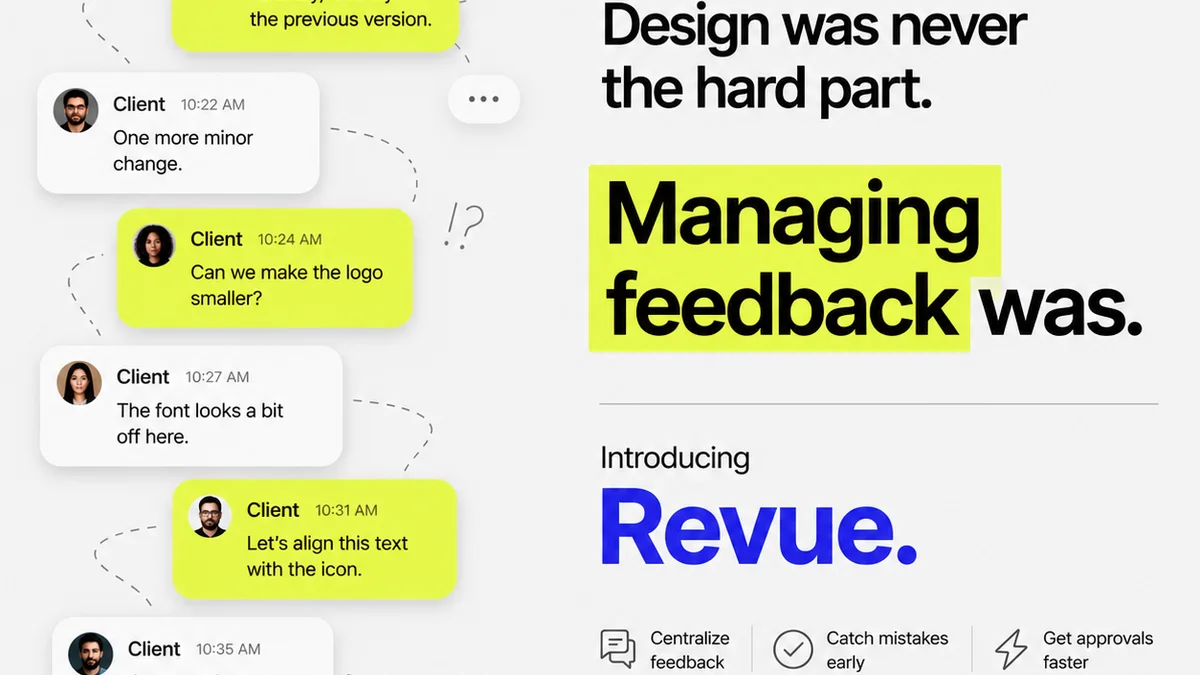
- Centralized feedback and version control: Eliminating endless email chains and confusion over the latest file.
- Clear revision tracking: Documenting every change and approval for auditability.
- Automated quality checks: Flagging potential compliance issues or brand guideline deviations early.
These efficiencies allow agencies to handle more projects with the same or fewer resources. This improved capacity and reduced internal friction can be directly translated into more competitive, yet profitable, pricing structures. It allows you to offer faster turnaround times or more comprehensive service packages without sacrificing margins.
Where Revue Fits In
This is where a platform like Revue becomes essential for healthcare agencies aiming to capture these emerging pricing trends. The ability to centralize client feedback, manage revisions with clear audit trails, and streamline approval processes directly impacts your operational efficiency.
When you can demonstrate to clients that your feedback loop is tightly controlled, that revisions are tracked meticulously, and that quality checks are integrated, you're not just showing them a slick interface. You're showing them reduced risk, faster time-to-market, and a more predictable project lifecycle.
This operational clarity is what allows you to confidently move away from purely hourly billing. It supports project-based pricing, value-based fees, and transparent retainers because the underlying workflow is robust and auditable. You can prove your efficiency, which directly supports your pricing strategy.
Final Thought
As healthcare agencies look towards 2026, the pricing conversation is evolving. It’s moving beyond billable hours and fixed retainers towards a model that rewards demonstrable value, specialized expertise, operational efficiency, and a deep understanding of the client's complex, regulated environment. Are you building your pricing around the operational realities of delivering exceptional, compliant creative work, or are you still relying on outdated assumptions?
Frequently asked questions
How is healthcare agency pricing different from other industries?
Healthcare agency pricing is significantly influenced by stringent regulations (like HIPAA and FDA guidelines), the need for specialized medical knowledge, and the critical importance of patient privacy and data security. This often necessitates higher investment in compliance, specialized expertise, and robust, auditable workflows, driving pricing models that reflect these complexities.
What is the shift from traditional retainers in healthcare creative?
The shift is away from simple fixed monthly retainers towards more flexible, value-driven models. This includes project-based pricing with performance tiers, hybrid approaches, and subscription models for predictable services. The goal is to better align agency fees with demonstrable client outcomes and the variable nature of healthcare projects.
How can agencies demonstrate ROI in healthcare creative?
Agencies demonstrate ROI by integrating with client analytics, tracking key performance indicators (KPIs) relevant to healthcare (e.g., patient acquisition cost, appointment bookings, health literacy scores), and clearly attributing creative efforts to business objectives. Continuous optimization based on data and transparent reporting of financial impact are crucial.
Why is specialization important for healthcare agency pricing?
Specialization allows agencies to develop deep expertise in specific healthcare niches (e.g., pharmaceuticals, medical devices). This expertise leads to faster project execution, more effective strategies, reduced compliance risk, and higher client confidence, all of which justify premium pricing compared to generalist agencies.