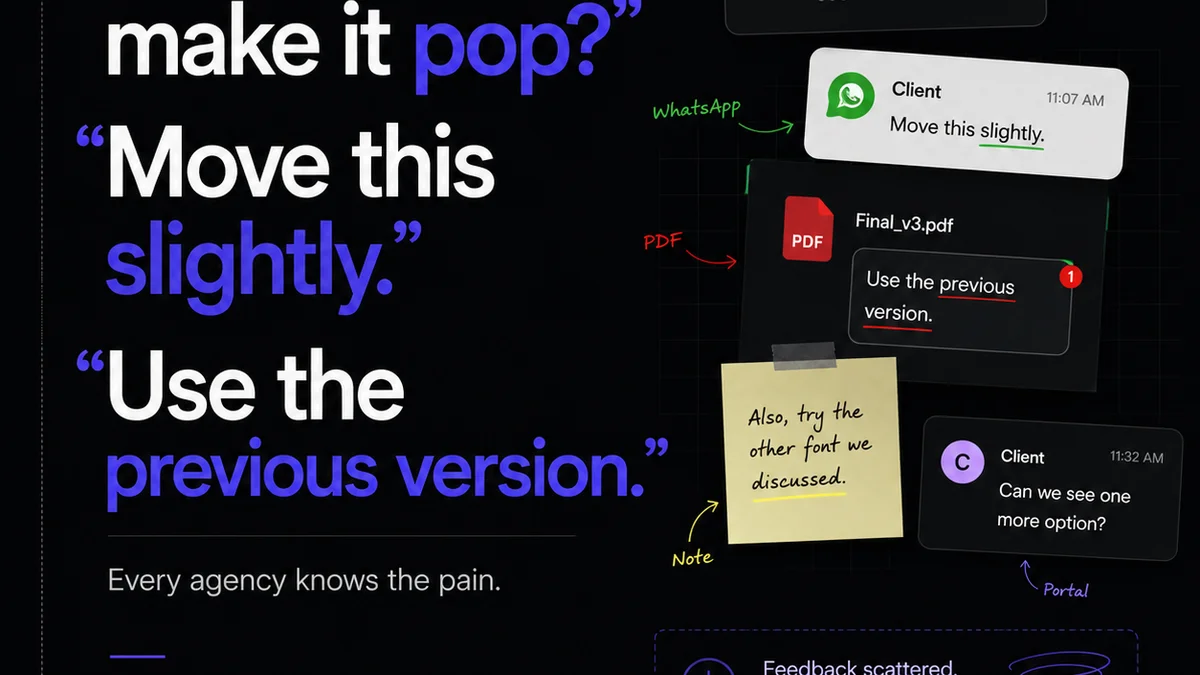
Everyone thinks agency revision management is just about getting feedback in one place. It’s about clear communication, right? Or maybe better project management software?
None of that is wrong. But it’s incomplete.
The hard truth? Effective revision management isn't a feature; it's a system. It’s the backbone of profitable creative work, directly impacting your margins and client relationships. Without a robust system, you’re just reacting, drowning in endless rounds and scope creep.
1. The Myth of 'Just One More Round'
The endless revision cycle is a killer. It bleeds profitability and kills team morale. Agencies often fall into the trap of thinking “just one more round” is a minor inconvenience. It’s not.
Each extra round represents:
- Unbilled hours
- Delayed project timelines
- Frustrated designers
- Strained client relationships
- Eroded profit margins
This isn't just about creative differences; it's often a symptom of deeper workflow issues. We need to look past the surface-level complaints to the root causes.
1.1. Ambiguous Briefs and Kickoffs
If the initial brief is fuzzy, the first round of feedback will be too. Clients don't know what they want because they weren't guided effectively at the start.
A solid kickoff meeting is non-negotiable. It sets expectations, clarifies objectives, and defines success metrics. This isn't busywork; it's preventative medicine for the revision process.
1.2. Lack of Defined Scope
What exactly are you delivering? What constitutes a
Frequently asked questions
What are the biggest challenges in agency revision management?
Common challenges include unclear initial briefs, scope creep, disorganized feedback channels, lack of clear approval processes, and lengthy, unproductive revision cycles that impact profitability and team morale.
How can I reduce the number of revision rounds?
Reduce revisions by starting with a crystal-clear brief, conducting thorough kickoff meetings, setting explicit scope and deliverables, establishing a structured feedback and approval process, and using a centralized platform for all communication and markups.
What is the role of a project manager in revision management?
A project manager is crucial for facilitating communication, ensuring feedback is consolidated and clear, tracking revision status, managing client expectations, and enforcing the established revision process to prevent scope creep and delays.
How does technology help with agency revision management?
Technology, like dedicated review and approval platforms, centralizes feedback, provides clear version control, enables visual annotation, automates approval workflows, and creates an audit trail, significantly streamlining the entire revision process.