Everyone talks about the best agency workflow tools. You see them on every tech blog, promising to revolutionize your creative output. They promise faster turnarounds, happier clients, and more billable hours. None of that is wrong. But it’s incomplete.
The hard truth? No tool is a magic bullet. The real gains in agency workflow come from understanding your process, not just layering on new software. It’s about connecting the dots between strategy, creative, and client approval. For US teams, that means cutting through the noise and focusing on what truly moves the needle.
1. The Illusion of 'Best' Tools: It's About Integration, Not Isolation
The market is flooded with point solutions. Project management software, time trackers, digital asset managers, proofing tools, communication apps. Each promises to solve a specific pain point. And they often do, in isolation.
But agencies aren't isolated functions. They're a complex ecosystem. A bottleneck in approvals can cripple a design team. Unclear feedback can derail a developer. Missed deadlines cost money and reputation.
The Symptom List: Are You Drowning in Disconnected Tools?
- Endless email chains for feedback.
- Version control nightmares with file names like `logo_final_v3_really_final.ai`.
- Clients confused about what's approved and what's still in progress.
- Designers and account managers constantly chasing down information.
- Difficulty tracking project scope creep.
- Wasted time manually compiling reports on project status.
These aren't just minor annoyances. They're symptoms of a fragmented workflow. The 'best' tools are the ones that talk to each other, or better yet, do the work of several tools.
2. Core Workflow Pillars: Where Technology Meets Process
To build an effective workflow, focus on these fundamental pillars. They're the bedrock upon which any successful agency operates, regardless of size or specialty.
a) Centralized Project Management
This is the nervous system of your agency. It needs to house everything: tasks, deadlines, communication, files, and client history. Forget juggling spreadsheets and sticky notes.
- Task Assignment & Tracking: Who is doing what, and by when?
- Timeline Visualization: Gantt charts, Kanban boards, or simple calendars. Visualizing your project flow is critical.
- Resource Allocation: Understanding team capacity to avoid burnout and over-promising.
- Budget Tracking: Linking project tasks to estimated and actual costs.
Tools here range from robust platforms like Asana or Monday.com to more specialized agency management software. The key is that it’s the single source of truth for project status.
b) Streamlined Client Feedback & Approvals
This is where many agencies bleed time and money. Unclear, delayed, or conflicting feedback is a project killer. The goal is clarity and efficiency.
- Contextual Annotations: Feedback directly on the creative asset, not in a separate email.
- Version Control: Clear tracking of revisions and approvals for each version.
- Staged Approvals: Defining who needs to sign off at each stage.
- Automated Notifications: Alerting stakeholders when action is needed or when a new version is ready.
This pillar is crucial for maintaining client relationships and project momentum. Without it, you're constantly in reactive mode.
c) Efficient Asset Management
Creative assets are your agency's lifeblood. Keeping them organized, accessible, and version-controlled is non-negotiable.
- Centralized Repository: One place for all final assets, brand guidelines, and project files.
- Metadata & Tagging: Making assets searchable by client, project, type, or usage rights.
- Version History: Accessing previous iterations if needed.
- Access Control: Ensuring the right people have access to the right files.
A Digital Asset Management (DAM) system, or a robust feature within your PM tool, is essential here. Think of it as your agency's digital library.
d) Transparent Communication Channels
Internal and external communication needs to be clear, concise, and documented. Relying solely on email or scattered chat messages leads to lost information.
- Project-Specific Channels: Keeping conversations tied to the relevant project.
- Internal Team Chat: Quick, informal communication without cluttering email.
- Client Portals: A dedicated space for clients to view progress and communicate.
- Activity Feeds: Summaries of recent updates and actions.
The goal is to reduce ambiguity and ensure everyone is on the same page, reducing the need for constant status update meetings.
3. Choosing the Right Tech Stack: Less is Often More
The temptation is to find the 'all-in-one' solution. While some platforms aim for this, true integration often comes from a carefully selected suite of tools that complement each other.
Consider your agency's specific needs:
- Size and Team Structure: A small boutique agency has different needs than a large multi-disciplinary firm.
- Client Types: Do you work with enterprise clients requiring robust security and audit trails, or smaller businesses needing simplicity?
- Creative Specializations: Are you primarily digital, print, video, or a mix? This impacts asset management needs.
- Budget: Enterprise solutions can be costly. Prioritize based on ROI.
Don't get caught up in feature comparisons. Focus on how well a tool fits into your *existing* or *desired* workflow. Does it simplify or complicate?
For US teams, look for tools with strong support, clear pricing, and integrations that play well with other popular business software (like accounting or CRM systems).
4. Where Revue Fits In
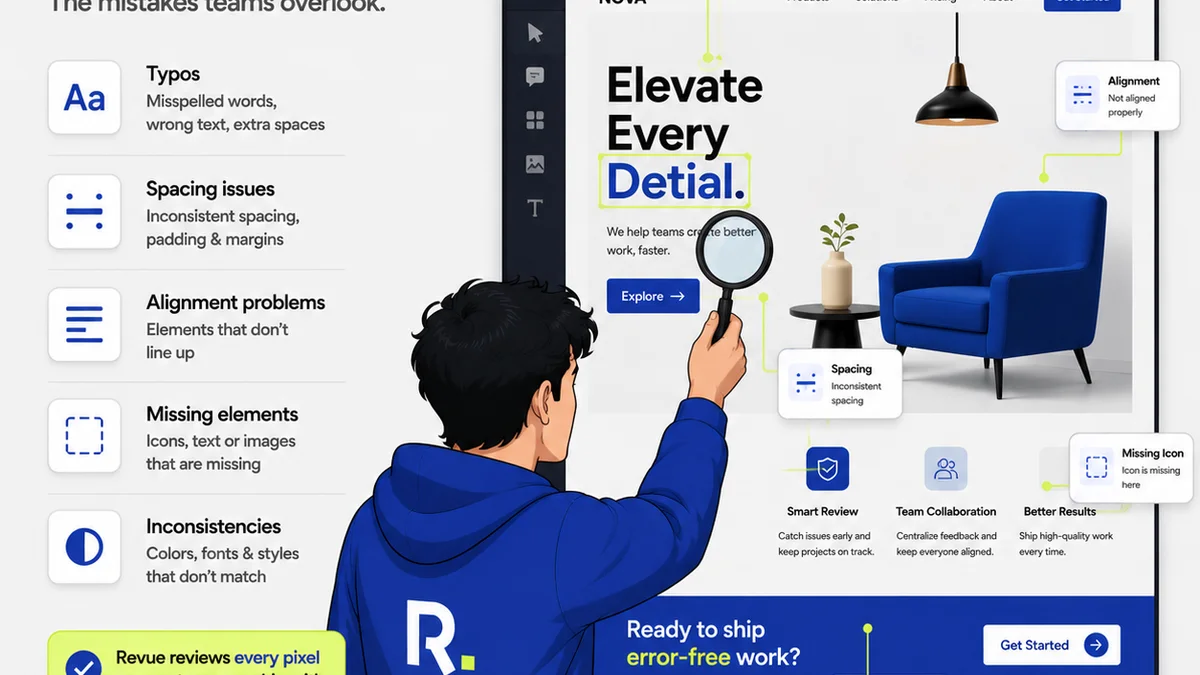
This is where a platform like Revue becomes critical. It’s not just another tool; it’s the connective tissue that brings order to creative chaos, especially around feedback and approvals.
Revue acts as the central hub for client feedback and revision management. Instead of sifting through endless emails or disparate chat messages, all feedback is centralized, contextual, and actionable.
- Centralized Feedback: Clients can comment directly on creative assets, eliminating ambiguity and ensuring feedback is tied to the specific version.
- Revision Tracking: Easily manage multiple versions of a project, see who approved what and when, and maintain a clear audit trail.
- Approval Workflow Visibility: Stakeholders always know the status of a project and what action is required from them.
- Quality Checks: By having a clear, documented approval process, you reduce the risk of errors slipping through before final delivery.
Revue helps US agencies move beyond subjective feedback loops to a structured, efficient system that respects both the creative process and the client relationship. It bridges the gap between creation and final sign-off, reducing friction and speeding up delivery.
5. Implementing Change: It's a Marathon, Not a Sprint
Introducing new tools or processes can be met with resistance. People are comfortable with their existing habits, even if those habits are inefficient.
- Start Small: Pilot a new tool or process with a single team or project.
- Communicate Clearly: Explain the 'why' behind the change and the benefits for everyone involved.
- Provide Training: Ensure your team knows how to use the new tools effectively.
- Gather Feedback: Regularly check in with your team to identify pain points and make adjustments.
- Iterate: Workflow optimization is an ongoing process. Be prepared to adapt as your agency grows and evolves.
Focus on adoption. A tool is only effective if your team actually uses it consistently. Make it easy for them.
Final Thought
The quest for the 'best' agency workflow tools often leads to a fragmented, overwhelming tech stack. The real opportunity lies not in acquiring more software, but in integrating the right solutions to support a clear, efficient, and transparent process. Are your tools serving your workflow, or is your workflow bending to your tools?
Frequently asked questions
What are the key components of an effective agency workflow?
An effective agency workflow typically includes centralized project management, streamlined client feedback and approvals, efficient asset management, and transparent communication channels. These pillars ensure projects move smoothly from initiation to delivery.
How can I improve client feedback processes in my agency?
Improve client feedback by using tools that allow for contextual annotations directly on creative assets. Centralize all feedback in one place, track revisions clearly, and establish a defined approval process to reduce ambiguity and delays.
Is it better to use an all-in-one agency management tool or a suite of specialized tools?
The best approach depends on your agency's specific needs, size, and budget. While all-in-one tools offer convenience, a curated suite of specialized tools that integrate well can sometimes provide deeper functionality and flexibility. Prioritize tools that connect and support your core processes.
How does Revue help with agency workflow challenges?
Revue centralizes client feedback and revision management, providing a clear audit trail and visibility into approval statuses. This helps US agencies eliminate fragmented communication, reduce errors, and speed up project delivery by streamlining the creative review process.