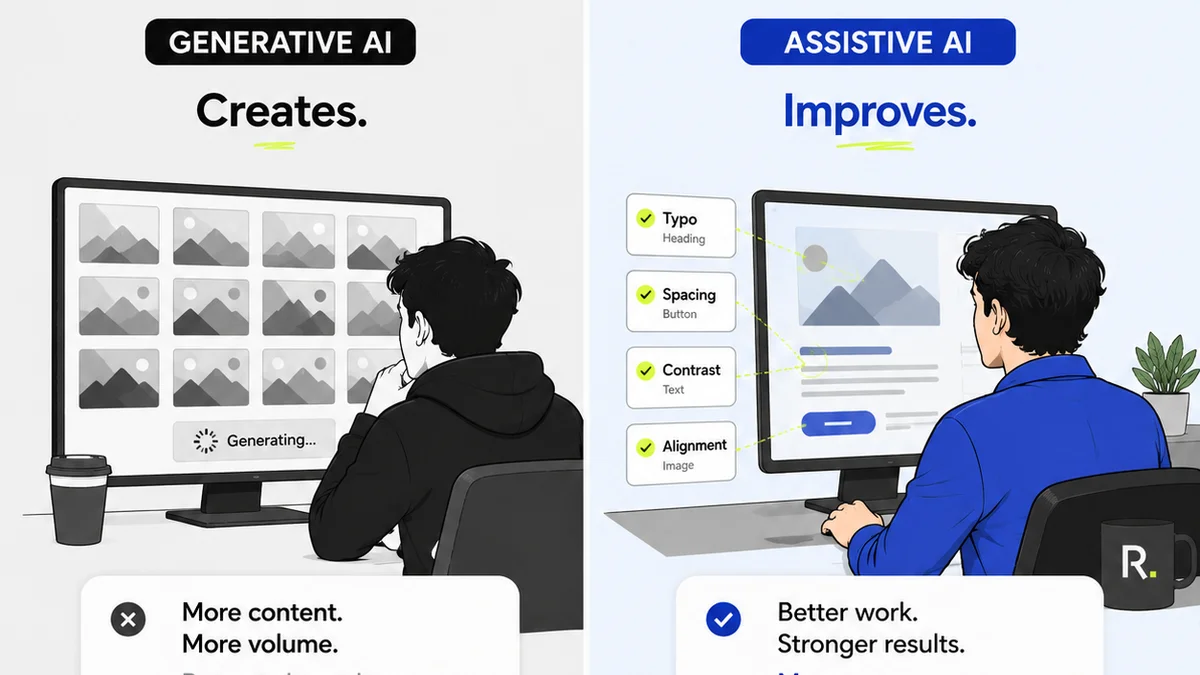
Everyone’s talking about AI in creative asset production. It’s fast. It’s efficient. It can generate amazing visuals from a simple prompt.
And that means your review process is obsolete, right?
Wrong.
AI-generated assets still need rigorous review. The tools might be new, but the principles of good creative oversight haven't changed. In fact, they’ve become even more critical. The sheer volume and speed of AI output demand a sharper, more systematic approach to quality control.
This isn't about fearing AI. It's about integrating it intelligently. It means building an AI asset review checklist that accounts for the unique challenges and opportunities AI presents.
1. Beyond the Prompt: Verifying AI Output Accuracy
The most common assumption is that if the AI generated it, it’s “correct.” This is a dangerous oversight.
AI models learn from vast datasets. While powerful, these datasets can contain biases, inaccuracies, or outdated information. Your review process must catch these.
Brand Alignment
Does the AI output truly reflect the brand’s visual identity? AI can sometimes produce generic or slightly “off” interpretations if not guided precisely.
- Color palette adherence
- Typography consistency (if applicable)
- Tone and style matching brand guidelines
- Logo usage and placement (if integrated)
Factual Correctness
For any asset conveying information, accuracy is non-negotiable. AI can hallucinate or misinterpret data.
- Checking statistics, dates, and names
- Verifying product details and specifications
- Ensuring any text generated is contextually sound
Legality and Compliance
This is a minefield for AI. Copyright, likeness rights, and industry-specific regulations are complex.
- Is the AI output original, or too close to existing copyrighted material?
- Are there identifiable people whose likeness might be used without permission?
- Does the asset comply with advertising standards or other industry regulations?
This AI asset review step is about asking: “Is this *true* and *allowed*?”
2. The 'Uncanny Valley' of AI Aesthetics
AI can create stunning visuals, but sometimes they lack that human touch. Or worse, they fall into the uncanny valley.
Your checklist needs to scrutinize the aesthetic quality beyond just surface-level appeal.
Visual Cohesion
Does the generated image feel cohesive? Are there strange artifacts or illogical elements?
- Seamless integration of AI-generated elements with any human-created components
- Absence of visual glitches, distorted features, or nonsensical textures
- Natural lighting and shadow consistency
Emotional Resonance
Does the asset connect with the target audience on an emotional level? AI can struggle with nuanced emotional expression.
- Authenticity of depicted emotions
- Relatability of characters or scenarios
- Overall mood and impact on the viewer
Originality and Artistry
Even if technically accurate, is the output derivative? Is it just a remix of common AI tropes?
- Does it offer a fresh perspective or unique visual style?
- Does it avoid cliché AI imagery?
- Does it exhibit a level of craft that elevates it beyond simple generation?
This is where human judgment is irreplaceable. AI can mimic, but true artistry requires deeper understanding.
3. Technical Rigor for AI-Generated Files
The technical specifications of AI assets are just as important as their creative merit. Don't assume AI outputs are production-ready.
Check file formats, resolution, and color profiles diligently.
File Format and Usability
Is the output in a usable format for your intended platform?
- Correct file type (JPG, PNG, SVG, etc.)
- Appropriate resolution for web or print
- Optimized file size for digital delivery
Color Space and Profiles
Mismatched color profiles are a common production headache, even with AI.
- Correct color space (sRGB for web, CMYK for print)
- Embedded color profiles
- Consistency across multiple generated assets
Layering and Editability (If Applicable)
If the AI output is intended to be further edited, its structure matters.
- Are elements provided on separate layers where feasible?
- Is the file structure logical for subsequent manipulation?
Technical flaws can derail even the most brilliant concept. Your AI asset review checklist must cover these basics.
4. Ethical Considerations and Bias Detection
AI models are trained on data reflecting the real world, including its biases. Responsible creative teams must actively combat this.
Your review process is the last line of defense against perpetuating harmful stereotypes.
Representation
Does the AI output reflect diverse and inclusive representation?
- Gender, race, age, ability, and other demographic considerations
- Avoidance of tokenism or stereotypical portrayals
- Authentic and respectful depiction of different groups
Bias in Interpretation
Did the AI interpret the prompt in a biased way? For example, associating certain professions with specific genders.
- Scrutinize prompts for potential bias triggers
- Review outputs for unintended stereotypical associations
- Actively seek out and correct biased outputs
Unintended Consequences
Could the asset be misinterpreted or used in a way that causes harm?
- Consider potential negative reactions or cultural insensitivities
- Evaluate the broader societal impact of the asset
This AI asset review step requires critical thinking and a commitment to ethical practices.
5. Performance and Goal Alignment
Does the AI-generated asset actually *work*? Does it serve the intended purpose effectively?
This goes beyond aesthetics and into the strategic effectiveness of the creative.
Conversion and Engagement Metrics
If the asset is for marketing, does it align with conversion goals?
- Clarity of Call to Action (CTA)
- Visual hierarchy guiding the user's eye
- A/B testing potential with variations
User Experience (UX) Impact
For UI elements or web assets, how does it affect the user experience?
- Accessibility considerations (e.g., color contrast, legibility)
- Intuitive design that supports user goals
- Consistency with established UX patterns
Message Clarity
Is the core message of the asset immediately understandable?
- Is the visual narrative clear and compelling?
- Does it communicate the intended information without ambiguity?
An AI asset might look good, but if it doesn't perform, it's a failure. Your checklist must ensure strategic success.
Where Revue Fits In
Managing the complexities of AI-generated assets requires a robust workflow. This is where a centralized feedback and approval platform like Revue becomes invaluable.
Instead of fragmented email chains or scattered messages, Revue provides a single source of truth for all creative feedback.
- Centralized Feedback: AI outputs, along with any human-created elements, can be uploaded to Revue. Stakeholders can provide contextual feedback directly on the asset, eliminating confusion about versions or comments.
- Revision and Approval Tracking: Keep a clear, auditable trail of all revisions, comments, and approvals. This is crucial when iterating on AI outputs or comparing AI-generated options. You can easily see which version was approved and why.
- Quality Control Workflows: Build custom checklists within Revue to ensure every AI asset goes through the necessary AI asset review steps outlined above. Assign tasks, set deadlines, and manage the entire QC process efficiently.
- Version Control: Easily manage multiple AI-generated variations or iterations of an asset, ensuring everyone is working from and commenting on the correct version.
Revue streamlines the process, allowing your team to focus on the critical evaluation of AI output rather than the administrative overhead of managing feedback.
Final Thought
AI is a powerful tool, not a replacement for human judgment. The sophistication of AI tools will only increase, but the need for a discerning eye, a critical mind, and a structured review process will remain.
Will your agency's AI asset review checklist evolve with the technology, or will you be caught relying on outdated assumptions?
Frequently asked questions
How do I ensure AI-generated assets are brand-compliant?
Your AI asset review checklist should include specific checks for brand color palettes, typography, tone, and logo usage. Compare the AI output against your established brand guidelines meticulously. AI can sometimes drift, so direct comparison is key.
What are the biggest legal risks with AI assets?
The primary legal risks involve copyright infringement (if the AI output is too similar to existing works) and usage rights for any identifiable people or likenesses within the generated asset. Always verify originality and obtain necessary permissions.
How can I combat bias in AI-generated creative assets?
Implement a thorough review for representation and bias. Check if the AI output perpetuates stereotypes related to gender, race, or other demographics. Actively prompt for diversity and scrutinize outputs for unintended biased interpretations. Human oversight is crucial here.
Does AI change the need for technical checks on assets?
No, AI does not eliminate the need for technical checks. You still need to verify file formats, resolution, color profiles, and optimization for the intended use (web or print). AI outputs are not automatically production-ready.
How does a platform like Revue help with AI asset review?
Revue centralizes feedback, tracks revisions and approvals, and allows for custom quality control checklists. This structure is essential for managing the volume and complexity of AI-generated assets, ensuring no critical AI asset review step is missed.