Everyone’s talking about AI brand compliance tools. They promise to scan your creative assets, flag off-brand elements, and save you from embarrassing mistakes. Sounds great, right? Especially for US teams navigating a complex regulatory and brand landscape.
None of that is wrong. But it’s incomplete.
The hard truth? AI is a powerful assistant, not an autonomous enforcer. Relying solely on these tools without understanding their limitations and integrating them into a robust workflow is a recipe for disaster. It’s like hiring a security guard but leaving all the doors unlocked.
1. The AI Brand Compliance Illusion
The allure of AI is its speed and scale. It can process vast amounts of data, identify patterns, and flag deviations far faster than any human team. This is why companies are rushing to implement AI brand compliance solutions.
But AI isn't sentient. It operates on rules, data, and algorithms you provide or that it learns from. It doesn't inherently *understand* brand nuance, cultural context, or the strategic intent behind a creative choice.
This leads to:
- False Positives: AI flags elements that are perfectly on-brand but don't fit its programmed parameters.
- False Negatives: AI misses subtle violations that a human would spot because they don't trigger specific rules.
- Over-reliance: Teams become complacent, trusting the AI's output without critical human review.
For US teams, this is particularly risky. Brand guidelines can be intricate, encompassing legal disclaimers, industry-specific regulations (like those in finance or healthcare), and evolving cultural sensitivities. An AI might flag a logo placement correctly but miss an unapproved tagline or a claim that’s legally problematic.
2. Beyond the Scan: Understanding Your Brand Ecosystem
Effective brand compliance isn't just about checking boxes; it's about embedding brand integrity into your entire creative process. AI tools can help, but only when they're part of a larger strategy.
Think about it:
- What are your *real* compliance pain points? Is it logo usage, color palettes, typography, tone of voice, legal disclaimers, or a combination?
- Who owns brand governance? Is it a dedicated brand manager, a legal team, or a distributed responsibility?
- How is feedback currently managed? Are approvals clear, documented, and traceable?
AI tools are best deployed when they augment human oversight, not replace it. They excel at the repetitive, rule-based checks that consume valuable human hours.
Consider the core components of a strong brand compliance strategy:
a. Centralized Brand Assets and Guidelines
Before any AI can scan, it needs something to scan against. This means having a single, up-to-date source of truth for your brand guidelines and approved assets.
This includes:
- Brand style guides (visual and verbal)
- Logo files (correct formats, variations, and usage rules)
- Color palettes (primary, secondary, tertiary)
- Typography guidelines
- Templates for common collateral
- Legal disclaimers and required statements
Without this foundation, your AI tool is scanning in a vacuum.
b. Defined Approval Workflows
Who needs to sign off on what? What are the stages of review? How are revisions tracked?
A clear workflow ensures that:
- The right people review the right assets.
- Feedback is consolidated and actionable.
- Decisions are documented.
AI can flag potential issues, but human stakeholders must make the final call based on strategic and legal considerations.
c. Continuous Training and Auditing
Your brand evolves. Your AI needs to evolve with it. Regularly update the AI's knowledge base with new guidelines, asset variations, and even past compliance issues. Conduct periodic audits to ensure the AI is performing as expected and to identify any blind spots.
3. Selecting the Right AI Brand Compliance Tools for US Teams
When you're ready to explore AI, focus on tools that integrate into your existing workflow and offer flexibility. Here's what to look for:
a. Customization Capabilities
Can you upload your specific brand guidelines, logos, and color palettes? The more customizable the tool, the more accurate its scans will be. A generic scanner won't understand the unique requirements of your brand.
b. Integration with Existing Tools
Does the AI tool connect with your design software (like Adobe Creative Cloud), DAM (Digital Asset Management) system, or project management platforms? Seamless integration minimizes manual effort and reduces the chance of errors.
c. Scope of Analysis
What does the tool actually check? Some focus purely on visual elements (logo size, color). Others attempt to analyze text for tone or compliance with specific messaging. Ensure the tool's capabilities match your primary compliance needs.
d. Reporting and Audit Trails
The tool should provide clear reports on its findings, ideally with links to the specific elements flagged. An audit trail showing when scans were performed and what was flagged is crucial for accountability.
e. User Experience for Feedback and Revisions
How easy is it for your team to act on the AI's findings? The best tools facilitate quick review, annotation, and revision, feeding back into the approval process.
4. Where Revue Fits In
AI tools are powerful for initial checks and identifying obvious deviations. But managing the entire feedback, revision, and approval cycle for creative projects requires a more holistic solution.
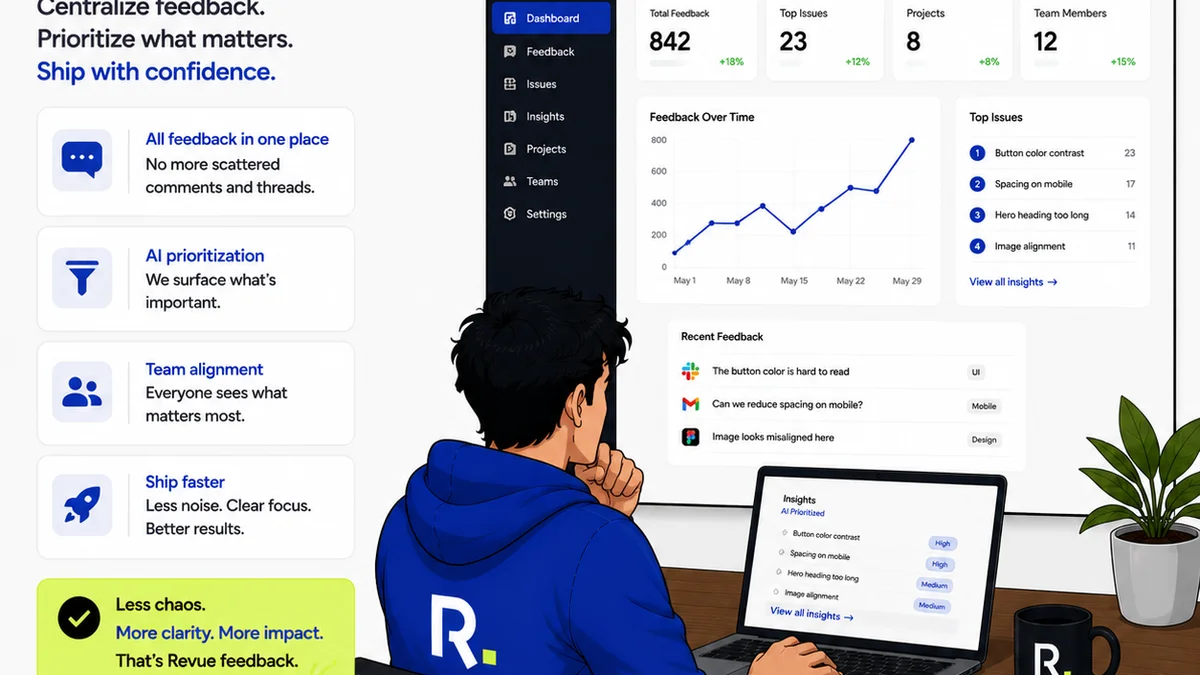
This is where Revue shines. We help US creative teams bring order to the chaos of client feedback and internal reviews.
- Centralized Feedback: No more digging through endless email chains or scattered Slack messages. All client feedback on creative assets lives in one place, attached directly to the version being reviewed.
- Revision Visibility: See exactly what changed between versions, who requested it, and why. This clarity is essential for maintaining brand consistency and avoiding scope creep.
- Streamlined Approvals: Clearly track the status of approvals, ensuring that all necessary stakeholders have signed off before a project moves forward. This reduces bottlenecks and ensures brand governance is respected.
- Quality Assurance: By having a clear, documented history of feedback and revisions, you can perform more effective quality checks, ensuring the final output aligns with the brief and brand standards.
Revue doesn't replace AI scanning, but it provides the essential human layer of management, communication, and oversight that AI alone cannot offer. It ensures that the insights from AI tools are acted upon within a structured, accountable process.
5. The Human Element: Why AI Isn't Enough
Let's be blunt: Brand compliance is rarely black and white. It’s a spectrum, influenced by strategy, audience, and context.
Consider these scenarios:
- A new campaign requires a slightly altered logo treatment for artistic effect. An AI might flag this as a violation, but a seasoned brand manager knows it's an approved creative exception.
- A piece of marketing copy uses a colloquialism that's slightly outside the brand's formal tone. An AI might flag it, but the marketing director understands it's a deliberate choice to connect with a specific demographic.
- A disclaimer needs to be present, but the AI can't verify if the *legal adequacy* of the wording is sufficient – that requires legal counsel.
These are judgment calls. They require understanding the 'why' behind the brand, not just the 'what'.
AI tools are excellent at identifying deviations from a defined set of rules. They are not equipped to understand strategic intent, cultural relevance, or the subjective nuances that define a strong brand.
Final Thought
AI brand compliance tools offer a significant advantage in efficiency and scale. But they are tools, not replacements for human judgment and robust workflow management. The real power comes from integrating AI into a system where clear guidelines, defined processes, and critical human oversight work in concert. How are you ensuring your creative process balances AI efficiency with essential human insight?
Frequently asked questions
Can AI tools guarantee 100% brand compliance?
No. AI tools are excellent at identifying deviations from programmed rules and patterns, but they lack the nuanced understanding of strategic intent, cultural context, and subjective judgment that humans possess. They can produce false positives and false negatives, making human oversight essential.
What are the essential components of a brand compliance strategy before using AI?
Before implementing AI, ensure you have centralized, up-to-date brand assets and guidelines, clearly defined approval workflows, and a plan for continuous training and auditing of your AI tools. A strong foundation is critical for AI effectiveness.
How can US teams benefit most from AI brand compliance tools?
US teams can benefit by using AI for repetitive, rule-based checks, freeing up human teams for strategic decision-making. Look for customizable tools that integrate with existing workflows and offer robust reporting, but always pair AI output with human review.
What is the role of a tool like Revue in AI-driven brand compliance?
Revue complements AI by managing the human element of the creative process. It centralizes feedback, tracks revisions, and streamlines approvals, ensuring that AI-identified issues are addressed within a structured workflow and that final creative decisions are documented and accountable.