Everyone’s talking about AI’s creative output. ChatGPT writing copy, Midjourney spitting out visuals. It’s exciting, and frankly, a little scary. But that’s only half the story.
The real revolution isn’t just in what AI can *make*. It’s in how AI is changing the entire operational backbone of creative agencies and in-house teams. The messy, unglamorous, but absolutely critical work of managing projects, feedback, and approvals.
None of that is wrong. But it’s incomplete.
The Hard Truth: AI Automates Workflow, Not Just Art
The assumption is that AI is here to replace the creatives. The truth? AI’s most profound impact is on the operations that support those creatives. It’s about streamlining processes, eliminating bottlenecks, and making the entire production pipeline smarter, faster, and more predictable.
This isn’t about AI becoming the next great artist. It’s about AI becoming the ultimate project manager, the tireless proofreader, the ruthless efficiency expert for your entire creative operation.
1. Taming the Brief: From Ambiguity to Actionable Intelligence
The Problem: The Vague Brief
How many times has a project kicked off with a brief that’s more suggestion than strategy? Vague goals, undefined target audiences, unclear deliverables. This ambiguity breeds rework, missed deadlines, and frustrated clients.
Creative teams spend countless hours trying to decipher intent, chasing down clarification, and making educated guesses that often miss the mark.
AI’s Intervention: Structured Data and Predictive Insights
AI can analyze existing briefs, client communication, and historical project data to identify gaps and inconsistencies before the work even begins.
- Automated Brief Analysis: AI tools can scan briefs for keywords, sentiment, and completeness against predefined project types or client profiles.
- Predictive Risk Assessment: Based on past projects, AI can flag briefs with a high probability of scope creep or client dissatisfaction.
- Audience Profiling: AI can help flesh out target audience personas with data-driven insights, moving beyond guesswork.
Imagine starting a project with a brief that’s already been validated, clarified, and enriched with data. That’s AI’s operational promise.
2. Streamlining Feedback: From Chaos to Clarity
The Pain Point: The Feedback Frenzy
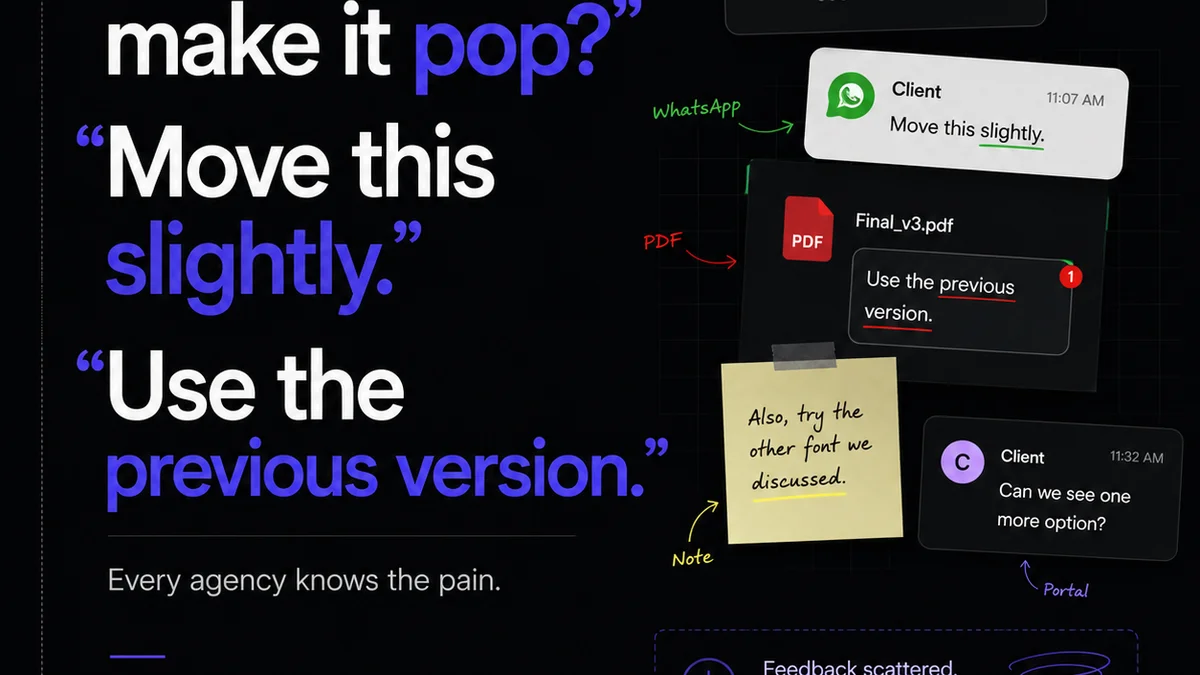
Client feedback is essential. But it often arrives in a disorganized deluge: scattered emails, scribbled notes on PDFs, Slack messages, even verbal comments. Sorting through this, identifying actionable points, and communicating them clearly to the team is a monumental task.
This is where projects get derailed. Misinterpretations lead to wrong revisions, wasting valuable time and resources.
AI’s Solution: Centralized, Actionable Feedback Loops
AI can act as a powerful filter and organizer for all incoming feedback.
- Automated Feedback Categorization: AI can sort feedback by type (e.g., copy edits, design tweaks, strategic concerns) and by stakeholder.
- Sentiment Analysis: Understand the overall tone of feedback to gauge client satisfaction or identify potential friction points.
- Actionable Summary Generation: AI can condense lengthy feedback threads into concise, actionable tasks for the creative team.
- Cross-Referencing: AI can identify conflicting feedback from different stakeholders, prompting clarification.
The goal is to transform feedback from a chaotic noise into a clear, prioritized to-do list. Making sure the right feedback gets to the right person at the right time.
3. Optimizing Revisions and Approvals: The Bottleneck Buster
The Sticking Point: The Endless Revision Cycle
The revision and approval process is notorious for delays. Clients take too long to respond, feedback is unclear, and tracking versions becomes a nightmare. This is often the biggest drag on project timelines and profitability.
You’ve seen it: projects languishing for weeks, waiting for that one sign-off. That’s lost revenue.
AI’s Role: Intelligent Tracking and Workflow Automation
AI can bring much-needed structure and automation to this critical phase.
- Automated Reminders and Escalations: AI can monitor approval deadlines and automatically send reminders or escalate overdue items.
- Version Control Intelligence: While not AI itself, AI can integrate with version control systems to flag significant changes or deviations from approved versions.
- Predictive Approval Times: Based on historical data and client behavior, AI can estimate how long approvals might take, allowing for better schedule management.
- Automated Quality Checks: AI can perform preliminary checks on revised assets against brand guidelines, technical specs, or previous feedback points.
This isn’t about removing human judgment. It’s about automating the tedious tracking and follow-up, freeing up your team to focus on actual creative problem-solving.
4. Enhancing Quality Assurance: Proactive Problem Solving
The Challenge: Last-Minute Surprises
Quality assurance (QA) is often a final gatekeeper, catching errors that should have been spotted much earlier. This can lead to last-minute rushes, stressful fixes, and potentially, a compromised final product.
Relying solely on manual QA is like waiting until the end of the assembly line to check for defects.
AI’s Contribution: Continuous, Intelligent Checks
AI can embed QA checks throughout the creative process, not just at the end.
- Automated Compliance Checks: Ensure assets meet technical specifications (file size, format, resolution) or legal requirements (disclaimers, disclosures).
- Brand Consistency Audits: AI can scan entire campaigns or websites to ensure consistent use of logos, colors, fonts, and messaging.
- Accessibility Testing: AI tools can help identify potential accessibility issues in digital creative.
- Error Pattern Recognition: By analyzing past QA reports, AI can identify recurring error types and suggest preventative measures.
This proactive approach catches errors earlier, when they are cheaper and easier to fix, improving overall output quality and client trust.
Where Revue Fits In
All these operational shifts demand a central nervous system. A place where the AI-driven insights and automated workflows can converge and be managed effectively.
Revue is built for this evolving landscape. It provides the centralized platform needed to:
- Centralize Client Feedback: Bring all feedback, whether AI-analyzed or human-generated, into one clear, organized space. No more scattered comments.
- Manage Revisions and Approvals with Visibility: Track the status of every asset, every revision, and every approval in real-time. AI can power the reminders, but Revue provides the dashboard.
- Run Quality Checks Seamlessly: Integrate AI-powered checks and ensure that all feedback and revisions are addressed before final delivery.
Revue acts as the connective tissue, ensuring that the operational efficiencies gained through AI translate into tangible improvements in project delivery and client satisfaction.
Final Thought: Are You Building a Machine, or a Masterpiece?
AI is undeniably a powerful tool for operational efficiency in creative fields. It can automate the mundane, clarify the complex, and accelerate the slow.
But efficiency is only a means to an end. The true challenge for agencies and creative teams isn't just adopting AI for operations. It's about leveraging these tools to free up human creativity, strategic thinking, and client relationships.
Are you using AI to simply speed up the old way of doing things? Or are you fundamentally rethinking your operations to unlock new levels of creative excellence and client value?
Frequently asked questions
How can AI help with client brief analysis?
AI can scan briefs for clarity, completeness, and consistency, identify potential risks based on historical data, and even enrich them with audience insights, ensuring projects start on a stronger footing.
Can AI really manage creative feedback?
Yes, AI can categorize, analyze sentiment, and summarize feedback from various sources into actionable tasks. It helps reduce misinterpretations and prioritize revisions effectively.
What is the benefit of AI in creative revision and approval processes?
AI can automate reminders, track approval statuses, predict timelines, and even perform preliminary quality checks on revisions, significantly reducing bottlenecks and delays.
How does AI improve quality assurance in creative work?
AI enables continuous, proactive QA by performing automated checks for compliance, brand consistency, and accessibility throughout the workflow, catching errors earlier and more efficiently.
Does AI replace the need for human oversight in creative operations?
No, AI is best viewed as a tool to augment human capabilities. It automates tedious tasks and provides data-driven insights, freeing up creative professionals to focus on strategy, creativity, and client relationships.