Everyone agrees that design consistency is king. It builds brand recognition, fosters trust, and makes your work instantly identifiable. The common assumption? That achieving this consistency is purely a matter of good design guidelines, diligent designers, and strong oversight.
None of that is wrong. But it’s incomplete.
The hard truth is that maintaining design consistency across a team, especially as it grows or handles multiple projects, is an operational challenge. It’s about systems, workflows, and the sheer friction of communication.
1. The Illusion of Universal Understanding
You’ve written the perfect brand guidelines. They’re comprehensive, beautifully illustrated, and easily accessible. You hand them over, and everyone nods. Problem solved, right?
Wrong.
Guidelines are static documents. Human interpretation is dynamic. What seems crystal clear to you might be ambiguous to a junior designer, a freelance collaborator, or even a senior team member juggling ten other priorities.
The Subtle Drift
This ambiguity leads to subtle drifts. A font weight here, a corner radius there, a slightly off-brand color hex code. Individually, these are minor. Collectively, over dozens of assets and multiple projects, they erode the brand’s visual identity.
It’s not malicious. It’s human.
Think about it:
- A designer is under a tight deadline and makes a “quick judgment call.”
- A new team member hasn’t fully internalized all the nuances of the style guide.
- A client requests a minor tweak that, while seemingly innocuous, nudges a design element out of spec.
- Different tools or software versions render elements slightly differently.
These are the tiny cracks where inconsistency seeps in.
2. Scaling Consistency: The Bottleneck of Manual Checks
As teams and project volume increase, the burden of maintaining consistency falls on individuals. This usually means:
- More review cycles.
- More back-and-forth communication.
- More time spent policing minor details instead of creative problem-solving.
This manual oversight becomes a bottleneck. It slows down delivery, frustrates designers, and adds significant overhead. It’s an expensive way to ensure brand integrity.
The pressure to deliver quickly often means that perfect consistency takes a backseat to meeting deadlines. This is a false economy. The long-term cost of inconsistent branding is far higher.
The Cost of Rework
Rework due to consistency errors is a killer. It’s not just the time spent fixing the asset; it’s the time lost on other tasks, the potential for client frustration, and the demoralization of the design team.
Consider the ripple effect:
- A junior designer misses a subtle color deviation.
- The senior designer catches it, but only after it’s been approved by the project manager.
- The asset goes to development, and a last-minute fix is required, delaying launch.
- The client sees the delay and questions the team’s efficiency.
This is a familiar dance in many agencies.
3. Enter AI: The Scalable Consistency Engine
This is where AI starts to shift the paradigm. AI isn't here to replace designers; it’s here to augment their capabilities and, crucially, to automate the tedious aspects of maintaining standards.
Think of AI as a tireless, objective quality assurance layer that works alongside your human talent.
Automated Brand Audits
AI tools can be trained on your brand guidelines. They can then scan design files – from mockups to final assets – to identify deviations in real-time. This includes checking:
- Color palettes against approved swatches.
- Typography hierarchies, weights, and spacing.
- Spacing and alignment rules.
- Logo usage and clear space requirements.
- Image treatment and filtering.
This isn't about AI making creative decisions. It’s about AI enforcing the rules you’ve already set.
Predictive Consistency
Beyond spotting current errors, AI can also predict potential consistency issues. By analyzing past projects and common deviation patterns, AI can flag elements that are *likely* to cause problems before they become widespread.
This proactive approach is a game-changer.
Imagine an AI assistant that flags a proposed color change as “potentially inconsistent with Brand X’s primary palette” based on historical data and defined rules. This allows the designer to course-correct immediately, without a lengthy review cycle.
Streamlining Asset Generation
AI can also assist in generating consistent assets at scale. For example, creating variations of an ad banner or social media post across different dimensions. Instead of manually resizing and re-adapting each element, AI can automate the process while adhering to defined spacing, typography, and layout rules.
This frees up designers to focus on the creative strategy, not the repetitive execution.
4. AI as a Style Guide Enforcer
Your style guide is the blueprint. AI can be the construction foreman, ensuring every brick is laid exactly as specified.
It's not about stifling creativity; it's about providing guardrails so creativity can flourish within defined boundaries.
Real-time Feedback Loops
Integrate AI checks into your design tools. As a designer works, the AI can provide instant feedback. A red outline appears around an element that deviates from the brand’s specified padding. A notification pops up if the wrong font weight is used.
This immediate feedback is invaluable. It corrects errors at the source, when they are easiest and cheapest to fix.
This is far more efficient than discovering an issue days or weeks later.
Training and Onboarding
AI can also serve as an interactive training tool. New designers can use AI-powered checks to learn the intricacies of the brand guidelines through practice and immediate correction, rather than just reading documentation.
It accelerates the learning curve and ensures new team members are building consistent work from day one.
5. Where Revue Fits In
Maintaining design consistency isn't just about the creation phase; it’s about the entire lifecycle of a creative asset, especially when client feedback is involved.
This is where a platform like Revue becomes critical.
Centralized Feedback Hub
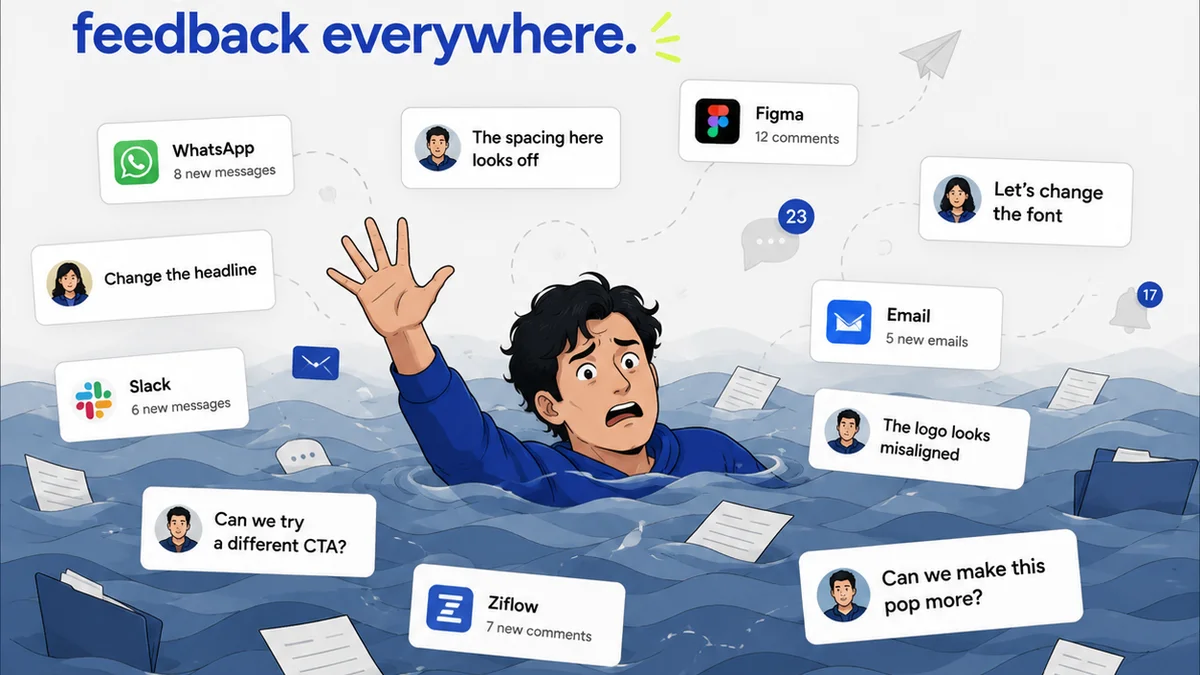
Revue acts as the single source of truth for feedback on creative work. Instead of scattered email threads, Slack messages, or scribbled notes on PDFs, all client comments are organized and contextualized within the platform.
This means:
- Clear, actionable feedback linked directly to specific design elements.
- Reduced misinterpretation and lost comments.
- A definitive record of all discussions and decisions.
Revision and Approval Visibility
AI can help enforce consistency on the front end, but managing the feedback loop and approvals is where human oversight and clear processes are paramount. Revue provides this visibility.
Project managers and creative directors can easily track the revision history, see who approved what, and ensure that feedback aligns with brand strategy and previous decisions. This prevents scope creep and ensures that changes, even if client-driven, are implemented thoughtfully and consistently.
Quality Checks and Sign-offs
Before a final asset is delivered, a quality check is essential. Revue facilitates this by providing a clear overview of all revisions and approvals. You can see the journey of an asset from initial concept to final sign-off, ensuring that all brand guidelines, including those potentially flagged by AI, have been adhered to.
It brings structure to the chaos of client collaboration, making it easier to maintain the high standards your clients expect.
6. Final Thought
The pursuit of design consistency is an ongoing battle, not a one-time setup. Relying solely on human diligence is a strategy destined to falter under pressure. AI offers a powerful, scalable solution to enforce the rules, freeing up your creative teams to do what they do best: create brilliant, on-brand work.
The question isn't whether AI *can* improve design consistency. The real question is: how quickly can you integrate these tools to stop the bleed of brand erosion and elevate your team's efficiency?
Frequently asked questions
Can AI replace human designers for ensuring consistency?
No, AI is designed to augment human designers, not replace them. It automates the detection of deviations from established brand guidelines, freeing up designers to focus on creative strategy and problem-solving rather than tedious manual checks.
How can I train an AI to understand my brand guidelines?
AI tools can be trained by feeding them your existing brand guidelines, style guides, and examples of on-brand and off-brand assets. The AI learns to identify patterns and deviations based on this input.
What types of design elements can AI check for consistency?
AI can check a wide range of elements, including color palettes, typography (fonts, weights, sizes, spacing), layout rules, spacing and alignment, logo usage, clear space requirements, and image treatments.
How does AI help with consistency during client feedback and revisions?
While AI primarily enforces consistency during asset creation, platforms like Revue integrate with this by providing a centralized hub for feedback and approvals. This ensures that revisions are tracked, understood, and implemented in a way that maintains overall brand consistency, preventing new deviations from creeping in during the review process.
Is implementing AI for design consistency expensive?
The cost varies depending on the AI tools used. However, the expense should be weighed against the significant cost of design rework, missed deadlines, and brand erosion caused by inconsistency. Many AI tools offer scalable solutions that can provide a strong return on investment.