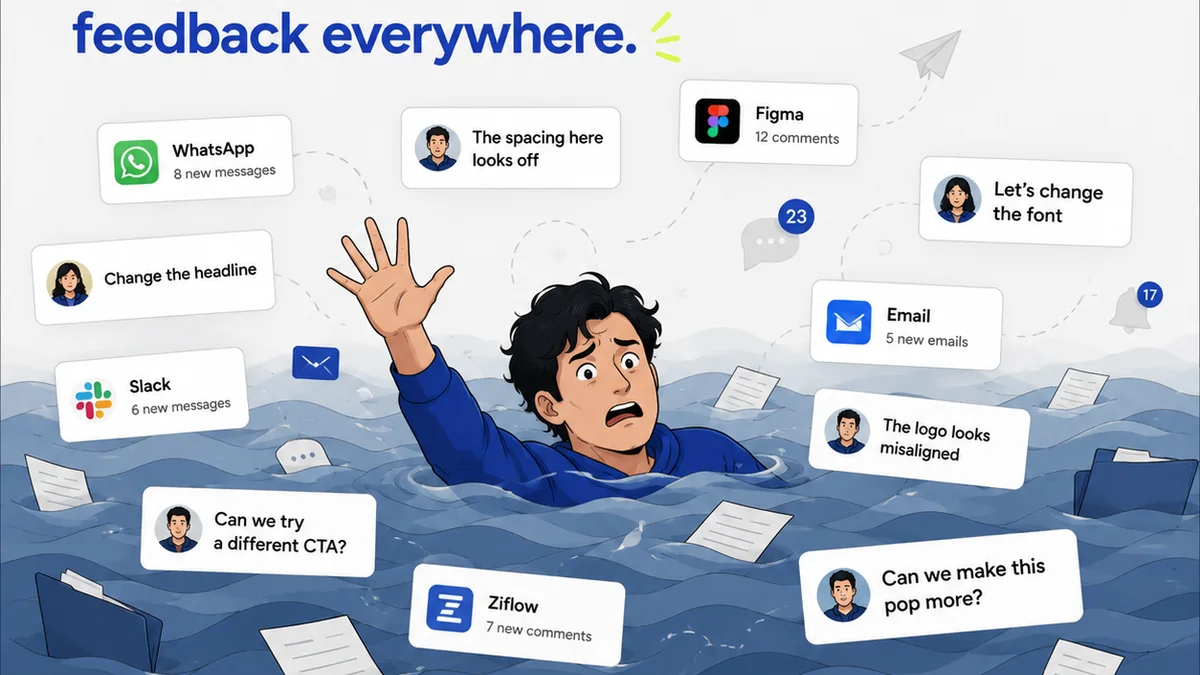
Everyone’s talking about AI in design. It’s going to automate everything, right? Especially tedious tasks like quality assurance. That’s the common assumption. AI will catch all the visual bugs, ensure brand consistency, and generally make our lives easier. None of that is wrong. But it’s incomplete.
The hard truth is that AI for design QA isn’t a fully automated solution. It's a powerful tool, but it requires human oversight, strategic implementation, and a clear understanding of its limitations. Relying on AI alone for quality checks is a shortcut that leads to more problems than it solves.
1. AI Catches Bugs, Not Bad Design
Let's be clear: AI excels at pattern recognition and anomaly detection. It can be trained to spot deviations from a set of rules or a known baseline. This means AI can flag:
- Inconsistent spacing or alignment.
- Color palette deviations.
- Font errors or missing characters.
- Broken links or image errors.
- Basic accessibility violations (e.g., low contrast ratios).
This is incredibly valuable. It frees up human reviewers from the drudgery of finding these technical glitches. But AI doesn't understand context. It can't tell you if a design is strategically sound, emotionally resonant, or creatively compelling.
The Strategic Blind Spot
A design might be pixel-perfect according to AI's parameters, but still fail its core objective. Does it communicate the right message? Does it appeal to the target audience? Does it align with the client's brand strategy?
These are qualitative judgments that require human experience and critical thinking. AI can't assess user intent or brand voice. It can’t gauge the effectiveness of a creative concept. That’s still firmly in the human domain.
2. Training Data is Everything (and a Major Hurdle)
For AI to be effective in design QA, it needs to be trained on relevant data. This means providing it with examples of what
Frequently asked questions
Can AI replace human designers in QA?
No, AI cannot fully replace human designers in quality assurance. While AI excels at identifying technical inconsistencies and rule-based errors, it lacks the critical thinking, contextual understanding, and creative judgment necessary to assess the strategic effectiveness and overall quality of a design.
What are the biggest limitations of AI for design QA?
The primary limitations include a lack of contextual understanding, an inability to judge creative merit or strategic alignment, and a heavy reliance on high-quality, relevant training data. AI can catch bugs, but it can't evaluate the effectiveness of the design itself.
How can creative teams best implement AI for design QA?
Creative teams should implement AI as a supplementary tool to augment human review. Focus on using AI for repetitive, rule-based checks (like consistency, basic accessibility, or brand guideline adherence) to free up human reviewers for higher-level strategic and creative evaluation.
What kind of AI tools are useful for design QA?
Tools that automate visual regression testing, check for brand guideline compliance (color, typography), perform basic accessibility scans, and identify broken links or image issues are particularly useful. These tools augment, rather than replace, human oversight.