Everyone's talking about AI in design. You hear it's faster, cheaper, and unlocks new creative possibilities. And none of that is wrong. But it’s incomplete.
The hard truth? AI tools, while powerful, don't eliminate the need for human oversight. In fact, they introduce new complexities that demand a more robust approach to quality assurance. Simply accepting AI output without critical review is a fast track to mediocrity and missed deadlines.
Improving AI design QA isn't about finding bugs in code. It's about understanding the nuances of AI-generated assets and ensuring they align with client goals, brand guidelines, and fundamental design principles. It requires a shift in how we think about quality control.
1. Understand the AI's Limitations
Before you can test AI output, you need to know what you're testing against. AI models are trained on vast datasets, but they can inherit biases, misunderstandings, or simply generate
Frequently asked questions
What are the biggest challenges in AI design QA?
The biggest challenges include ensuring brand consistency, identifying subtle AI-generated artifacts or biases, verifying factual accuracy in AI-generated content, and maintaining a human-centric review process that doesn't stifle creativity while still catching errors.
How can I ensure AI-generated designs meet brand guidelines?
Develop a specific checklist for AI design QA that includes brand elements. This might involve checking color palettes against brand guides, verifying logo usage, ensuring typography matches brand standards, and confirming the overall aesthetic aligns with brand perception. AI output should be treated as a draft that needs to be refined to meet these specific requirements.
Should I use AI tools for QA itself?
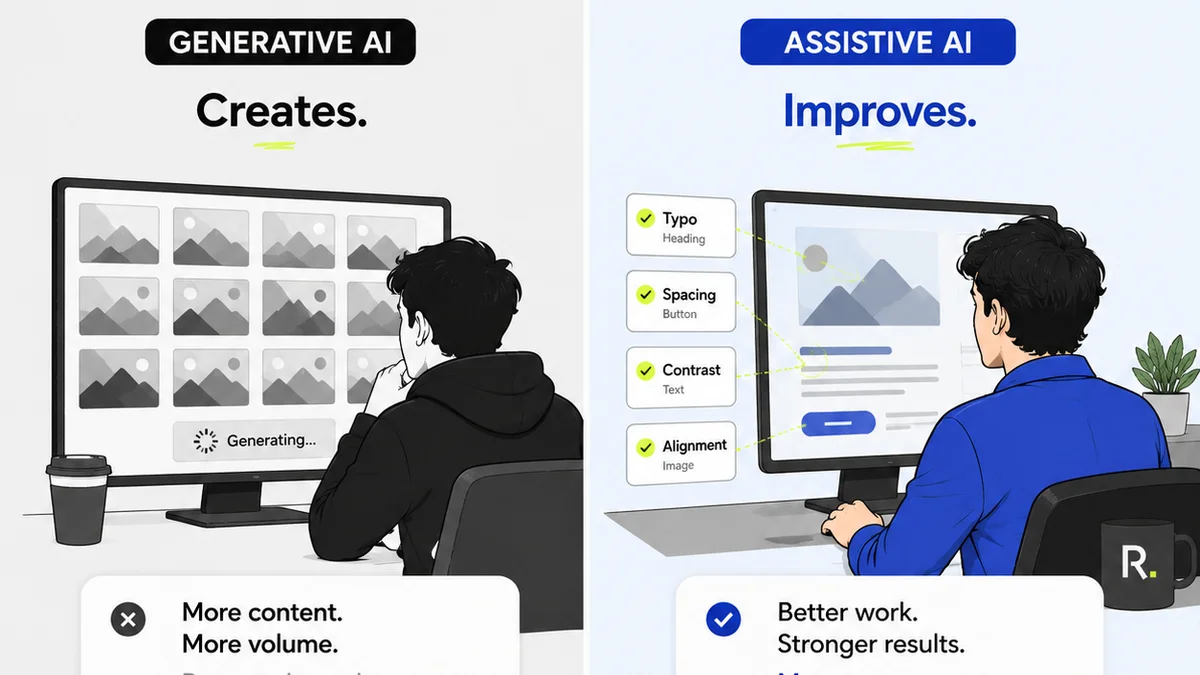
Yes, AI can assist in QA. Tools can help flag potential issues like accessibility problems (e.g., contrast ratios), identify repetitive patterns, or even check for basic layout inconsistencies. However, these AI QA tools should augment, not replace, human review. Complex aesthetic judgments, strategic alignment, and nuanced feedback still require human expertise.
How does AI design QA differ from traditional QA?
Traditional QA often focuses on functional bugs and adherence to pre-defined specifications. AI design QA adds layers of complexity: evaluating creative output for subjective quality, identifying emergent biases or 'hallucinations' from the AI, ensuring alignment with evolving brand needs that the AI might not 'understand,' and managing the iterative nature of AI generation where the 'final' output can vary.