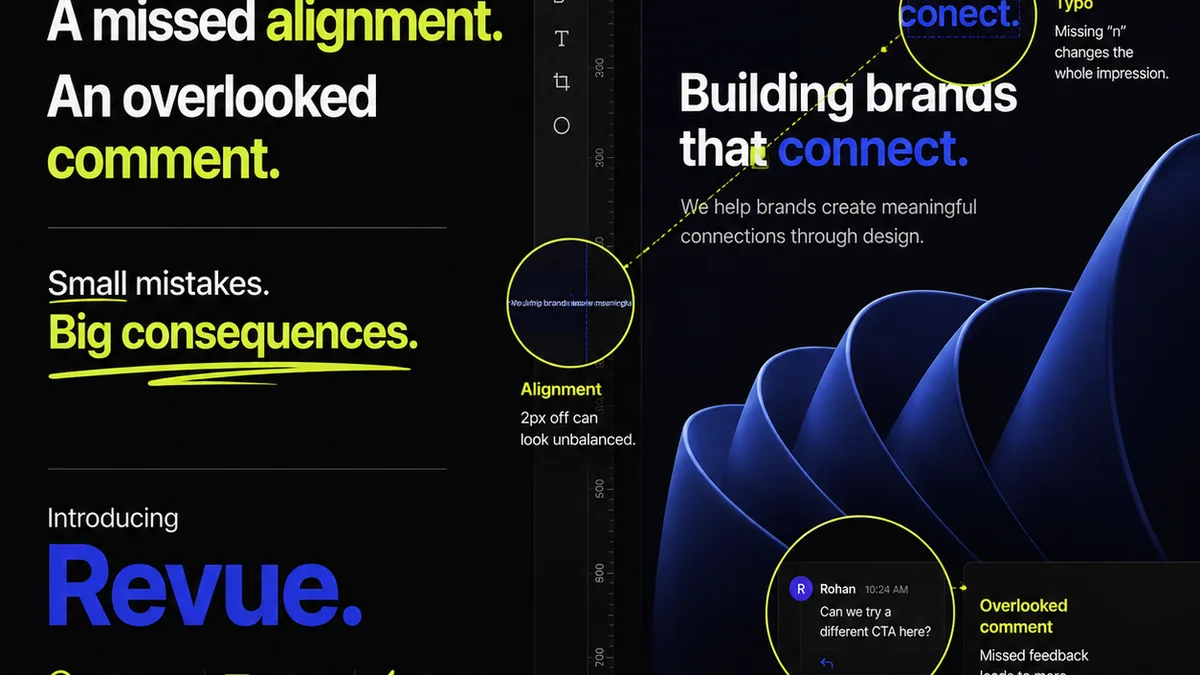
Everyone's talking about how AI tools will revolutionize creative workflows. They'll speed up ideation, generate assets in seconds, and cut down on grunt work. It all sounds great.
And it is, mostly. But there's a wrinkle. A big one.
The assumption is that AI simply makes things *faster*. The deeper truth? AI doesn't just accelerate; it fundamentally changes the nature of creative output and, consequently, AI revision management.
This shift creates new bottlenecks and requires a different approach to feedback, iteration, and approval. Ignoring this creates chaos.
The Hard Truth: AI Isn't Just Faster, It's Different
AI doesn't produce
Frequently asked questions
What are the biggest challenges in AI revision management?
The primary challenges include defining clear feedback loops for AI-generated content, managing the sheer volume of iterations, ensuring brand consistency across AI outputs, and integrating AI-specific feedback into existing project management systems.
How can I ensure brand consistency with AI-generated assets?
Establish detailed brand guidelines for AI input (prompts, style references). Implement a rigorous review process to catch deviations. Use AI tools that allow for fine-tuning and style replication. Regularly audit AI outputs against established brand standards.
What's the role of human oversight in AI revision management?
Human oversight is critical. AI assists, but humans provide strategic direction, subjective creative judgment, brand alignment, and ethical considerations. Oversight ensures the AI's output meets project goals and client expectations, moving beyond mere technical generation.
Can AI tools help manage their own revisions?
Some advanced AI platforms are beginning to incorporate features for iterative refinement based on feedback. However, they typically require structured input and human direction to guide the revision process effectively. They don't manage revisions autonomously; they facilitate them.