Everyone’s talking about AI search. You’ve probably seen it touted as the next big thing for finding information faster. And that’s not wrong. But for B2B marketers, it’s far more than a glorified search engine. It’s a powerful tool for competitive intelligence, content strategy, and understanding buyer intent. The real power lies not just in asking AI questions, but in asking the *right* questions, and knowing how to interpret the answers in a business context. That’s where the operational truth lies.
The hard truth? Simply plugging keywords into an AI chatbot won’t automatically win you market share. It requires a structured approach. A checklist. Here’s how to build one for leveraging AI search in B2B marketing.
1. Define Your Objective: What Problem Are You Solving?
Before you even type a query, get crystal clear on what you want to achieve. Vague objectives lead to vague answers, which lead to wasted effort. Are you trying to:
- Identify emerging trends in a specific industry?
- Understand competitor messaging and positioning?
- Uncover pain points for a target customer segment?
- Discover content gaps your competitors aren't filling?
- Research potential partnership opportunities?
Your objective dictates the scope and nature of your AI search queries. It's the foundation.
1.1. Specificity is King
Instead of “AI trends,” try “Emerging AI applications in supply chain management for enterprise clients in the last 12 months.” The more specific, the better the AI can narrow its focus.
2. Know Your Audience & Their Language
AI search tools are trained on vast datasets, but they don't inherently understand your niche audience's specific jargon, acronyms, or unspoken needs. You need to bridge that gap.
Consider the language your ideal B2B buyer uses. What terms do they search for? What are their industry-specific challenges? Feed this context into your prompts.
2.1. Persona Integration
If you have buyer personas, use them. Frame your queries from their perspective. For example, instead of asking about a product feature, ask “What are the top 3 challenges a VP of Operations faces when implementing new inventory management software?”
2.2. Industry Jargon
Don’t shy away from using industry-specific terms. If your target market uses terms like “IoT integration,” “SaaS scalability,” or “GDPR compliance,” include them. This helps the AI surface more relevant, specialized information.
3. Crafting Effective AI Search Prompts
This is where the rubber meets the road. A well-crafted prompt is an art and a science. Think of it as briefing a junior analyst, but one with access to near-infinite information.
3.1. The Anatomy of a Great Prompt
- Role-Playing: “Act as a senior market analyst specializing in the cybersecurity sector…”
- Context: “…for a mid-sized SaaS company targeting enterprise clients.”
- Task: “Identify the top 5 emerging threats that B2B companies are concerned about regarding cloud security.”
- Constraints/Format: “Provide a brief summary for each threat, including its potential business impact and common mitigation strategies. Use bullet points for mitigation.”
- Tone (Optional but helpful): “Assume a formal, business-oriented tone.”
Combine these elements strategically. A prompt like: “Act as a competitive intelligence analyst for a B2B fintech firm. Research the recent product launches and key messaging shifts from our top three competitors (Company A, Company B, Company C) in the last quarter. Focus on features that address regulatory compliance challenges. Summarize findings in a table format with columns for Competitor, Product/Feature, Launch Date, Key Message, and Compliance Area.”
3.2. Iteration is Key
Your first prompt might not yield perfect results. Refine it. Add more detail, clarify ambiguous terms, or change the angle. AI search is an iterative process.
4. Verifying and Validating AI-Generated Information
This is non-negotiable. AI can hallucinate or present outdated information. Treat AI output as a starting point, not the final word.
Always cross-reference critical data points with reputable sources. Look for corroboration from industry reports, established news outlets, or primary research.
4.1. Source Scrutiny
When AI provides sources (if it does), examine them. Are they credible? Are they recent? Are they relevant to your specific B2B context?
4.2. Fact-Checking with Human Expertise
The best validation comes from your internal team. Does the AI’s output align with what your sales team hears from prospects? Does it make sense to your product experts? Use AI to augment, not replace, human insight.
5. Analyzing and Applying the Insights
Raw data is useless. Insights drive action. How do you transform AI-generated information into actionable B2B marketing strategies?
5.1. Competitive Analysis
Use AI to identify competitor strengths and weaknesses. Are they highlighting a feature you’ve overlooked? Are they targeting a segment you’ve ignored? This informs your own product marketing and messaging.
5.2. Content Strategy Development
Uncover content gaps by asking AI about common questions or challenges your target audience faces that aren’t well-addressed by existing content. This can spark ideas for blog posts, whitepapers, webinars, and case studies.
5.3. Identifying Market Opportunities
Look for emerging trends or underserved niches. AI can help spot these patterns across vast amounts of data, allowing you to be first to market with new solutions or messaging.
6. Where Revue Fits In
AI search can unearth valuable insights, but managing the *execution* of strategies based on those insights requires robust workflows. This is where Revue becomes essential for creative agencies and in-house teams.
Once you've identified a content opportunity or a competitive angle using AI, you need to plan, create, get feedback on, and approve the creative assets. Revue centralizes this entire process.
- Centralized Feedback: Gather all client or stakeholder comments on creative work in one place, eliminating scattered email threads and confusing version control.
- Revision & Approval Visibility: Track every version, every revision, and every approval. Know exactly where a project stands and who is responsible for the next step.
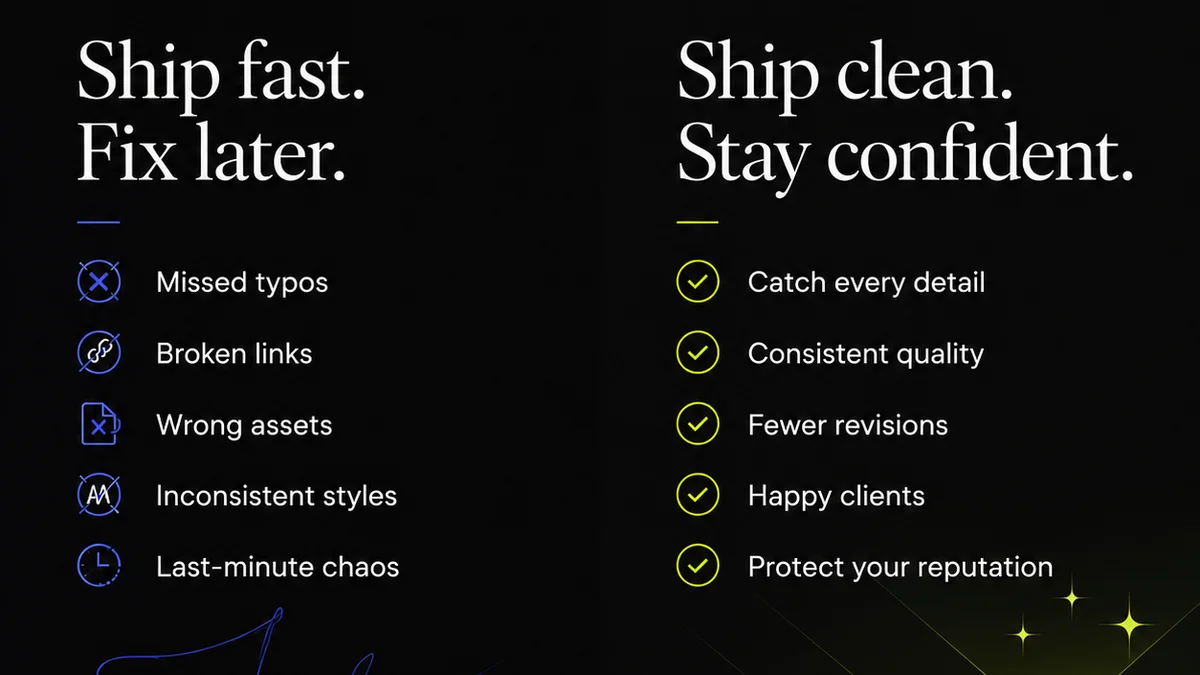
- Quality Checks: Ensure creative output aligns with the strategic insights derived from your AI research and client briefs, maintaining brand consistency and strategic integrity.
AI gives you the 'what' and 'why'; Revue helps you manage the 'how' and 'when' of bringing your marketing initiatives to life, ensuring quality and efficiency.
7. Ethical Considerations and Data Privacy
As you leverage AI search, be mindful of ethical implications. Understand the data sources the AI is using and be aware of potential biases.
For B2B, this also extends to how you use competitive intelligence. Focus on publicly available information and avoid any practices that could be construed as unethical or illegal.
7.1. Bias Detection
Be critical of AI outputs. If a conclusion seems one-sided or overly simplistic, probe deeper. Ask the AI to consider alternative perspectives or provide data that supports counterarguments.
7.2. Data Handling
Never input confidential client or company data into public AI search tools unless you fully understand their data privacy policies. Use anonymized data or internal, secure AI solutions if available.
8. The Human Element: AI as a Co-Pilot
The most effective use of AI search in B2B marketing isn't about replacing human strategists, but augmenting them. AI is a powerful co-pilot, handling the heavy lifting of data processing and pattern recognition.
Your role as a marketer is to provide the strategic direction, interpret the findings, and make the final decisions. AI can suggest, but you must steer.
8.1. Strategic Oversight
AI can identify trends, but it can't understand the nuanced market dynamics, long-term brand vision, or specific business context like a human expert can. That strategic oversight remains critical.
8.2. Creativity and Intuition
While AI can generate content ideas, true marketing creativity—the kind that resonates deeply with audiences and builds brands—still relies on human intuition, empathy, and storytelling skills.
Final Thought
AI search is not a magic wand. It’s a sophisticated tool that, when wielded with a clear strategy and a critical eye, can unlock significant competitive advantages for B2B marketers. The real question isn't whether AI search will change B2B marketing, but how effectively you'll adapt your processes to harness its power.
Frequently asked questions
What is the primary benefit of using AI search for B2B marketing?
The primary benefit is gaining deeper, faster insights into market trends, competitor activities, and customer needs, which can inform more effective marketing strategies and content development.
How can I ensure the information I get from AI search is accurate?
Always cross-reference critical data points with reputable sources. Treat AI output as a starting point and use human expertise and established industry knowledge to validate findings.
What makes a good AI search prompt for B2B marketing?
A good prompt is specific, provides context (like audience and industry), clearly defines the task, and may include constraints on format or tone. Iterating on prompts is also key.
Can AI search replace human marketers in B2B?
No, AI search is best viewed as a co-pilot. It augments human capabilities by processing vast data, but strategic oversight, creativity, intuition, and final decision-making remain with human marketers.
How does Revue integrate with AI search insights for B2B marketing?
Revue helps manage the execution of marketing strategies derived from AI insights. It centralizes client feedback, tracks revisions and approvals for creative assets, and ensures quality checks, bridging the gap between insight and output.