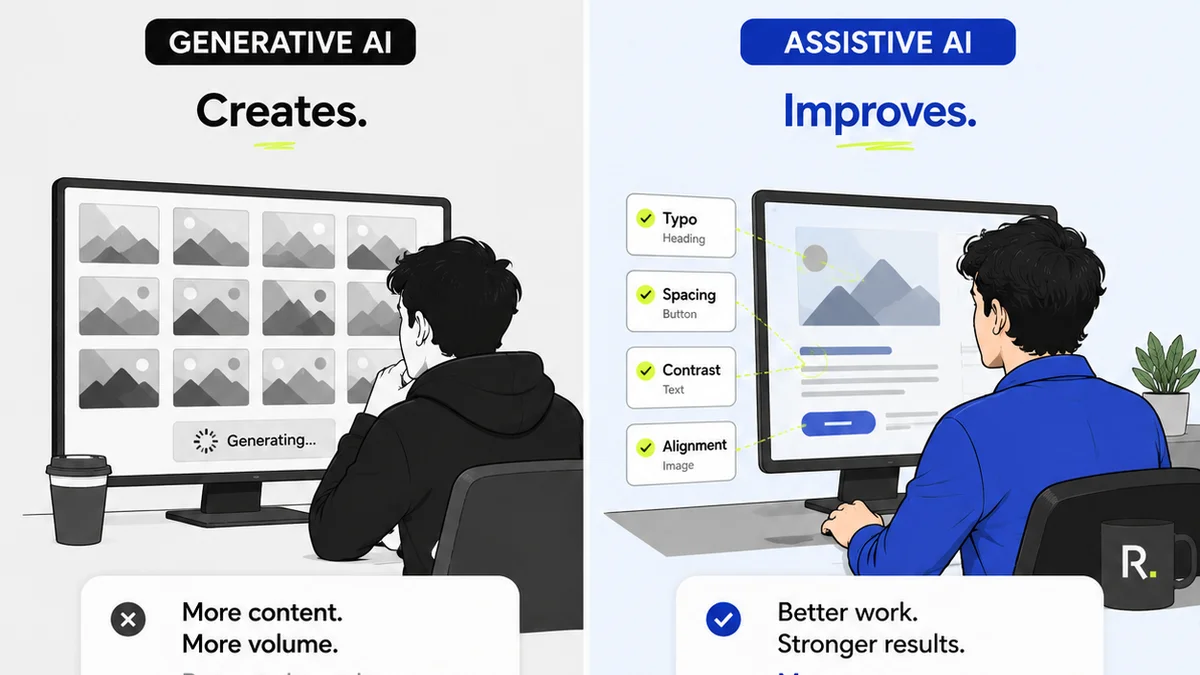
Everyone’s talking about AI tools for marketers. They promise to automate, optimize, and accelerate everything from content creation to campaign analysis. It sounds like a magic bullet for overloaded teams.
None of that is wrong. But it’s incomplete.
The real story isn’t about the tools themselves. It’s about how you wield them.
The Hard Truth: AI Amplifies, It Doesn’t Replace
AI tools can churn out copy, generate images, and analyze data at speeds humans can’t match. But they lack critical human judgment, strategic insight, and brand nuance. Simply plugging in an AI tool won’t fix broken workflows or guarantee better results. It will just make existing processes faster, for better or worse.
The true benefit of AI for marketers lies in its ability to augment human capabilities, not replace them. This requires a strategic, workflow-centric approach.
1. Define Your Actual Problems, Not Just Your AI Aspirations
Most teams jump into AI tools chasing the latest trend. They want AI for content, AI for social media, AI for SEO. But this is backward.
The first step is identifying your biggest operational bottlenecks and strategic challenges. Where are you losing time? Where are errors most common? What tasks are repetitive and draining your team’s creative energy?
Common Bottlenecks AI Can Address:
- Manual data entry and reporting.
- Drafting initial content outlines or variations.
- Summarizing long documents or research.
- Identifying basic keyword opportunities.
- Generating simple image assets for social media.
- Proofreading and basic grammar checks.
If your problem isn’t on this list, an AI tool might not be the right solution. Focus on the pain points first. Then, see if AI offers a practical fix.
2. Master Prompt Engineering: The Art of Asking
The quality of AI output is directly proportional to the quality of your input. This is where prompt engineering comes in. It’s not just about asking a question; it’s about providing context, defining constraints, and specifying desired outcomes.
Think of it like briefing a junior designer or copywriter. You wouldn’t just say “design a logo.” You’d provide brand guidelines, target audience, desired mood, and examples.
AI prompts require a similar level of detail.
Key Elements of Effective Prompts:
- Role: “Act as a senior copywriter specializing in B2B SaaS.”
- Task: “Write three social media post variations.”
- Context: “The posts are for a campaign targeting marketing managers about our new client feedback tool.”
- Constraints: “Each post should be under 150 characters, include a CTA to learn more, and avoid jargon.”
- Tone: “Maintain a confident, informative, and slightly contrarian tone.”
- Format: “Output as a bulleted list.”
Invest time in learning how to craft better prompts. It’s the most crucial skill for unlocking AI’s potential.
3. Integrate AI into Existing Workflows, Don't Force New Ones
The biggest mistake is treating AI tools as separate silos. They should enhance, not disrupt, your established processes. Look for opportunities to weave AI into your current steps.
For instance, instead of asking AI to write a full blog post, use it to generate an outline or draft the introduction based on your research notes. Then, your human writer refines, expands, and adds their unique voice.
Consider how AI can assist at each stage:
- Strategy: AI can analyze market trends or competitor messaging (with caution).
- Ideation: Brainstorming headlines, taglines, or content angles.
- Creation: Drafting initial copy, generating image concepts, creating code snippets.
- Optimization: Suggesting SEO improvements, refining ad copy.
- Analysis: Summarizing campaign performance data, identifying patterns.
The goal is seamless integration. The AI should feel like a helpful assistant, not an alien technology.
4. Prioritize Human Oversight and Editing
AI-generated content is a draft, never a final product. It can be generic, factually inaccurate, or misaligned with your brand voice. Human review is non-negotiable.
This means your team needs time allocated for editing, fact-checking, and brand alignment. Don't expect to publish AI output directly.
Think of AI as a powerful intern. It can do a lot of the legwork, but a senior team member must review, refine, and approve the final output.
Stages of Human Oversight:
- Fact-Checking: Verify all claims, statistics, and information.
- Brand Voice Alignment: Ensure the tone, style, and messaging match your brand identity.
- Strategic Relevance: Does the output serve the campaign goals?
- Originality Check: While AI doesn't plagiarize in the traditional sense, ensure the output is unique and adds value.
- Ethical Review: Consider potential biases or unintended consequences.
This oversight is where strategic value is added. It’s where your agency’s expertise truly shines.
5. Choose Tools Wisely: Function Over Flash
The AI tool market is exploding. New platforms and features appear daily. It’s easy to get distracted by the latest shiny object.
Instead, focus on tools that solve your specific problems and integrate well with your existing tech stack. Consider:
- Use Case Specificity: Does the tool excel at the task you need (e.g., copywriting, image generation, data analysis)?
- Integration Capabilities: Can it connect with your project management software, design tools, or CRM?
- Data Security and Privacy: How is your data handled? This is critical for client work.
- Ease of Use: How steep is the learning curve for your team?
- Cost-Effectiveness: Does the ROI justify the subscription fee?
Don’t adopt a tool just because it’s popular. Test it rigorously. Does it actually make your team more efficient and effective?
6. Train Your Team: Skill Up, Don't Fear Out
There’s a natural anxiety that AI will make jobs obsolete. The reality is that AI is shifting the skills required, not eliminating the need for human talent.
Your team needs training not just on *how* to use AI tools, but *why* and *when*. They need to understand the principles of prompt engineering, critical evaluation of AI output, and strategic integration.
Focus on upskilling:
- Prompt Writing Workshops.
- AI Ethics and Bias Training.
- Sessions on Integrating AI into Specific Tasks (e.g., content creation, market research).
- Encourage experimentation and sharing best practices within the team.
The agencies and teams that thrive will be those that embrace AI as a partner, empowering their people with new skills.
Where Revue Fits In
AI tools can accelerate content creation and data analysis, but the crucial steps of client communication, feedback consolidation, and final approval remain complex human endeavors. This is where Revue excels.
While AI might draft an initial marketing brief or suggest campaign ideas, getting that aligned with client expectations is where the real work happens. Revue provides a centralized hub for all client feedback. No more hunting through endless email threads or scattered Slack messages.
Our platform streamlines the revision and approval process, ensuring clarity and accountability. When AI-generated assets or copy need client sign-off, Revue makes it simple to gather precise feedback, track revisions, and get definitive approvals. This visibility is key to preventing miscommunication and ensuring the final creative output meets strategic goals and client needs.
Furthermore, Revue’s structured review process can act as a final quality check, ensuring that even AI-assisted work adheres to brand standards and project requirements before final delivery.
7. Measure Impact, Not Just Adoption
Are your AI tools actually moving the needle? It’s easy to track how many team members are using a tool, but harder to measure its true impact on productivity, quality, and business outcomes.
Define clear KPIs before you implement AI. Are you aiming to:
- Reduce content production time by X%?
- Increase campaign engagement by Y%?
- Decrease errors in data reporting by Z%?
- Improve client satisfaction scores related to feedback turnaround?
Regularly review these metrics. If an AI tool isn’t delivering measurable improvements, re-evaluate your strategy or the tool itself.
Final Thought
AI tools are powerful additions to a marketer’s toolkit, but they are not a substitute for strategic thinking, human creativity, or rigorous process. The real magic happens when AI augments your team’s abilities, streamlining the mundane so they can focus on the meaningful.
Are you using AI to amplify your team’s best work, or just to do more of the same, faster?
Frequently asked questions
How do I choose the right AI tools for my marketing team?
Focus on tools that solve specific, identified problems within your workflow. Prioritize function over flash, and consider integration capabilities, data security, ease of use, and cost-effectiveness. Test tools rigorously before widespread adoption.
Is prompt engineering really that important for AI tools?
Yes, prompt engineering is crucial. The quality of AI output directly depends on the quality of your input. Crafting detailed, contextual prompts with clear objectives is key to getting useful results.
Will AI replace marketers?
AI is more likely to augment than replace marketers. It automates repetitive tasks and speeds up processes, but human strategic insight, creativity, judgment, and client relationship skills remain essential. The focus is shifting to upskilling.
How can AI tools improve client feedback processes?
While AI can help draft initial communications or analyze feedback trends, the core of client feedback and approval management requires human interaction and clear process. Tools like Revue centralize this, ensuring AI-assisted work is properly reviewed and approved.