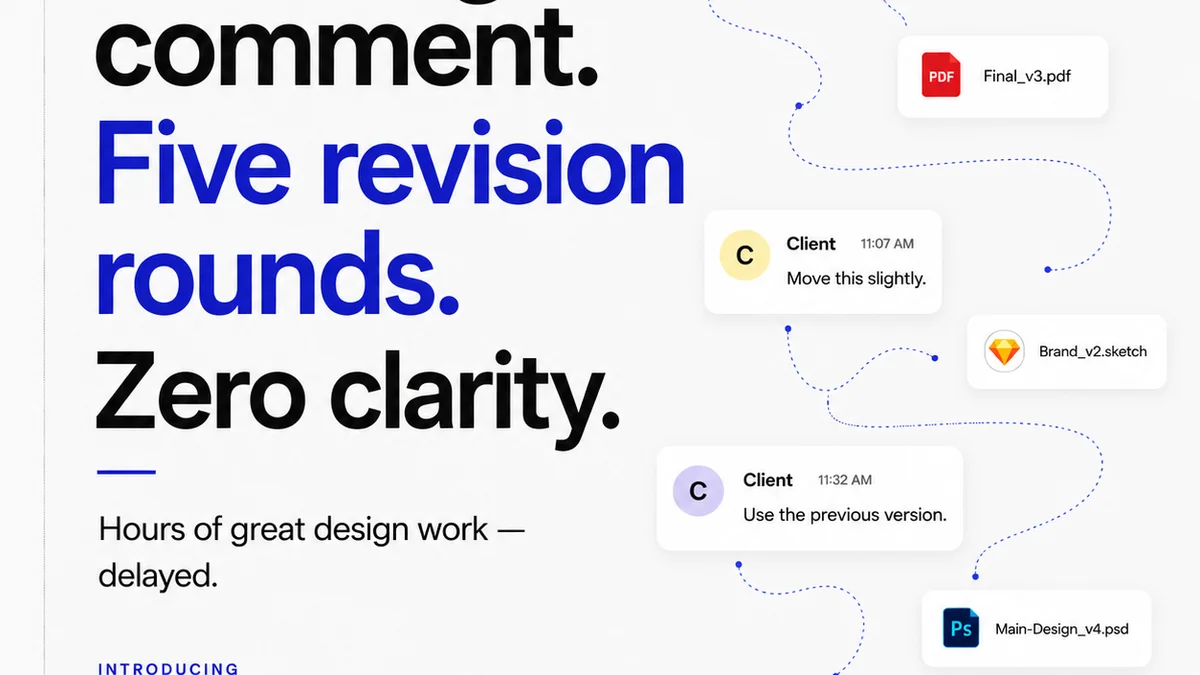
Everyone thinks they know how to give feedback. Just leave a comment, right? Maybe a sticky note. Perhaps a quick email summary.
None of that is wrong. But it’s incomplete.
The hard truth? Your annotation workflow is probably costing you time, creating confusion, and damaging client relationships. It’s not just about *leaving* feedback; it’s about how that feedback is gathered, organized, and acted upon.
1. Defining
Frequently asked questions
What is an annotation workflow?
An annotation workflow is a structured process for collecting, organizing, and acting on feedback provided on creative assets. It goes beyond simply leaving comments to include clear guidelines on who can annotate, when, how, and how that feedback is consolidated and addressed.
Why is a structured annotation workflow important?
A structured workflow ensures clarity, reduces misinterpretation, minimizes back-and-forth, speeds up revision cycles, and improves overall project efficiency. It leads to better client satisfaction and higher quality final deliverables.
How can I improve my team's annotation process?
Start by defining clear roles and responsibilities, establishing communication protocols, using a centralized platform for feedback, setting deadlines for feedback, and creating a system for consolidating and prioritizing annotations.
What are the common pitfalls of poor annotation workflows?
Common pitfalls include scattered feedback across multiple channels (email, chat, calls), vague or subjective comments, lack of a single source of truth, delayed feedback, and conflicting instructions from different stakeholders.