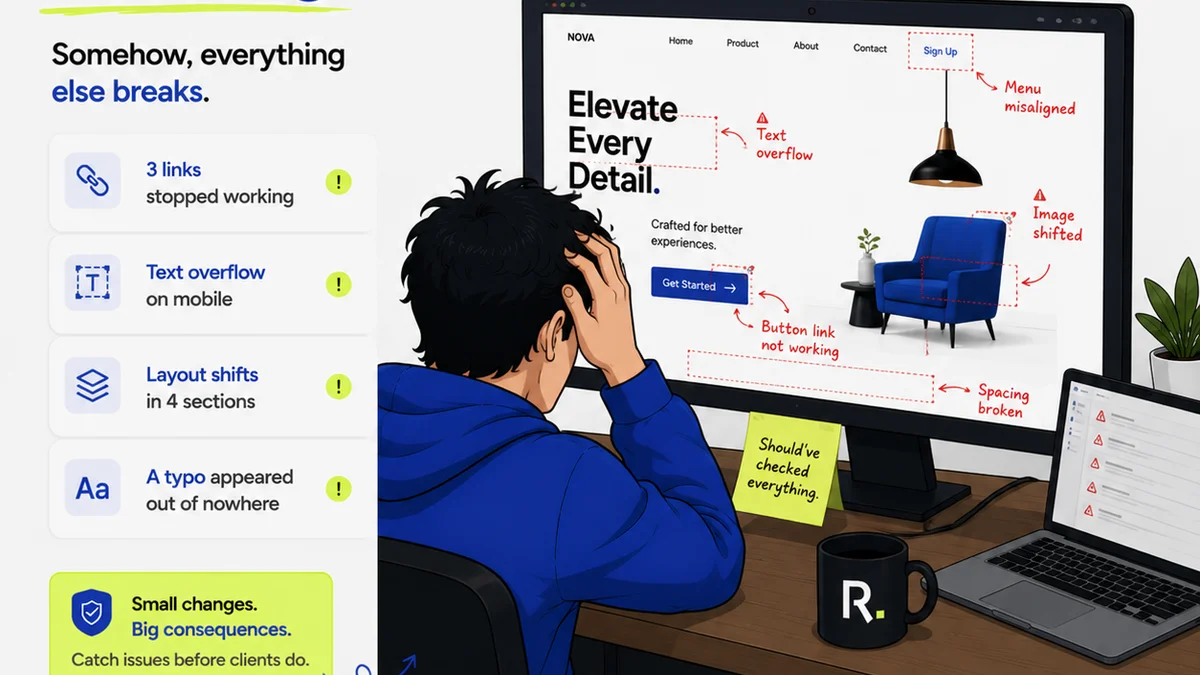
You think you know what slows down your agency. You track project completion times, client response rates, and maybe even how long it takes for a designer to finish a mock-up. None of that is wrong. But it’s incomplete.
The real killer of agency velocity isn’t the creative process itself. It’s the approval bottleneck. That insidious drag on timelines, budgets, and team morale happens when work is waiting, not working.
Identifying and fixing this bottleneck requires looking beyond surface-level project management. It demands a focus on specific, actionable metrics that reveal exactly where and why approvals are getting stuck.
1. Understanding the Approval Bottleneck
What exactly is an approval bottleneck in an agency context? It’s any point in the workflow where creative assets or project stages are held up waiting for feedback, revisions, or final sign-off from clients, stakeholders, or internal teams.
These aren't just minor delays. They cascade. A delayed approval means a delayed launch, a missed marketing window, or client dissatisfaction. It means your team is idle, waiting for the green light, while billable hours tick away unproductively.
Common Symptoms of Approval Bottlenecks
- Projects consistently running over deadline.
- Team members reporting they’re “waiting on client feedback” for days.
- Last-minute scope creep due to prolonged revision cycles.
- Burnout among creative staff who are often on standby.
- Client frustration with slow progress.
- Difficulty in forecasting project completion dates accurately.
These symptoms are often dismissed as “just part of the agency business.” That’s a dangerous assumption. It means you're accepting inefficiency as the norm.
2. Key Metrics for Approval Bottlenecks
To conquer the approval bottleneck, you need to measure it effectively. This isn't about counting how many revisions you’ve made. It’s about understanding the *time* and *frequency* of delays.
Time-Based Metrics
These metrics focus on how long work sits idle, waiting for a decision.
- Average Turnaround Time (ATT) for Feedback: The average time it takes from when feedback is requested to when it’s received. This is crucial. Is it 24 hours? 48? A week?
- Average Turnaround Time (ATT) for Approval: Similar to feedback ATT, but specifically for final sign-off. This often reveals a different, perhaps longer, delay.
- Time Spent in Review Stage: The total duration a project or asset spends in a defined review or approval phase, from start to finish.
- Idle Time Percentage: The percentage of total project time that an asset or task was waiting for approval, rather than being actively worked on.
Frequency and Volume Metrics
These help identify patterns and potential root causes.
- Number of Review Cycles Per Project: A high number might indicate unclear briefs, indecisive clients, or scope creep.
- Frequency of Approval Delays: How often do specific clients or internal stakeholders miss agreed-upon feedback windows?
- Percentage of Projects with Approval Delays: What’s the overall impact on your project portfolio?
Focusing on these metrics moves you from guessing to knowing. You can pinpoint where the friction is most intense.
3. Tools to Track Approval Bottleneck Metrics
Spreadsheets are the enemy of timely data. You need integrated tools that capture these metrics automatically or with minimal manual input.
Project Management Software (with caveats)
Many PM tools offer some level of tracking for task completion and deadlines. However, they often lack granular insight into *why* a task is delayed, particularly the specific wait time for client approvals.
Look for PM tools that allow for custom status fields (e.g., “Awaiting Client Feedback,” “Awaiting Internal Approval”) and can report on the duration of these specific statuses. Tools like Asana, Monday.com, or Wrike can be configured, but require discipline.
Dedicated Creative Workflow & Proofing Tools
This is where the magic happens. These platforms are built for the creative process and are designed to track feedback and approvals.
Revue, for example, centralizes client feedback, allowing for clear version control and explicit approval tracking. When feedback is requested, the system logs it. When it’s given, it’s logged. When approval is granted, it’s logged. This creates an irrefutable audit trail and provides the data needed for these bottleneck metrics.
Other proofing tools like Filestage or Frame.io (for video) excel at consolidating comments and tracking review stages, which directly informs ATT metrics.
Time Tracking Software
While not directly for approvals, integrated time tracking can supplement your data. If your team logs time spent *waiting* for feedback, you can aggregate this to quantify the cost of delays.
Tools like Toggl Track or Harvest can be used, but require explicit instruction for your team to log “waiting” time accurately. This is often less reliable than automated tracking within a workflow tool.
CRM Data
Your Customer Relationship Management (CRM) system can sometimes offer clues. Look at the communication logs with clients. How long do they typically take to respond to critical emails about project status or approvals?
This is more of a qualitative indicator unless your CRM has advanced workflow automation that logs response times on specific requests.
The best approach is often a combination. Use a dedicated creative workflow tool for the core approval process, and potentially integrate with your PM or time tracking software for broader context.
4. Analyzing and Acting on Your Data
Collecting metrics is only half the battle. The real win comes from analysis and action.
Identify Your Biggest Offenders
Are delays concentrated with one specific client? Is a particular internal team consistently slow to approve? Are certain types of projects (e.g., website designs vs. social media graphics) always subject to longer review cycles?
Drill down. The data will point you to the outliers. These are your prime targets for process improvement.
Quantify the Cost
Translate delays into dollars. If a project is delayed by 3 days, and your team’s blended hourly rate is $X, what’s the direct cost of that idle time? Add in the potential lost revenue from not launching on time or the cost of expedited work later.
This makes the problem tangible and justifies investment in solutions.
Optimize Client Communication
If clients are the bottleneck, refine your communication strategy. Are briefs crystal clear? Are feedback instructions unambiguous? Are you setting realistic expectations for turnaround times upfront?
Consider implementing automated reminders through your workflow tool. Clearly state the expected feedback turnaround time in your project proposals and kickoff meetings.
Streamline Internal Handoffs
If internal teams are the bottleneck, examine your internal processes. Is there a clear owner for approvals at each stage? Are reviewers equipped with the context they need to make decisions quickly?
Establish Service Level Agreements (SLAs) for internal feedback and approvals. Make sure the right people are involved early.
Refine Your Workflow
Sometimes the bottleneck isn’t a person, but the process itself. Are you asking for too many rounds of feedback? Is the review process too complex?
Use the data to simplify. Can you combine review stages? Can you implement a “one-and-done” feedback rule for certain deliverables?
5. Where Revue Fits In
Revue is built from the ground up to tackle the inefficiencies that plague creative workflows, with a particular focus on feedback and approvals.
By centralizing all client feedback and revision history within a single platform, Revue eliminates the chaotic email chains and scattered documents that breed delays. Every comment, every change request, every approval is logged and tracked.
This provides the granular data you need to accurately measure approval turnaround times and identify bottlenecks. When a designer uploads a new version, Revue clearly tracks when it was sent for review, when feedback was provided, and when final approval was given.
This visibility empowers you to:
- Automate Reminders: Gently nudge clients or internal stakeholders when feedback is due.
- Visualize Progress: See at a glance which assets are awaiting review and for how long.
- Generate Reports: Understand average feedback times per client or project type.
- Maintain Version Control: Ensure everyone is working from the latest approved version, reducing confusion and rework.
Revue transforms the amorphous problem of “slow approvals” into a measurable, manageable process. It’s about bringing clarity and control to the most critical juncture of your agency’s output.
6. Final Thought
The best approval bottleneck metrics tools aren't just about data collection; they're about driving decisive action. They reveal the hidden drags on your agency’s potential.
Are you measuring what truly matters, or just what’s easy to count?
Frequently asked questions
What is an approval bottleneck in an agency?
An approval bottleneck occurs when work (creative assets, project stages) is significantly delayed while waiting for feedback, revisions, or final sign-off from clients or internal stakeholders. It halts progress and impacts timelines and budgets.
What are the most important metrics for tracking approval bottlenecks?
Key metrics include Average Turnaround Time (ATT) for feedback and approvals, Time Spent in Review Stage, Idle Time Percentage, Number of Review Cycles, and Frequency of Approval Delays. These focus on the duration and frequency of waiting periods.
Can standard project management tools track approval bottlenecks effectively?
Standard PM tools can track deadlines but often lack the granularity to measure *why* tasks are delayed, specifically the time spent waiting for client approvals. Dedicated creative workflow or proofing tools are generally more effective for this.
How can I use approval bottleneck data to improve my agency?
Analyze the data to identify specific clients, teams, or project types causing delays. Quantify the cost of these delays, then optimize client communication, streamline internal handoffs, and refine your review processes based on these insights.
How does Revue help with approval bottlenecks?
Revue centralizes feedback and approval tracking, creating a clear audit trail. It logs when feedback is requested, received, and approved, providing the data needed to measure turnaround times and identify specific bottlenecks within the creative workflow.