Everyone thinks B2B SaaS design is about slick dashboards and intuitive workflows. And that's not wrong. But for the telecom industry, that's only scratching the surface.
The real challenge in B2B SaaS design for telecom lies in managing immense complexity, ensuring rock-solid reliability, and building trust with clients who manage critical infrastructure. It’s a different beast entirely.
1. Understanding the Telecom Landscape
Telecom B2B SaaS serves a unique, demanding market. Think network operators, infrastructure providers, and enterprise communication services. Their core business relies on uptime, scalability, and intricate technical processes. Your design must reflect this reality.
What does this mean day-to-day?
- Network monitoring tools that need to display vast amounts of real-time data without overwhelming users.
- Provisioning and management platforms for complex service configurations.
- Billing and analytics systems that must handle intricate pricing models and high transaction volumes.
- Customer support portals where technical issues demand clear, actionable information.
The user isn't a casual browser. They are an engineer, an operations manager, a finance executive. Their goals are efficiency, cost reduction, and service continuity.
The Stakes Are High
A bug in a consumer app might mean a lost sale. A bug in telecom SaaS can mean network outages, lost revenue, and significant reputational damage for the client. This gravity influences every design decision.
2. Core Design Principles for Telecom SaaS
Forget fleeting UI trends. Telecom B2B SaaS design demands a focus on fundamental principles that ensure usability, reliability, and security.
Clarity Over Clutter
Information density is often necessary, but clarity is paramount. Users need to find what they need instantly, especially during critical incidents. This means:
- Consistent navigation.
- Clear labeling of functions and data.
- Prioritized information hierarchy.
- Visual cues for status and alerts that are unambiguous.
Think of the Nielsen Norman Group's guidelines on error prevention and clear feedback. They are timeless for a reason.
Robustness and Reliability
The software *must* work. Period. Design for failure, not just success. This involves:
- Graceful error handling and recovery mechanisms.
- Redundancy in critical functions where possible.
- Clear indicators of system health.
- Minimizing points of failure in the user interface itself.
Users need to trust that the tool won't crash or provide faulty data when they are under pressure.
Scalability and Performance
Telecom networks and customer bases grow. The SaaS must scale with them. Design considerations include:
- Efficient data handling and rendering.
- Optimized workflows that don't bog down under load.
- Modular design that allows for feature expansion without compromising core performance.
Slow interfaces are unacceptable when managing critical services.
Security and Compliance
This is non-negotiable. Design must incorporate security from the ground up:
- Clear user role and permission management.
- Secure data input and output.
- Auditable logs for all critical actions.
- Consideration for industry-specific compliance standards.
Trust is built on security. A breach on your client's end, facilitated by your SaaS, is a disaster.
3. User Experience (UX) in a Technical Domain
UX in telecom B2B SaaS is about enabling complex tasks with minimal friction. It’s less about delight and more about dependable efficiency.
Task-Oriented Design
Focus on the primary tasks users need to accomplish. Map out workflows for:
- Network monitoring and diagnostics.
- Service order creation and fulfillment.
- Troubleshooting and incident resolution.
- Reporting and analytics.
Each workflow should be as streamlined as possible. Remove unnecessary steps. Provide context-sensitive help.
Data Visualization for Decision Making
Telecom generates massive amounts of data. Effective visualization is key to making that data actionable.
- Use charts and graphs that clearly represent trends and anomalies.
- Allow for drill-downs into specific data points.
- Provide customizable dashboards so users can monitor what matters most to them.
Think about how tools like Tableau or Splunk present complex data. The principles of clarity and context apply.
Onboarding and Training
Complex systems require effective onboarding. Design should facilitate:
- Intuitive initial setup and configuration.
- Clear in-app guidance and tutorials.
- Accessible documentation and knowledge bases.
Users shouldn't need an advanced degree just to get started.
4. User Interface (UI) Design for Functionality
UI in this space is the bridge between the user's intent and the system's capability. It needs to be functional, informative, and robust.
Information Architecture
A well-defined information architecture is critical for navigating complex systems. Users must be able to locate features and information logically and predictably.
- Consistent terminology.
- Logical grouping of related functions.
- Clear visual hierarchy to guide the eye.
A confusing IA leads to errors and frustration.
Visual Design for Clarity
While aesthetics are secondary to function, good UI design enhances usability.
- Use color strategically to indicate status, alerts, or categories.
- Employ typography that is legible and supports information hierarchy.
- Maintain consistent spacing and alignment for a clean, organized look.
Avoid overly decorative elements that can distract from critical information.
Interactive Elements
Buttons, forms, and controls must be:
- Clearly identifiable as interactive.
- Sufficiently sized for easy interaction.
- Provide immediate visual feedback upon interaction.
A button that looks like text is a problem. A form field that doesn't clearly indicate validation errors is worse.
5. Where Revue Fits In
Managing the design process for complex B2B SaaS in telecom presents unique challenges. Client stakeholders often have deep technical expertise and specific operational needs. Ensuring their feedback is captured accurately and acted upon efficiently is crucial.
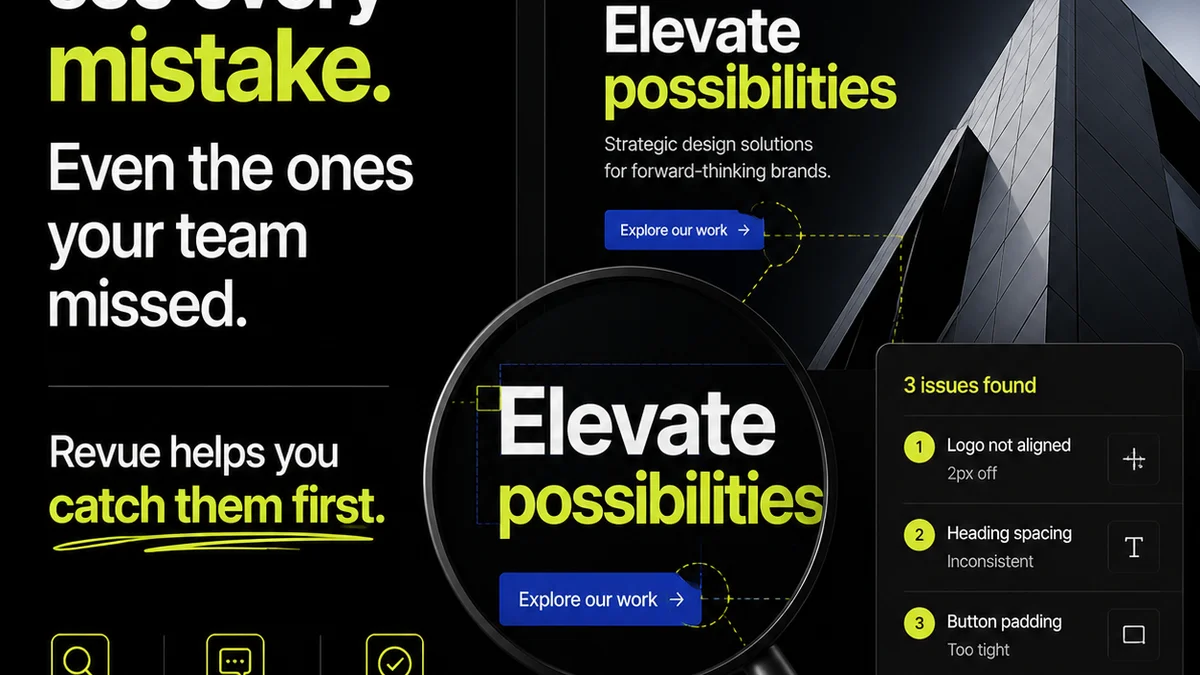
Revue helps streamline this by centralizing client feedback directly on creative assets. Instead of scattered emails or lengthy document reviews, stakeholders can provide contextual comments right on mockups, prototypes, or live builds.
This visibility into revisions and approvals means fewer misunderstandings and faster iteration cycles. For telecom SaaS, where precision is key, having a clear audit trail of feedback and sign-offs ensures that critical requirements aren't missed during the development process.
It helps maintain design integrity while accommodating necessary client input, ultimately leading to a more robust and user-accepted final product.
6. Common Pitfalls to Avoid
Designing B2B SaaS for telecom is fraught with potential missteps. Awareness is the first step to avoidance.
Assuming User Familiarity
Don't assume clients understand your design conventions or jargon. They understand their operational domain; you need to bridge the gap.
Over-Complicating Workflows
Just because a process is complex in reality doesn't mean the interface needs to reflect every nuance. Simplify where possible without losing critical functionality.
Ignoring Edge Cases
Telecom environments are full of edge cases. Your design must account for them, especially in error states and recovery scenarios.
Lack of Collaboration
Design cannot happen in a vacuum. Continuous collaboration with product managers, engineers, and importantly, the client, is essential.
Neglecting Performance
A beautiful interface that is slow to load or respond will be quickly abandoned. Performance is a feature, not an afterthought.
7. Final Thought
B2B SaaS design in telecom isn't just about aesthetics; it's about engineering trust and enabling critical operations. It demands a disciplined approach, deep empathy for the user's high-stakes environment, and a relentless focus on clarity and reliability.
How can your design process better account for the operational realities and critical needs of the telecom sector?
Frequently asked questions
What are the key differences between B2B SaaS design for telecom and other industries?
Telecom B2B SaaS design prioritizes extreme reliability, manages highly complex technical processes, and operates in a high-stakes environment where system failures have significant consequences. The focus is on operational continuity and trust, rather than just user delight or broad consumer adoption.
How important is data visualization in telecom SaaS?
Extremely important. Telecom generates vast amounts of data related to network performance, service delivery, and customer usage. Effective data visualization is crucial for users to quickly understand trends, identify anomalies, and make informed operational decisions.
What are the biggest UI/UX mistakes to avoid in telecom SaaS design?
Common mistakes include over-complicating workflows, assuming user familiarity with complex technical concepts, neglecting edge cases and error handling, poor information architecture, and failing to prioritize performance. These can lead to errors, frustration, and a lack of trust in the software.
How does a tool like Revue help with B2B SaaS design in telecom?
Revue helps centralize client feedback on design assets, providing clear visibility into revisions and approvals. This is vital for telecom SaaS where precision and stakeholder alignment are critical, reducing misunderstandings and ensuring complex requirements are met efficiently.