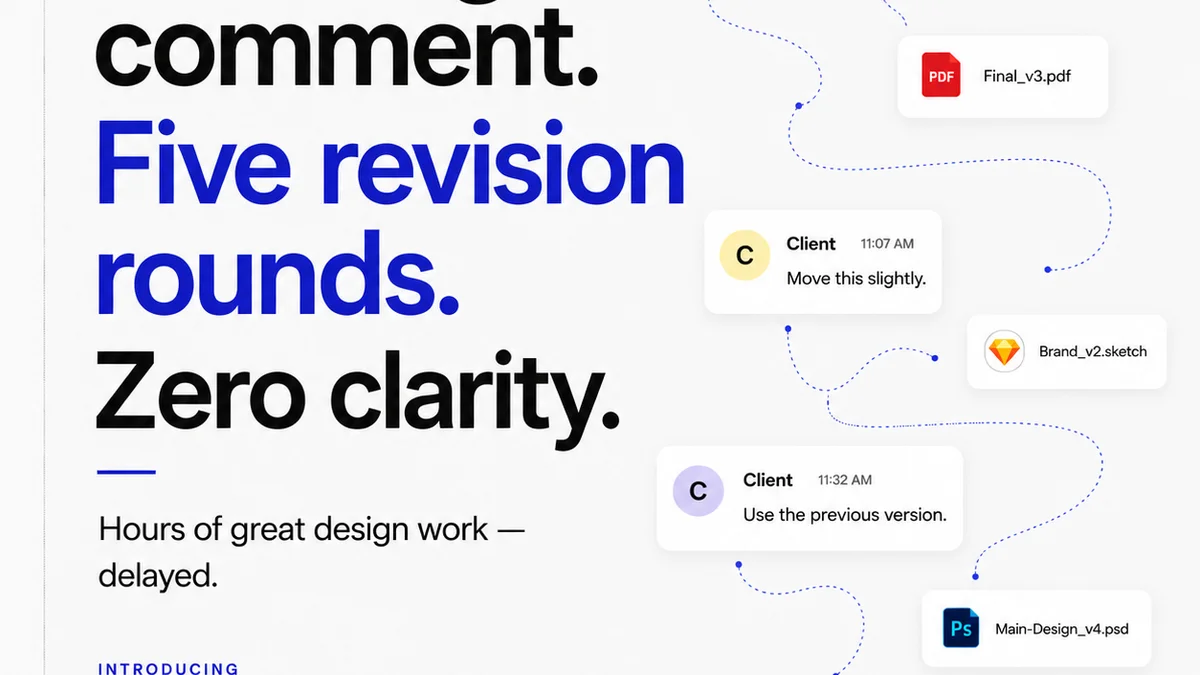
You think the best agency client feedback tools are about slick interfaces and fancy features. None of that is wrong. But it’s incomplete.
The real win isn't just having the *tool*. It's about the *process* the tool enables.
1. The Deep Truth: Feedback Isn't the Problem, Communication Is
We often blame the tools when feedback gets messy. Emails get lost, Slack threads become unmanageable, and version control turns into a guessing game. We hunt for the next shiny object, hoping it will magically fix our workflow.
But the problem usually isn't the software itself. It's the underlying communication breakdown.
Clients and teams often operate with different assumptions, unspoken expectations, and varying levels of technical understanding. This gap is where feedback gets distorted, delayed, and downright damaging.
The best tools don't just *collect* feedback; they *structure* communication. They force clarity, create accountability, and build a shared understanding of the project's status.
2. Beyond Basic Proofing: What Truly Streamlines Feedback
Many tools offer basic proofing: markups on an image or PDF. That’s table stakes. The real value comes from features that address the *why* and *how* of feedback.
Centralized Hubs
Chasing feedback across email, Slack, Teams, and random cloud storage links is a productivity killer. A centralized platform is non-negotiable for US agencies managing multiple clients and projects.
- Consolidates all project communication.
- Provides a single source of truth for feedback and approvals.
- Reduces time spent searching for information.
Contextual Feedback
Feedback needs to be tied directly to the asset it concerns. Generic comments like “I don’t like this” are useless. Tools that allow commenting directly on specific elements—pixels, lines of text, frames—are far more effective.
- Pinpoint comments to exact locations.
- Eliminate ambiguity about what needs changing.
- Facilitate quicker, more accurate revisions.
Version Control and History
Knowing which version is the latest and having a clear record of all previous iterations is crucial. This prevents confusion and costly rework.
- Track all changes and revisions automatically.
- Easily revert to previous versions if needed.
- Maintain a clear audit trail for every decision.
Clear Approval Workflows
Ambiguity around sign-offs is a major bottleneck. Tools that formalize the approval process ensure everyone knows when a piece is truly approved and by whom.
- Define clear steps for client review and approval.
- Automate notifications for pending approvals.
- Prevent work from moving forward without explicit sign-off.
Integration Capabilities
Your feedback tool shouldn't exist in a silo. It needs to play nicely with your existing tech stack—project management, design tools, and communication platforms.
- Connect with tools like Asana, Trello, Slack, or Figma.
- Automate task creation based on feedback.
- Streamline the handoff from feedback to development.
3. Evaluating Tools: Beyond the Feature List
When looking for the best client feedback tools for your US agency, don't just tick boxes on a feature list. Consider these deeper operational aspects.
Client Usability
Is the tool intuitive for clients who might not be tech-savvy? A complex interface will create more friction than it solves. Clients need to be able to provide feedback easily, without a steep learning curve.
Team Adoption
Will your internal team actually use it? If it adds significant overhead or disrupts their existing workflow too much, adoption will be low. Look for tools that integrate smoothly or offer a clear benefit over current methods.
Scalability
Can the tool grow with your agency? Consider how it handles an increasing number of users, projects, and clients. Pricing models that penalize growth are a red flag.
Security and Compliance
For US agencies, data security is paramount. Ensure the tool meets industry standards for protecting client data and intellectual property.
4. Common Pitfalls to Avoid
Even with the right tools, bad habits can derail your feedback process. Watch out for these common traps:
- The Endless Revision Cycle: Not defining clear limits on revisions upfront.
- Ambiguous Feedback: Clients providing vague comments that require back-and-forth clarification.
- Feedback Silos: Feedback being scattered across multiple platforms, leading to missed comments.
- Lack of Ownership: No clear person responsible for gathering, interpreting, and actioning feedback.
- Ignoring the Brief: Feedback that deviates significantly from the original project scope without proper scope-change discussion.
5. Where Revue Fits In
Revue isn't just another proofing tool. It’s built to solve the core communication and workflow challenges that plague agency feedback processes.
It provides a centralized hub where all client feedback, revisions, and approvals live. No more digging through email chains or Slack messages.
Revue’s structured approach ensures feedback is contextual, actionable, and directly tied to the creative asset. This clarity drastically reduces misinterpretation and speeds up the revision process.
With clear visibility into revision history and approval status, you gain control and accountability. Everyone on the team, and the client, knows exactly where things stand.
This focus on streamlining the entire feedback loop—from initial comment to final sign-off—is what makes Revue a powerful solution for US creative agencies aiming for efficiency and client satisfaction.
Final Thought
Are you managing feedback, or is feedback managing you? The right tools, used with a clear process, can turn a notorious agency pain point into a competitive advantage. It’s time to move beyond simply collecting comments and start mastering communication.
Frequently asked questions
What are the key benefits of using dedicated client feedback tools for agencies?
Dedicated tools centralize communication, provide contextual feedback on specific assets, offer version control, formalize approval workflows, and integrate with other project management software. This leads to reduced ambiguity, faster revisions, fewer errors, and improved client satisfaction.
How can agencies ensure clients actually use the feedback tools effectively?
Choose tools with intuitive, user-friendly interfaces that require minimal training. Clearly communicate the benefits to clients and set expectations for how feedback should be submitted. Provide brief onboarding or a quick demo if necessary. The easier it is, the more likely clients are to adopt it.
What's the difference between basic proofing tools and comprehensive feedback platforms?
Basic proofing tools often focus solely on annotation (e.g., drawing on an image). Comprehensive platforms add layers of workflow management, version tracking, approval status, communication history, and integration capabilities, addressing the entire feedback and approval lifecycle, not just the markup stage.
How do client feedback tools help with version control?
Good feedback tools automatically track each revision made to an asset. They provide a clear history of changes, allowing users to see who made what changes, when, and why. This prevents confusion about which version is the current one and makes it easy to revert to older iterations if needed.