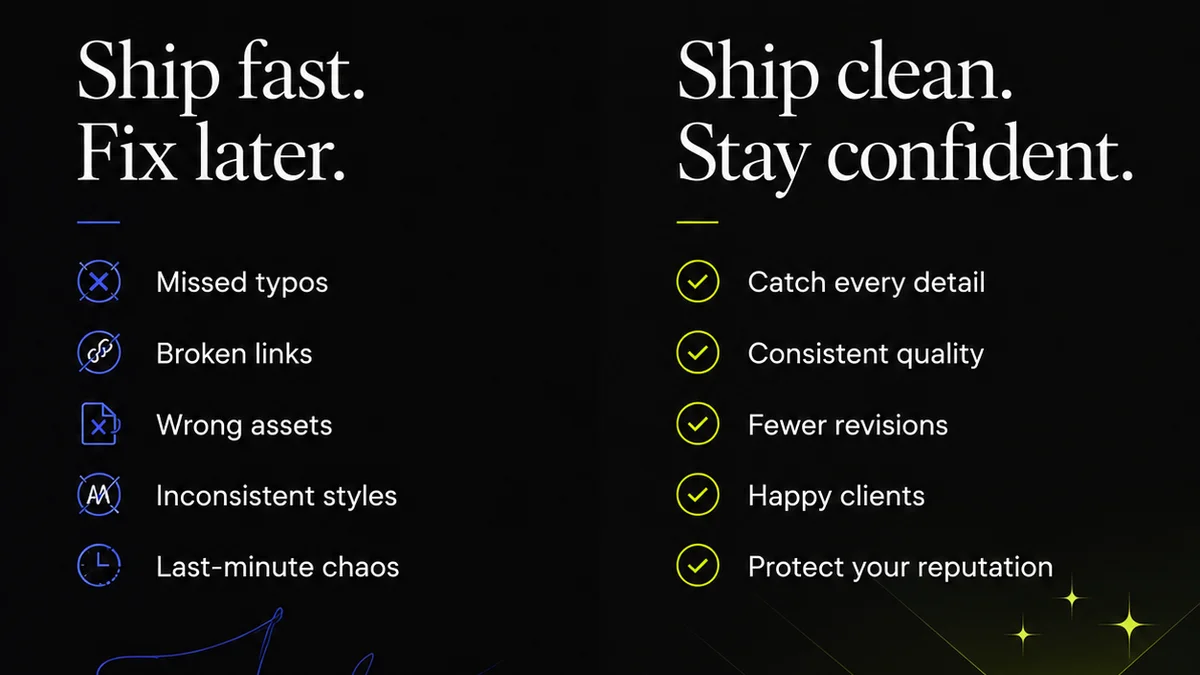
Everyone wants the best brand review software. The market is flooded with tools promising to streamline your creative process. They tout AI-powered insights, real-time collaboration, and endless integrations.
None of that is wrong. But it’s incomplete.
The real value of brand review software isn’t in a laundry list of features. It’s in how effectively it solves the core friction points in creative feedback and approval. The hard truth? Most teams are still bogged down by inefficient review cycles, lost feedback, and endless revision rounds, regardless of the software they use.
1. The Myth of the 'All-in-One' Solution
The assumption is that one piece of software can magically fix all your review woes. You buy the tool, you implement it, and suddenly feedback flows like water, approvals happen overnight, and clients are ecstatic.
This rarely happens. Why?
- Because creative workflows are complex and varied.
- Because client communication has nuances no software can fully replicate.
- Because tools often become another silo if not integrated thoughtfully.
The focus should shift from finding the *perfect* tool to finding the *right* tool that integrates into your existing, or slightly optimized, process. It’s about solving specific problems, not finding a silver bullet.
2. Defining 'Brand Review' in Today's Agency
What does 'brand review' even mean for a modern creative agency or in-house team? It’s more than just looking at a logo or a campaign. It’s about ensuring consistency, adherence to guidelines, and strategic alignment across every touchpoint.
Consistency is King
A strong brand isn't built on one great ad. It's built on thousands of consistent micro-interactions. Your review process must catch deviations before they hit the market.
This means reviewing:
- Logos and visual identity elements
- Website layouts and user interfaces
- Marketing collateral (brochures, social posts, ads)
- Video content and motion graphics
- Brand voice and messaging
- Internal style guides and documentation
The Strategic Layer
Is the work on-brief? Does it align with the client’s current business objectives? Does it resonate with the target audience?
These aren't just subjective opinions. They are critical strategic checks that require context. Software can facilitate these discussions, but it can’t replace the strategic thinking behind them.
3. Core Functionality That Actually Moves the Needle
Forget the bells and whistles for a moment. What are the fundamental capabilities that make brand review software truly effective?
Centralized Feedback Collection
Scattered feedback via email, Slack, Google Docs, and random PDF annotations is a recipe for disaster. The best software consolidates all feedback in one place, tied directly to the creative asset being reviewed.
This means:
- A single source of truth for all comments.
- Clear attribution of who said what.
- Timestamped feedback for easy reference.
- Reduced risk of missed comments or conflicting instructions.
Revision and Approval Tracking
Understanding the history of changes is crucial. Who requested what? Was it implemented? What was the outcome of the last review cycle?
Look for features that provide:
- Version control for creative assets.
- Clear visual indicators of changes made.
- Defined approval workflows with clear sign-off stages.
- Audit trails of all revisions and approvals.
This visibility prevents endless back-and-forth and clarifies ownership.
Quality Assurance (QA) Tools
Beyond subjective feedback, objective quality checks are vital. Does the design meet technical specifications? Is the copy error-free? Does it meet accessibility standards?
Effective software should support or integrate with QA processes for:
- Visual accuracy and pixel-perfect comparisons.
- Spell-checking and grammar verification.
- Checking against brand guidelines (e.g., color palette, typography).
- Accessibility checks (e.g., contrast ratios, alt text). For instance, adhering to WCAG guidelines is non-negotiable for digital assets.
This layer of automated or semi-automated checking catches errors that human eyes might miss, especially under deadline pressure.
4. Evaluating Potential Software: The Practical Checklist
When you’re evaluating brand review software, cut through the marketing. Ask these tough questions.
Does it Integrate Seamlessly?
Your tool needs to play nice with your existing stack. Does it connect with your design tools (like Adobe Creative Cloud or Figma), your project management software, and your communication platforms?
Poor integration means manual workarounds, which defeats the purpose.
Is the User Interface Intuitive?
If your team—or worse, your clients—struggle to use it, it’s dead on arrival. It needs to be simple for everyone involved, from junior designers to non-technical clients.
Does it Support Your Workflow, or Force a New One?
Be wary of software that dictates a rigid process. The best tools adapt to you. Can you customize approval workflows? Can you set different review stages for different types of projects?
What’s the Real Cost?
Look beyond the subscription price. Factor in the time spent on implementation, training, and potential workarounds due to limitations. Calculate the ROI based on saved time and reduced errors.
What About Security and Permissions?
Protecting client assets is paramount. Ensure the software offers robust security features and granular control over who can view, comment, and approve.
5. Where Revue Fits In
Many teams grapple with managing feedback scattered across emails, Slack, and various documents. The sheer volume and lack of structure lead to missed revisions and client frustration.
Revue is built to solve these specific operational headaches for creative agencies and in-house teams.
It acts as your central hub for client feedback, acting as a single source of truth. You can consolidate all comments, annotations, and discussions directly on the creative assets being reviewed. This eliminates confusion about what feedback is relevant or has been actioned.
Furthermore, Revue provides clear visibility into revision and approval cycles. Stakeholders can see the status of their feedback and the overall progress of a project, reducing the need for constant status update requests. This structured approach helps ensure that all necessary quality checks are performed before final delivery.
By centralizing feedback and streamlining approvals, Revue helps creative teams reduce the time spent chasing information and managing revisions, allowing them to focus on delivering exceptional creative work.
6. The Human Element: Feedback Done Right
Even with the best software, the quality of feedback itself is paramount. Software can organize it, but it can't create clarity where there is none.
Be Specific
Instead of “I don’t like this,” try “This headline doesn’t clearly communicate the product benefit we discussed.”
Be Constructive
Offer solutions or alternatives. “Could we explore a different color palette that feels more energetic?”
Be Timely
Feedback delivered late derails schedules. Ensure your review process has built-in timelines.
Be Concise
Respect the reviewer’s time and the creator’s focus. Get to the point.
Ultimately, software is a tool to facilitate better human communication, not replace it.
Final Thought
The search for the
Frequently asked questions
What is the primary benefit of using brand review software?
The primary benefit is centralizing and streamlining the feedback and approval process for creative assets. This reduces confusion, prevents missed feedback, and speeds up revision cycles, ensuring brand consistency.
How does software help with brand consistency?
By providing a single source of truth for all feedback and revisions, ensuring that all changes align with brand guidelines. Features like version control and audit trails help maintain a clear history, making it easier to catch deviations.
Is specialized brand review software necessary for small agencies?
While small agencies might start with simpler tools, specialized software becomes increasingly valuable as projects grow in complexity or client demands increase. It helps maintain professionalism and efficiency, preventing common pitfalls like lost feedback.
How can I ensure my team actually uses the new review software?
Choose software with an intuitive interface that requires minimal training. Clearly communicate the benefits and integrate it into your standard workflow. Leading by example and providing support are also crucial for adoption.
What's the difference between general project management tools and brand review software?
General project management tools focus on task tracking and timelines. Brand review software is specifically designed for visual feedback, annotation, version control, and structured approval workflows for creative assets, offering a more specialized feature set.