You probably think that building an accessible website is just about ticking boxes for WCAG compliance. Maybe it's a nice-to-have, a corporate social responsibility effort, or a legal shield. None of that is wrong. But it’s incomplete.
The deeper, harder truth is that for US businesses in the biotech sector, inaccessible digital experiences aren't just ethically questionable; they're a direct drain on your bottom line. They erode trust, limit reach, and ultimately, hinder your mission.
1. The Direct Legal and Financial Exposure
Let's start with the obvious: legal risk. The Americans with Disabilities Act (ADA) doesn't explicitly mention websites, but the courts have increasingly interpreted it to include digital spaces. This means your biotech company can face lawsuits if your website, crucial for patient information, research dissemination, or investor relations, isn't usable by people with disabilities.
These aren't minor skirmishes. Lawsuits can result in:
- Significant legal fees and settlement costs.
- Mandated remediation efforts that disrupt operations.
- Negative publicity that damages your brand reputation.
Beyond lawsuits, think about the cost of a demand letter. Often, these pre-litigation threats come with a demand for a quick settlement. Paying to make the problem disappear, without addressing the root cause, is a recurring expense that yields no long-term benefit.
2. Lost Opportunities: The Untapped Audience
Your audience isn't monolithic. In the US, approximately 61 million adults live with a disability. That's a substantial portion of the population. If your biotech website isn't accessible, you are effectively shutting the door on millions of potential patients, caregivers, researchers, and even employees.
Consider these segments:
- Patients and Caregivers: Many rely heavily on digital resources for health information, treatment options, and support. An inaccessible site means they can't find or understand what they need.
- Healthcare Professionals: Doctors, nurses, and researchers use online platforms to stay updated on the latest advancements. If your site is hard to navigate, they'll go elsewhere.
- Potential Employees: Top talent comes from all backgrounds. An inaccessible career portal or company site deters skilled individuals with disabilities from even applying.
This isn't just about empathy; it's about market share. Every inaccessible click is a lost opportunity to inform, engage, or recruit.
3. Damaged Brand Reputation and Trust
In the biotech industry, trust is paramount. Patients entrust you with their health. Investors entrust you with their capital. Researchers entrust you with groundbreaking data. An inaccessible digital presence signals a lack of care and attention to detail.
Imagine a patient trying to understand a complex treatment protocol on your site, only to be frustrated by unreadable text or non-functional navigation. What message does that send?
It suggests:
- Your company doesn't value all potential users.
- Your internal processes are sloppy.
- You're not as innovative or user-centric as you claim.
Rebuilding trust, once lost, is an incredibly expensive and time-consuming endeavor. Proactive accessibility is an investment in your brand's integrity.
4. Operational Inefficiencies and Increased Support Load
An inaccessible website often leads to clunky, inefficient internal workflows and an increased burden on customer support.
Think about it:
- Manual Workarounds: Staff might spend extra time manually providing information that should be readily available online.
- Confused Users: Users unable to navigate the site might flood your support lines with basic queries, diverting resources from more complex issues.
- Content Creation Bottlenecks: If content isn't created with accessibility in mind from the start, retrofitting it later is a painful, costly process.
This friction doesn't just cost money; it impacts team morale and slows down critical communication channels.
5. Hindered Innovation and Collaboration
Accessibility isn't just about compliance; it's a driver of better design and innovation. When you design for the widest possible range of users, you often uncover solutions that benefit everyone.
Consider the curb-cut effect: Ramps, initially designed for wheelchair users, also benefit parents with strollers, travelers with luggage, and delivery workers. Similarly, accessible design principles like clear navigation, logical structure, and readable typography improve the user experience for all.
Conversely, ignoring accessibility can stifle:
- User Research: Excluding people with disabilities from your user testing means you're missing critical insights.
- Design Thinking: A narrow view of the user limits the creative problem-solving space.
- Technological Adoption: Failing to build on accessible foundations can make integrating new assistive technologies more difficult down the line.
True innovation requires understanding and serving the full spectrum of human needs.
Where Revue Fits In
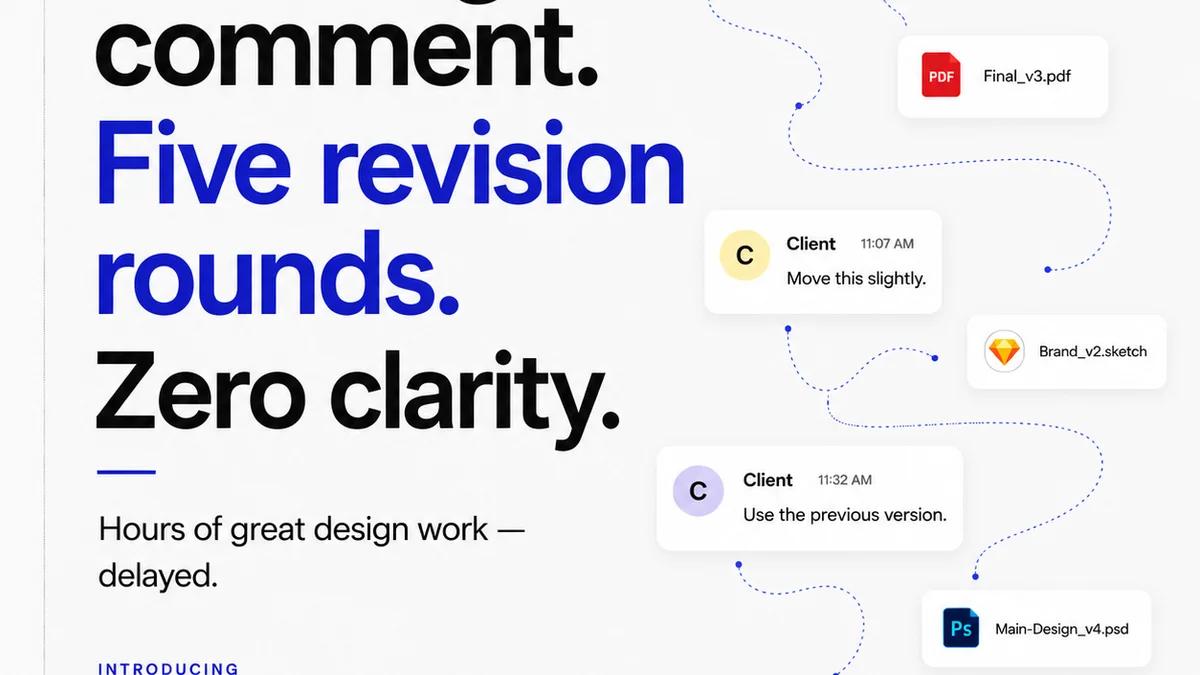
Managing creative assets and client feedback for a biotech company requires precision and clarity. Inaccessible feedback loops can lead to misunderstandings, missed requirements, and costly rework – all of which can be exacerbated if the feedback platform itself isn't usable by everyone on your team or your clients.
Revue helps centralize your creative workflow, ensuring that every piece of feedback, revision, and approval is tracked and visible. This visibility is crucial not just for efficiency but also for ensuring that accessibility requirements are clearly communicated and addressed throughout the project lifecycle.
When feedback is clear, consolidated, and tied directly to specific assets, your team can:
- Easily identify and implement accessibility-related comments.
- Maintain a clear audit trail of accessibility considerations.
- Streamline the revision and approval process, reducing misinterpretations.
- Ensure quality checks include accessibility criteria without adding excessive overhead.
By bringing structure to your creative operations, Revue helps mitigate the risks associated with miscommunication and scope creep, allowing your team to focus on building high-quality, inclusive digital experiences.
Final Thought
The cost of inaccessible digital experiences in biotech isn't a future problem; it's a present-day reality. It's measured in lost revenue, damaged reputation, legal liabilities, and a failure to serve the very people your innovations aim to help.
Are you treating accessibility as a fundamental requirement of your digital strategy, or just another compliance hurdle?
Frequently asked questions
What is the legal basis for website accessibility lawsuits in the US?
While the Americans with Disabilities Act (ADA) doesn't explicitly mention websites, federal courts have increasingly interpreted Title III of the ADA to apply to public accommodations' websites. This means businesses open to the public must ensure their websites are accessible to individuals with disabilities, leading to potential lawsuits if they are not.
How does website inaccessibility impact a biotech company's reputation?
In the biotech industry, trust is critical. An inaccessible website can signal a lack of care, attention to detail, and an unwillingness to serve all potential users (patients, researchers, investors). This can erode trust, damage brand perception, and lead to negative publicity, which is particularly harmful in a sector reliant on public confidence.
What are the operational costs of an inaccessible biotech website?
Inaccessible websites lead to operational inefficiencies. This includes increased customer support load as users struggle to find information, the need for manual workarounds by staff, and costly retrofitting of content and design elements that weren't initially built with accessibility in mind. It also hinders effective collaboration and user research.
How can a company like Revue help with accessibility concerns in digital projects?
Revue centralizes client feedback and manages revision workflows, providing clear visibility into project requirements. This helps ensure that accessibility considerations are communicated effectively, tracked throughout the project, and addressed during the revision and approval process, reducing misunderstandings and rework related to accessibility standards.