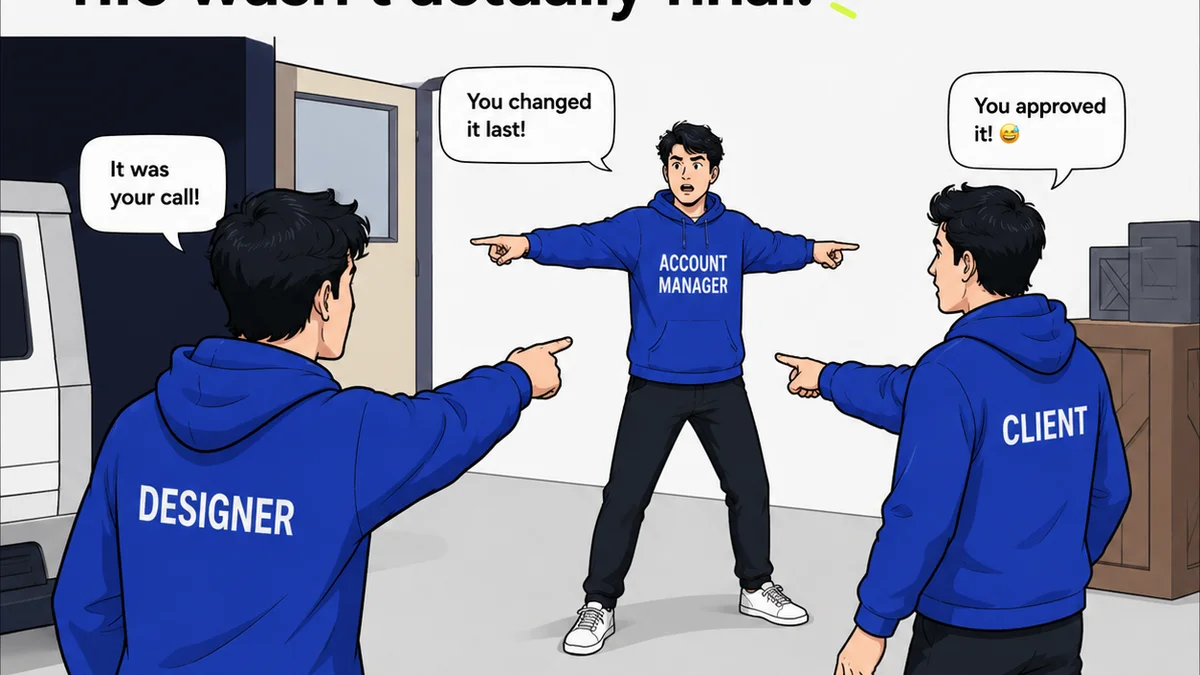
Everyone knows brand consistency matters. You’ve got the brand guidelines, the hex codes, the font files. You’ve probably even had a stern talk with a junior designer about using the wrong shade of blue.
None of that is wrong. But it’s incomplete.
The hard truth? Achieving true brand consistency isn’t about having the right files; it’s about having the right processes. It’s about your entire team, from account managers to final reviewers, understanding and executing the brand vision flawlessly, every single time. And that’s a workflow problem, not a design problem.
1. The Illusion of Control: Why Guidelines Aren't Enough
Brand guidelines are essential. They are the rulebook. But a rulebook doesn't guarantee understanding or adherence, especially under pressure.
Think about your typical project lifecycle:
- Client provides initial brief.
- Creative team brainstorms and develops concepts.
- Designs are presented.
- Feedback comes in, often vague or conflicting.
- Revisions are made.
- More feedback.
- Final approvals.
- Asset delivery to multiple channels.
At each stage, opportunities for drift exist. A client might say, “Make it pop more,” and a designer, interpreting that through their own lens, might push colors outside the approved palette. An account manager, trying to appease a stakeholder, might agree to a minor deviation without realizing its ripple effect.
This isn't malice. It's the friction of day-to-day operations.
The Feedback Loop Breakdown
Vague feedback is the enemy of consistency. “I don’t like it” or “Can we try something else?” are common refrains. Without clear, actionable input tied back to the brand strategy, revisions can become a game of guesswork.
And guesswork erodes consistency faster than anything.
2. The Real Battleground: Internal Processes and Communication
Brand consistency lives and dies in your internal workflows. If your team isn’t aligned, the brand will inevitably suffer.
Consider these common points of failure:
- Onboarding: Do new team members get a deep dive into the brand's strategic intent, not just its visual elements?
- Project Handoffs: Is there a clear process for transferring brand context between roles (e.g., from strategist to designer, designer to copywriter, copywriter to editor)?
- Client Communication: Are account teams equipped to discuss creative decisions in brand-aligned terms and push back constructively when necessary?
- Asset Management: Are approved assets easily accessible and version-controlled, or do people dig through old folders and emails?
- Quality Assurance: Is there a dedicated step to check for brand compliance before anything goes live?
These aren't glamorous topics. But they are the bedrock of a consistent brand experience.
The
Frequently asked questions
What is the most common mistake agencies make with brand consistency?
The most common mistake is relying solely on brand guidelines without implementing robust internal processes. This leads to inconsistencies creeping in due to miscommunication, vague feedback, and poor asset management.
How can internal communication improve brand consistency?
Clear communication ensures everyone on the team understands the brand's strategic goals and visual identity. Implementing regular brand alignment meetings, using centralized platforms for feedback, and training all client-facing staff on brand principles are key.
Does asset management affect brand consistency?
Absolutely. If team members can't easily find the latest approved logos, fonts, or templates, they might use outdated or incorrect versions, leading to inconsistencies. Centralized, version-controlled asset libraries are crucial.
How do you handle client feedback that might deviate from brand guidelines?
Empower your account managers and project leads to understand the brand strategy deeply. They should be able to explain *why* a certain element is important to the brand and guide the client toward feedback that aligns with the established vision, rather than simply accepting all requests.