You’ve heard it a million times: brand consistency is key. It builds trust. It creates recognition. It makes your client’s brand memorable.
None of that is wrong. But it’s incomplete.
The real reason brand consistency matters isn’t about pretty logos or matching colors. It’s about operational efficiency, reduced risk, and a smoother client experience. It’s the bedrock of a predictable, scalable creative process.
1. The Hidden Cost of Inconsistency
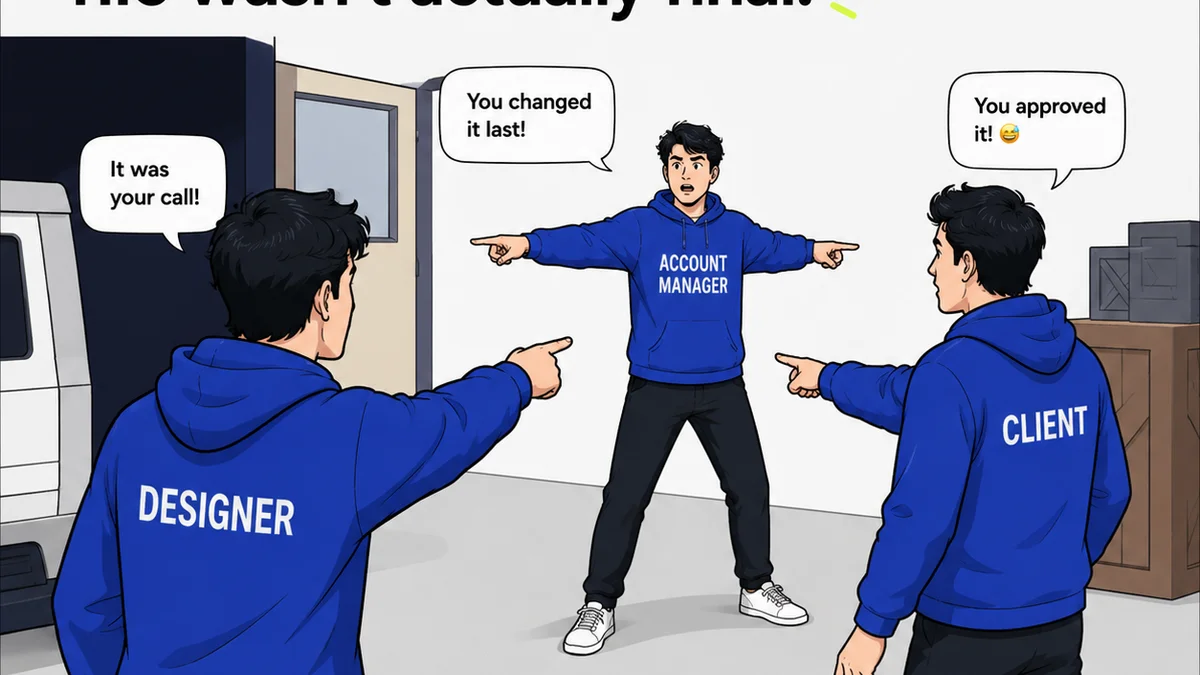
Most agencies treat brand consistency as a design problem. A checklist for the brand guidelines. But inconsistency is fundamentally an operational failure.
What does that failure look like?
- Endless, circular feedback loops on minor visual details.
- Client stakeholders pulling in different directions, citing conflicting interpretations of the brand.
- Revision rounds that spiral out of control because the core brand direction wasn’t locked down.
- Team members wasting time hunting for the latest approved assets or brand rules.
- A final deliverable that feels disjointed, even if individual pieces look okay in isolation.
This isn’t just frustrating. It’s expensive. Time spent correcting avoidable errors is time not spent on strategic thinking or creative innovation.
The 'Good Enough' Trap
Often, agencies and clients settle for 'good enough' on consistency. They get the logo right on the main assets. They use the primary color. But the nuances get lost.
This 'good enough' approach erodes brand equity over time. It’s a slow leak, not a catastrophic failure, but it’s still damaging.
2. Consistency Isn't Just Visual
When people talk brand consistency, they usually mean visuals: logo usage, color palettes, typography. That's the easy part.
The harder, more impactful consistency lies in:
Tone of Voice
Does the copy sound like the same brand across different channels? Is it formal or casual? Witty or serious? This requires clear guidelines and diligent application.
Messaging Pillars
Are the core messages consistent? Do they align with the brand's strategic objectives? Or is the client saying different things to different audiences?
User Experience (UX)
For digital products, consistent UI patterns and interaction design are crucial. A jarring UX breaks the illusion of a cohesive brand.
Customer Service Interactions
Even how a brand's support team interacts with customers contributes to the overall perception. Is it helpful, empathetic, and on-brand?
The Operational Truth
Achieving consistency across all these dimensions requires more than just a style guide. It demands robust processes for communication, asset management, and quality control.
3. Building a System for Consistency
Treating brand consistency as a system, not just a deliverable, changes everything. It moves from a one-off design task to an ongoing operational discipline.
Centralize Brand Assets and Guidelines
Where are the latest logos? The approved color codes? The voice and tone guide? If your team can't answer this instantly, you have a problem.
A centralized digital asset management (DAM) system or a well-organized shared drive is non-negotiable. But even better is a platform designed for creative workflows.
Establish Clear Approval Workflows
Who needs to sign off on what? At what stage? Ambiguity here is a breeding ground for inconsistency. Define roles and stages clearly.
This includes client approvals. Without a structured way to gather and manage client feedback, you invite subjective, off-brand edits.
Implement Cross-Functional Training
Ensure everyone touching the brand understands the guidelines. This isn't just for designers. Copywriters, social media managers, account managers—everyone needs a baseline understanding.
Regular Audits and Updates
Brands evolve. Guidelines need to be reviewed and updated. Regular audits of existing materials can catch inconsistencies before they become ingrained.
4. Where Revue Fits In
Operationalizing brand consistency is complex. It involves managing feedback, tracking revisions, and ensuring quality across multiple touchpoints.
This is precisely where Revue excels.
Revue provides a central hub for all creative feedback. Stakeholders can comment directly on specific elements of a design, screenshot, or video. This contextual feedback eliminates ambiguity and ensures alignment with brand objectives.
Revision tracking in Revue means you always know the latest approved version and can easily see the history of changes. This prevents outdated assets from creeping into the workflow and ensures everyone is working from the same playbook.
Furthermore, Revue's structured review and approval process helps enforce brand standards by making it clear what needs to be checked and by whom. It moves the conversation from subjective opinions to objective adherence to the brief and brand guidelines.
5. The Long-Term Payoff
Investing in operational brand consistency pays dividends.
- Faster Turnarounds: Less time spent correcting errors means quicker project completion.
- Reduced Client Friction: Clear processes and visible feedback loops build client confidence.
- Stronger Brand Equity: A consistently presented brand is more memorable and trustworthy.
- Scalability: Well-defined processes allow your agency to handle more projects without sacrificing quality.
- Team Efficiency: Clear guidelines and accessible assets reduce confusion and wasted effort.
Think of it like this: a perfectly tuned engine runs smoothly and powerfully. A sputtering engine is frustrating, inefficient, and prone to breaking down.
Final Thought
Brand consistency is often discussed as a marketing outcome. But its true power lies in its foundation: disciplined operations. Are you building your brand on a solid operational framework, or are you hoping for consistency to magically appear?
Frequently asked questions
What's the difference between visual consistency and operational consistency?
Visual consistency refers to the uniform application of brand elements like logos, colors, and typography. Operational consistency is the underlying process and discipline that enables visual consistency across all touchpoints and team members, ensuring the brand is executed reliably.
How can an agency ensure brand consistency with remote teams?
Centralized platforms for brand assets and feedback (like Revue), clear digital guidelines, regular virtual training sessions, and defined communication protocols are essential for maintaining consistency with remote or hybrid teams.
Is brand consistency only important for large companies?
No, brand consistency is crucial for businesses of all sizes. For smaller businesses or startups, establishing consistency early on builds a professional image and lays the groundwork for future growth and recognition.
How does client feedback impact brand consistency?
Unstructured or conflicting client feedback can easily derail brand consistency. A system for gathering, organizing, and addressing feedback contextually ensures that client input aligns with established brand guidelines rather than introducing ad-hoc changes.