Everyone agrees that brand consistency is crucial. You have brand guidelines, a style guide, maybe even a dedicated brand manager. You perform a final quality assurance (QA) check before anything ships. None of that is wrong. But it’s incomplete.
The hard truth? True brand consistency isn’t a final gate. It’s a continuous process woven into the fabric of your creative operations. Treating QA as the *only* checkpoint for brand consistency is a recipe for rework, client frustration, and diluted brand impact.
1. The Illusion of the Final Check
The typical agency workflow often relegates brand consistency checks to the very end. A designer finishes a piece, a project manager gives it a once-over, and maybe a client service person glances at it. This approach assumes that everything is perfect until the last minute.
This is where things break down:
- Late-stage discovery of inconsistencies means expensive, last-minute fixes.
- It puts the burden of perfect adherence on one or two people, who are often swamped.
- It doesn't account for evolving brand needs or subtle misinterpretations of guidelines.
- It creates a bottleneck just before delivery.
This reactive stance makes brand consistency feel like a chore, not a core value.
2. Proactive Brand Integration: From Brief to Delivery
Brand consistency QA needs to start the moment a project kicks off. It’s about embedding brand thinking into every step, not just inspecting the final product.
2.1. The Brief is Your First Brand QA Tool
Does the project brief clearly articulate the brand’s core values, target audience, and desired tone of voice? A vague or incomplete brief is the first sign that brand consistency might suffer.
Ensure:
- Clear articulation of brand personality.
- Defined target audience demographics and psychographics.
- Specific examples of tone and style for this particular project.
- Reference to existing brand assets or campaigns.
If the brief is weak, the creative output will likely be too. This is your earliest opportunity for brand consistency QA.
2.2. Design System as the Single Source of Truth
For digital products, a robust design system is non-negotiable. It’s not just a library of components; it’s a living document that enforces brand consistency at a granular level.
A well-maintained design system should include:
- UI components with clear usage guidelines.
- Typography scales and rules.
- Color palettes with defined accessibility ratios.
- Iconography sets.
- Voice and tone examples for microcopy.
- Examples of what *not* to do.
When designers and developers work from a shared, up-to-date design system, many brand consistency issues are prevented before they arise. This is proactive QA.
2.3. Collaborative Review Cycles
Don't wait until the end for feedback. Integrate brand consistency checks into your regular design review meetings.
During these sessions:
- Assign someone to specifically flag brand guideline adherence.
- Discuss how the design choices reflect the brand strategy.
- Use visual aids that highlight key brand elements.
- Encourage team members to ask, “Does this *feel* like the brand?”
This makes brand consistency a shared responsibility and a regular part of the conversation.
3. Defining Brand Consistency Metrics
How do you measure brand consistency if it’s not just a final checkbox? You need quantifiable and qualitative metrics that track adherence over time and across projects.
3.1. Qualitative Assessment
This involves subjective but informed evaluation. Does the work *feel* right? Does it align with the brand's personality and values? This is where experienced creatives and brand stewards excel.
- Consistency in tone of voice across copy.
- Appropriate use of imagery and visual metaphors.
- Alignment with campaign messaging.
- Emotional resonance with the target audience.
3.2. Quantitative Checks
These are the more objective, measurable aspects. They often involve checking against defined rules and standards.
- Logo usage (clear space, minimum size, correct variations).
- Color palette adherence (primary, secondary, accent colors).
- Typography rules (font families, weights, sizes, line heights).
- Adherence to layout grids and spacing.
- Accessibility standards (contrast ratios, font legibility).
For digital assets, tools can automate many of these checks. For broader campaigns, a structured checklist during internal reviews is essential.
4. The Role of Technology in Brand QA
Manual checks are prone to error and can be time-consuming. Leveraging the right technology can significantly improve the efficiency and accuracy of brand consistency QA.
4.1. Centralized Feedback Platforms
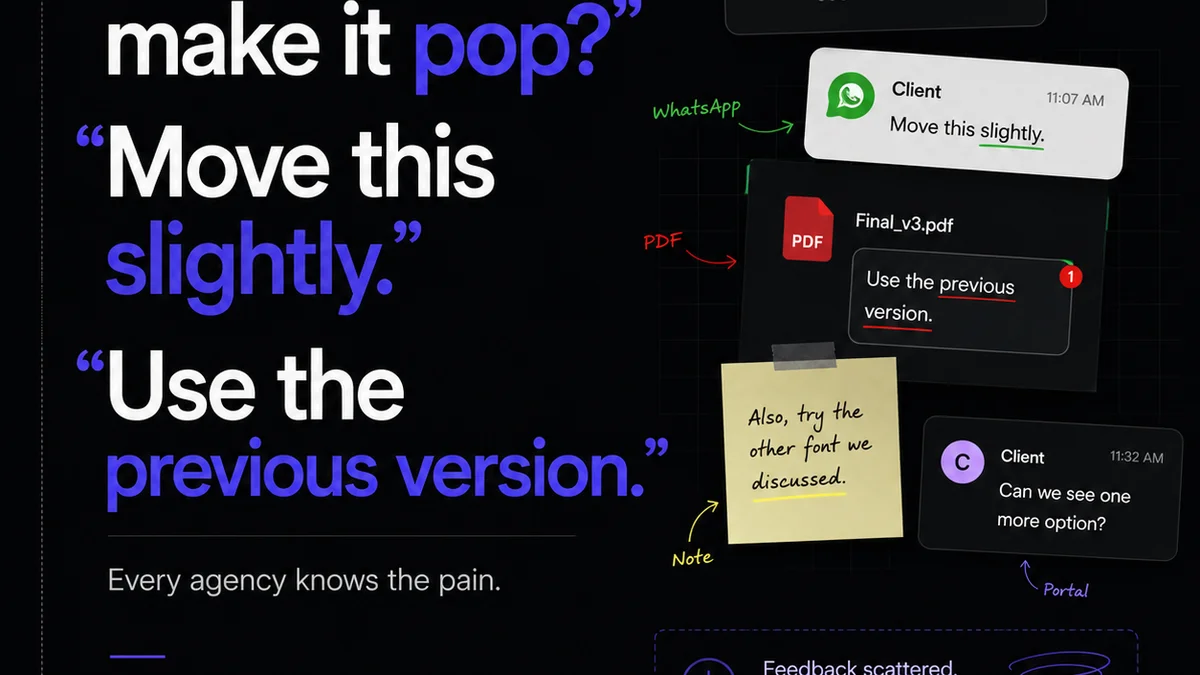
Tools that allow for centralized feedback and version control are invaluable. Instead of scattered email threads or Slack messages, all comments and approvals live in one place.
This ensures:
- All stakeholders are working from the latest version.
- Feedback is contextual and linked directly to the creative asset.
- A clear audit trail of revisions and decisions.
- Reduced miscommunication about what needs to be changed.
4.2. Digital Asset Management (DAM) Systems
A DAM system is crucial for managing brand assets like logos, imagery, and templates. It ensures that the team is always using the correct, up-to-date versions.
Key features include:
- Version control for assets.
- Metadata tagging for easy searching.
- Usage rights management.
- Controlled access to approved brand materials.
This prevents the use of outdated or incorrect brand elements.
4.3. Automated Brand Checkers
While not a replacement for human judgment, automated tools can scan designs for common brand guideline violations.
These might check for:
- Correct logo placement and size.
- Approved color usage.
- Font consistency.
- Basic accessibility color contrast.
These tools can catch simple errors quickly, freeing up human reviewers for more nuanced brand evaluation.
5. Where Revue Fits In
Revue is built to streamline the entire creative feedback and approval process, inherently supporting better brand consistency QA. By centralizing client feedback and managing revisions within a single platform, you eliminate the chaos that often leads to brand drift.
With Revue, you can:
- Centralize all feedback: Comments are attached directly to specific versions of creative assets, ensuring context is never lost. This means less misinterpretation of brand requirements.
- Track revisions transparently: See every iteration, every comment, and every approval. This creates a clear audit trail, making it easy to verify that brand guidelines were followed through each stage of revision.
- Streamline quality checks: Before final sign-off, conduct thorough internal brand consistency reviews within the platform. All the necessary assets and feedback are in one place, making it efficient to confirm adherence to brand standards.
- Ensure stakeholder alignment: Everyone involved sees the same feedback and the same asset versions, reducing the risk of conflicting instructions that can undermine brand integrity.
Revue doesn't just manage feedback; it helps build a more disciplined, consistent brand output by making the process visible and accountable.
6. Fostering a Brand-Centric Culture
Ultimately, the best brand consistency QA comes down to culture. It’s about making everyone on the team a brand steward.
How to build this culture:
- Continuous Training: Regularly refresh the team on brand guidelines, especially for new hires or when brand updates occur.
- Celebrate Brand Wins: Acknowledge and share examples of exceptional brand consistency.
- Empowerment: Encourage team members to speak up if they see a potential brand inconsistency, regardless of their role.
- Client Education: Help clients understand the importance of brand guidelines and involve them in the process.
When brand consistency is a shared value, it becomes less of a QA task and more of a natural outcome of great work.
Final Thought
Is your brand consistency QA a final hurdle or a guiding principle? The difference isn't just about avoiding mistakes; it's about building a stronger, more recognizable, and more impactful brand over time. What steps will you take today to make brand consistency less of a checklist and more of a core operational practice?
Frequently asked questions
What is brand consistency QA?
Brand consistency QA (Quality Assurance) is the process of systematically checking creative work to ensure it aligns with established brand guidelines and standards before it's released. This goes beyond a simple final check to ensure all elements—visual, tonal, and functional—accurately represent the brand.
Why is a final check not enough for brand consistency?
A final check is often too late. It can lead to costly, last-minute revisions, missed deadlines, and a perception of brand inconsistency if errors are discovered just before delivery. Proactive and integrated checks throughout the workflow are more effective.
How can a design system improve brand consistency?
A design system acts as a single source of truth for UI components, styles, and guidelines. By using a design system, teams ensure that elements are implemented consistently across projects, reducing manual errors and subjective interpretation of brand rules.
What role does technology play in brand consistency QA?
Technology, such as centralized feedback platforms (like Revue), Digital Asset Management (DAM) systems, and automated brand checkers, can significantly enhance brand consistency QA. These tools help manage assets, centralize feedback, track revisions, and automate basic checks, improving efficiency and accuracy.
How can agencies foster a culture of brand consistency?
Fostering a brand-centric culture involves continuous training on brand guidelines, celebrating brand successes, empowering all team members to identify and flag inconsistencies, and educating clients on brand importance. When brand stewardship is a shared value, consistency becomes a natural outcome.