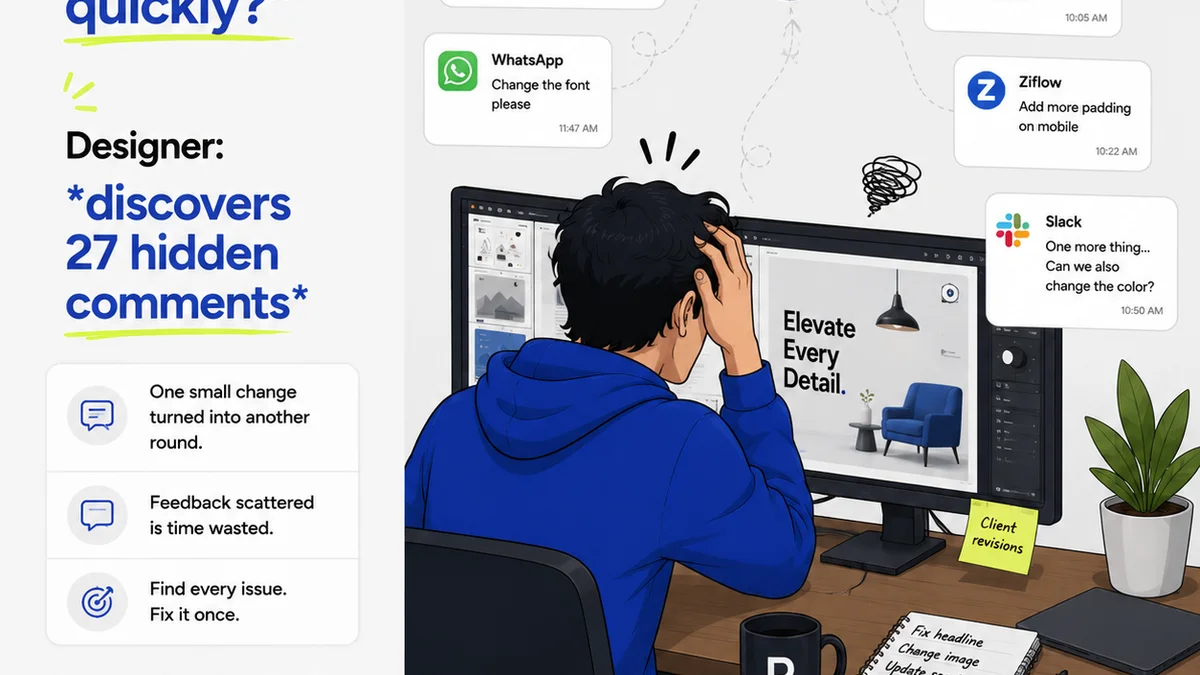
Most creative agencies think brand governance software is about enforcing logo usage. That’s a small piece of the puzzle. You need a system that integrates with your actual workflow, not just a digital brand book.
The hard truth? Effective brand governance is less about aesthetics and more about operational control. It’s about ensuring consistency across every client touchpoint, streamlining feedback, and reducing revision cycles. Software that doesn't support this is just digital clutter.
1. Beyond the Style Guide: Centralized Asset Management
A brand governance tool isn't just a place to store logos and color palettes. It's the single source of truth for all brand assets. This means everything from final approved logos, fonts, and imagery to campaign-specific collateral.
Think about the chaos of scattered files:
- Emails with outdated logos.
- Slack messages with incorrect hex codes.
- Shared drives with multiple versions of the same asset.
- New hires fumbling for the right files.
This isn't just inefficient; it’s a direct path to brand dilution. Your governance software must provide a robust, searchable, and accessible library for all brand elements.
Key Features to Prioritize:
- Version control for all assets.
- Granular access permissions.
- Smart search functionality (by asset type, project, usage).
- Integration with design tools like Adobe Creative Cloud and Figma.
2. Streamlining Feedback and Approvals: The Core of Governance
This is where most brand governance discussions fall short. A true governance system doesn't just dictate how the brand *looks*; it dictates how the brand *works* within your agency and with clients.
This means having a clear, auditable process for feedback and approvals. Without it, your brand guidelines are just suggestions, easily overridden by a quick email or a Slack message.
Your software needs to facilitate, not just document, this process. It needs to be the central hub where client feedback is gathered, revisions are tracked, and final approvals are logged.
What Good Governance Software Does Here:
- Provides a single point for all client comments, eliminating silos.
- Offers clear visual annotation tools for precise feedback.
- Tracks revision history, showing who changed what and when.
- Manages approval workflows, ensuring sign-off at key stages.
- Automates notifications for pending actions or approvals.
This level of control is essential for maintaining brand integrity, especially when multiple stakeholders are involved.
3. Ensuring Quality Control and Consistency
Brand governance isn't a one-and-done task. It's an ongoing commitment to quality. Your software should actively support this by embedding checks and balances into your production process.
This means looking beyond just the final output. It’s about ensuring that every piece of collateral, every social post, every website update adheres to the established brand standards.
Think about the risks:
- A social media post using the wrong font.
- A website banner with an out-of-date logo.
- A client presentation with inconsistent color usage.
These aren't minor errors; they erode client trust and brand authority.
Software Features for Quality Assurance:
- Automated checks for common brand guideline violations (e.g., logo size, color palette adherence).
- Templated workflows for recurring assets, enforcing pre-approved structures.
- Read-only access to brand guidelines within the review environment.
- Audit trails for every asset and every review cycle.
4. Driving Efficiency and Scalability
The ultimate goal of brand governance software for an agency is to make your operations more efficient and scalable. If it adds more steps or complexity, it's failing.
A well-implemented system reduces the time spent searching for assets, clarifying feedback, chasing approvals, and correcting errors.
This frees up your creative teams to focus on what they do best: creating great work. It also makes onboarding new team members faster and reduces the reliance on individual
Frequently asked questions
What is the primary purpose of brand governance software for an agency?
The primary purpose is to ensure brand consistency and quality across all client projects by centralizing assets, streamlining feedback, and managing approvals. It moves beyond just style guides to operational control.
How does brand governance software help with client feedback?
It provides a single, organized platform for all client comments and annotations, reducing miscommunication and ensuring feedback is tracked, actionable, and linked to specific assets or revisions.
Can brand governance software automate quality checks?
Yes, many tools can automate checks for common brand guideline violations, such as incorrect logo usage, color palette adherence, or font consistency, helping to catch errors before final delivery.
What is the difference between a digital brand book and brand governance software?
A digital brand book is primarily a repository of brand guidelines and assets. Brand governance software integrates these guidelines into the active workflow, managing feedback, revisions, and approvals, thus providing operational control.