Everyone thinks brand guidelines are just about logos and colors. That’s not wrong. But it’s woefully incomplete.
For insurance brands, especially, the real work of guidelines in 2026 is about building trust in a complex, often opaque industry. It’s about clarity. It’s about consistency across every single touchpoint, especially digital ones. It's about making sure your brand feels human when people are at their most vulnerable.
Forget static PDFs. Think dynamic, accessible, and deeply integrated into how your teams actually work. That's the future.
1. Beyond the Static PDF: Dynamic and Accessible Guidelines
The old way was simple: a giant PDF, updated annually, and then largely ignored. It sat on a server, a digital paperweight.
This approach fails because it’s disconnected from daily workflow. Designers, marketers, and even customer service reps need access to guidelines when they’re *in the moment*, not when they have to hunt down a file.
The trend is toward living, breathing brand systems.
Digital-First Accessibility
Think intranets, dedicated brand portals, or integrated tools. These platforms make guidelines searchable, easily updatable, and always available.
This isn't just about convenience. It’s about ensuring everyone is working with the latest, most accurate information. No more outdated logo files or forgotten color codes.
Component-Based Systems
Instead of just rules, think building blocks. Design systems are becoming the backbone of modern brand guidelines. This means pre-approved UI components, content modules, and even messaging frameworks.
For insurance, this is crucial for consistency in explaining complex products. A standardized component for explaining policy terms ensures clarity, no matter who is building the page or email.
2. The Trust Imperative: Clarity and Empathy in Communication
Insurance is built on trust. In 2026, brand guidelines must actively reinforce that trust, especially in how brands communicate.
This means moving beyond corporate speak and embracing human-centered language. Your guidelines need to dictate not just *what* you say, but *how* you say it.
Demystifying Jargon
Insurance is notorious for its complex terminology. Guidelines must provide clear, simple definitions for common terms and mandate their use over obscure jargon.
- Policy
- Deductible
- Premium
- Claim
- Underwriting
Your brand guidelines should offer approved, plain-language alternatives or provide easy-to-understand definitions within context.
Empathy as a Core Principle
People interact with insurance brands when they’re stressed, facing a problem, or making a significant financial decision. Brand voice guidelines must reflect this reality.
- Tone should be reassuring, not alarming.
- Language should be supportive, not condescending.
- Imagery should be relatable, not aspirational or sterile.
This requires a shift from purely functional communication to emotionally intelligent communication. Your guidelines are the rulebook for empathy.
3. Visual Storytelling for a Complex Industry
Static stock photos won’t cut it. Insurance brands need to visually tell stories that resonate and build confidence.
Guidelines are evolving to support richer, more authentic visual narratives.
Authentic Photography and Illustration
Generic images create distance. Guidelines in 2026 will emphasize photography and illustration that reflect real people, real situations, and diverse communities.
- Showcase diverse families, individuals, and business owners.
- Depict everyday moments where insurance plays a role, rather than just crisis scenarios.
- Use illustration to simplify complex concepts visually.
This visual strategy humanizes the brand and makes its value proposition more tangible.
Data Visualization That Educates
Insurance involves a lot of data – risk factors, coverage details, financial performance. Guidelines need to dictate how this data is presented.
- Use clear charts and graphs that are easy to interpret.
- Ensure accessibility for all users, including color contrast and alternative text for visual elements.
- Maintain brand consistency in the style and labeling of all data visualizations.
Effective data visualization, guided by clear principles, can turn complex information into understandable insights, building confidence.
4. Digital Fluency and Interactive Experiences
The customer journey is increasingly digital. Brand guidelines must address the nuances of online interactions.
This extends beyond just responsive design to encompass the entire digital experience.
Motion and Animation with Purpose
Subtle animation can guide users, explain processes, and add personality. But it needs to be controlled.
Guidelines should specify:
- When and how to use animation.
- Animation principles (e.g., easing, duration) that align with brand personality.
- Accessibility considerations for motion (e.g., reducing motion options).
Think of animation as an extension of your brand voice, used to enhance clarity and engagement, not just for decoration.
Personalization and Dynamic Content
Insurance offerings can be highly personal. Guidelines need to accommodate this while maintaining brand integrity.
- Define parameters for personalization (e.g., using customer data to tailor product recommendations).
- Establish rules for dynamic content in emails and on websites.
- Ensure that personalization doesn’t compromise core brand messaging or values.
The goal is a relevant experience that still feels undeniably like your brand.
5. Sustainability and Ethical Considerations
Consumers, especially younger demographics, increasingly care about a brand’s ethical stance and environmental impact.
Brand guidelines are starting to reflect these values.
Communicating Corporate Social Responsibility (CSR)
How does your insurance brand talk about its role in the community or its sustainability initiatives? Guidelines need to provide a framework.
- Mandate truthful and transparent reporting of CSR efforts.
- Dictate appropriate channels and tone for sharing these stories.
- Avoid greenwashing or making unsubstantiated claims.
Authenticity is key here. Consumers can spot insincerity from a mile away.
Ethical Use of Data and AI
As AI plays a larger role in underwriting, claims processing, and customer service, guidelines must address its ethical application.
- Principles for fairness and bias mitigation in AI algorithms.
- Transparency regarding AI use in customer interactions.
- Data privacy and security standards that exceed minimum requirements.
Building trust in the digital age means being transparent about the technology you employ.
Where Revue Fits In
Managing evolving brand guidelines for a large insurance organization is a complex operational challenge. Keeping everyone aligned, especially across diverse teams and multiple projects, is tough.
This is where a centralized feedback and approval platform like Revue becomes essential.
Instead of scattered email threads, version control nightmares, and missed feedback, Revue provides a single source of truth for creative assets and their associated feedback.
- Centralized Feedback: All comments, annotations, and approvals live on the asset itself, ensuring context is never lost. This means feedback directly related to brand guideline adherence is easily trackable.
- Revision Visibility: Track every change, who made it, and when. This provides an audit trail for compliance and ensures that revisions are made according to the latest guidelines.
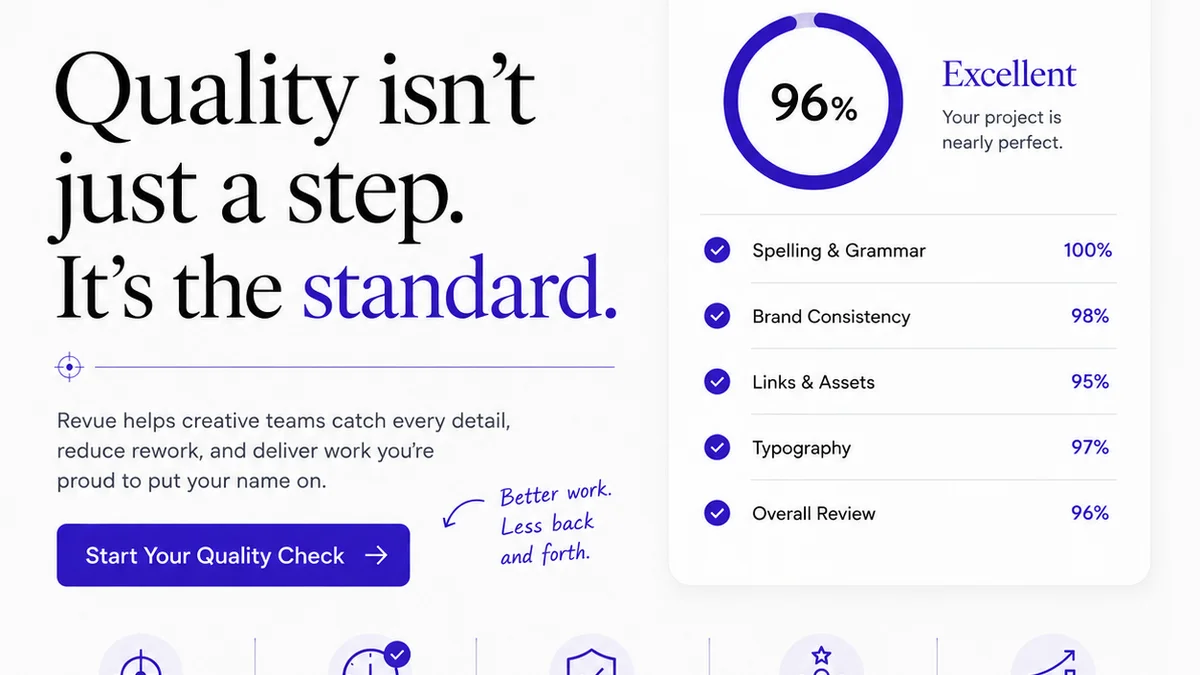
- Quality Assurance: Use the platform to perform final checks against brand standards before assets go live, catching potential guideline violations before they cause issues.
Revue helps ensure your sophisticated brand guidelines aren't just documents, but actively enforced principles across your creative output.
Final Thought
Brand guidelines are no longer just the gatekeepers of aesthetics; they are the architects of trust, clarity, and consistent experience in an increasingly complex world. For insurance brands, this evolution is not just a trend—it's a necessity for survival and growth.
Are your current guidelines truly equipping your teams to build that trust, or are they just gathering digital dust?
Frequently asked questions
What is the biggest shift in brand guidelines for insurance companies?
The biggest shift is moving from static PDF documents to dynamic, accessible, digital-first brand systems. This emphasizes clarity, empathy, and consistency across all touchpoints, especially digital ones, to build trust in a complex industry.
How can insurance brands use guidelines to build trust?
Guidelines should mandate clear, jargon-free language, an empathetic tone, and authentic visual storytelling. They need to guide teams on how to communicate complex policy details simply and reassuringly, reflecting the customer's vulnerable state.
Why are digital experiences critical for insurance brand guidelines?
The customer journey is increasingly digital. Guidelines must address interactive elements, motion design, personalization, and the ethical use of AI to ensure a consistent, trustworthy, and engaging online experience that aligns with the brand's values.
How do sustainability and ethics factor into modern brand guidelines?
Modern guidelines increasingly incorporate principles for communicating Corporate Social Responsibility (CSR) transparently and ethically. They also need to address the responsible and unbiased use of data and AI in all brand communications and operations.