Everyone talks about brand positioning. They’ll tell you it’s about defining your ‘why,’ finding your unique selling proposition, or crafting a compelling narrative. None of that is wrong. But it’s incomplete.
The hard truth is, effective brand positioning isn't just a marketing exercise. It's an operational blueprint that dictates how your agency actually works, how you attract clients, and how you deliver value. It’s about making ruthless choices so you can be exceptional in a few key areas, not mediocre in all of them.
1. The Myth of Universal Appeal
Many agencies believe the goal of brand positioning is to appeal to as many potential clients as possible. This is a trap. Trying to be everything to everyone means you end up being nothing special to anyone.
Think about it. If your positioning statement is vague, like “We help businesses grow,” who are you really talking to? Startups? Fortune 500s? E-commerce? B2B SaaS? You can’t be the best partner for all of them.
The real power of brand positioning lies in its ability to repel the wrong clients just as effectively as it attracts the right ones. This isn't about being exclusionary for the sake of it; it's about focus.
Focusing Your Ideal Client Profile
A strong position forces you to define:
- What specific industry or niche do you serve best?
- What size of company is your sweet spot?
- What are their core business challenges that you uniquely solve?
- What kind of client relationship do you thrive in?
When you’re crystal clear on this, your marketing messages become sharper, your sales conversations become more productive, and your project execution becomes more efficient. You stop wasting time and resources chasing bad fits.
2. Positioning as an Operational Constraint
This is where most agencies miss the mark. They treat positioning as a document to be created and then filed away. It’s not. It’s a set of constraints that should guide every decision you make.
If your positioning is ‘We are the go-to agency for disruptive DTC brands,’ then every operational decision should reflect that. This means:
- Hiring talent with direct experience in DTC growth.
- Developing case studies exclusively showcasing DTC success.
- Investing in tools and processes that streamline work for e-commerce clients.
- Saying ‘no’ to projects that fall outside this scope, even if they’re lucrative.
This isn't about limiting your agency; it’s about building deep expertise and a reputation that’s hard to replicate. It’s about becoming the undeniable expert, not just another generalist.
The Ripple Effect on Workflow
Your brand positioning should inform:
- Service Offerings: Are your services tailored to your niche, or are they generic?
- Pricing Strategy: Does your pricing reflect the specialized value you deliver?
- Team Structure: Do your teams have the right skills and experience for your target clients?
- Client Onboarding: Is your onboarding process designed to quickly understand and address the specific needs of your ideal clients?
- Internal Tools: Do your tools support efficient delivery for your chosen niche?
If your positioning doesn't actively shape these areas, it’s just words on paper.
3. Communicating Your Position Internally
A common mistake is assuming that once the positioning is defined, the team will just ‘get it.’ That’s rarely the case. Your positioning needs to be embedded into the agency’s DNA.
How do you do that? It starts with leadership. Every strategic decision, from hiring to client acquisition to service development, must be filtered through the lens of your positioning.
Making Positioning Actionable
Consider these practical steps:
- Regular Training: Dedicate time in team meetings to discuss what the positioning means in practice for different roles.
- Onboarding Materials: Ensure new hires understand the agency’s specific position and what’s expected of them.
- Performance Reviews: Incorporate how well individuals and teams are embodying the positioning into their evaluations.
- Client Briefs: Make sure every client brief explicitly references how the project aligns with the agency’s core positioning.
- Project Retrospectives: Analyze projects not just on their success, but on how well they reinforced or strayed from the agency’s defined strengths.
When your team lives and breathes the positioning, it becomes a powerful internal compass. It guides their work, their client interactions, and their professional development.
4. The Danger of Static Positioning
The market shifts. Client needs evolve. Your agency grows and learns. If your brand positioning is static, it will eventually become irrelevant. You need a mechanism for review and adaptation.
This doesn't mean changing your core identity every six months. It means periodically assessing if your positioning still accurately reflects your capabilities, your market reality, and your strategic goals.
When to Re-evaluate
Set a cadence for review, perhaps annually or bi-annually. Ask questions like:
- Are we still attracting the right clients?
- Are our target clients’ needs changing in ways we aren’t addressing?
- Are new market opportunities emerging that align with our core strengths?
- Are competitors encroaching on our niche with a more compelling offer?
- Has our own expertise evolved to a point where our positioning should be refined?
The goal is evolution, not revolution. It’s about staying sharp and relevant, ensuring your positioning remains a competitive advantage, not a relic.
Where Revue Fits In
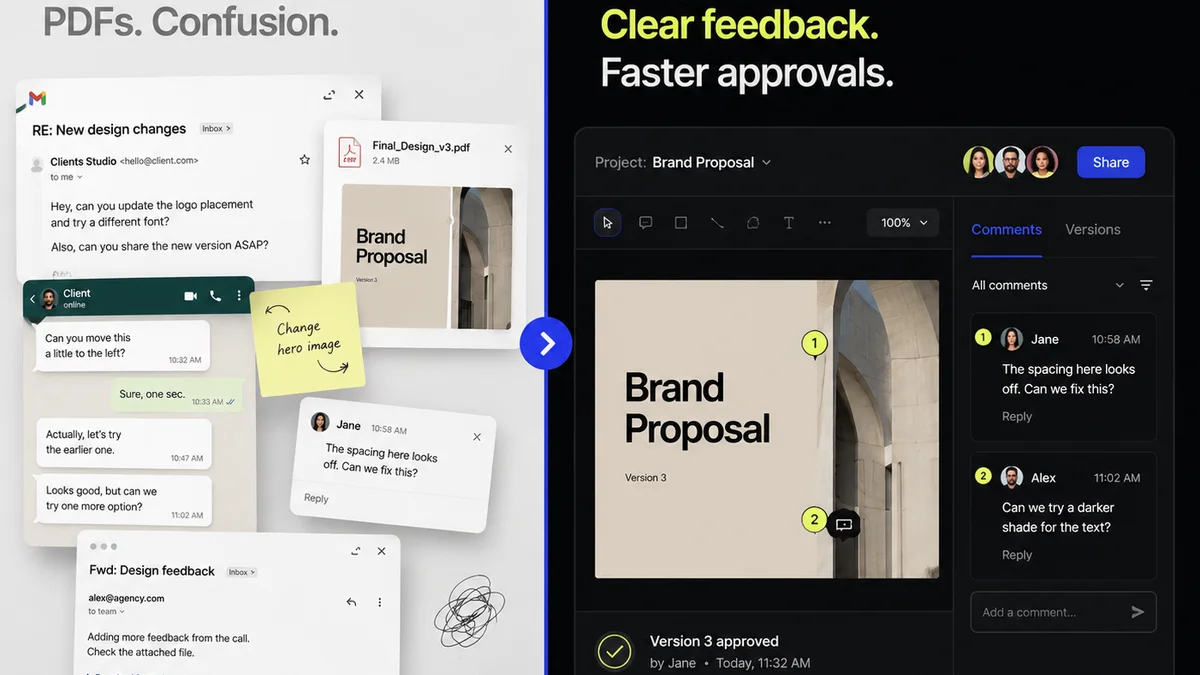
Managing client feedback, revisions, and approvals is central to delivering on any brand promise. If your agency positions itself as detail-oriented and efficient, but your internal processes are chaotic, that disconnect will kill client trust.
Revue helps bridge that gap. By centralizing client feedback, you eliminate the ambiguity that plagues email chains and scattered documents. This ensures everyone is working from the same source of truth, a critical factor when delivering specialized work.
The platform provides clear visibility into revision history and approval statuses. This operational transparency is key for agencies that position themselves on reliability and clear communication. It allows teams to manage workflows proactively, ensuring projects stay on track and align with the client’s evolving needs and your agency’s expertise.
Ultimately, a well-defined brand position is only as strong as the operational discipline that supports it. Revue provides the tools to enforce that discipline where it matters most: in the day-to-day execution of creative work.
Final Thought
Is your brand positioning a guiding star, or just a decorative signpost? If it's not actively shaping your operations, your client selection, and your team's daily work, you're missing the point. True positioning isn't about what you say you are; it's about what you relentlessly choose to be.
Frequently asked questions
What is brand positioning?
Brand positioning is the strategic process of defining how your brand is perceived by your target audience relative to competitors. It’s about carving out a distinct and memorable space in the market that resonates with your ideal clients.
Why is niche focus important in brand positioning?
Focusing on a niche allows you to become an expert in a specific area, attract a more targeted client base, and differentiate yourself from generalist competitors. It enables you to deliver specialized value and command premium pricing.
How does brand positioning affect an agency's operations?
Effective brand positioning should influence every operational decision, from hiring and service development to client selection and internal processes. It acts as a filter, ensuring that all activities align with the agency's defined strengths and target market.
How often should an agency review its brand positioning?
Agencies should periodically review their brand positioning, typically annually or bi-annually, to ensure it remains relevant to market changes, evolving client needs, and the agency's own growth and capabilities. This allows for necessary adaptation without compromising core identity.