Everyone’s talking about brand positioning. They churn out lists of buzzwords, predict the next big trend, and promise a silver bullet for market cut-through. None of that is wrong. But it’s incomplete.
The hard truth? True brand positioning in 2026 isn’t about what you say; it’s about what you do. It’s less about crafting a perfect external message and more about building an internally aligned, operationally sound engine that consistently delivers on your brand promise.
1. The Shift from "What" to "How"
For years, brand positioning focused heavily on the "what": What unique selling proposition do we have? What benefit do we offer? What story can we tell?
This approach led to a proliferation of clever taglines and aspirational mission statements that often had little grounding in daily reality.
The 2026 landscape demands a pivot to the "how": How do we consistently deliver this benefit? How do our internal processes reflect our brand values? How do our teams embody the brand promise in every client interaction?
Operational Alignment is the New Differentiator
Your brand positioning is only as strong as your ability to execute it. If your client onboarding process is chaotic, your brand promise of "seamless experience" rings hollow.
If your creative review cycles are bogged down, your claim of "agile innovation" feels like a lie.
This means brand positioning is no longer solely the domain of marketing. It’s a strategic imperative that touches every department:
- Sales: Are they selling the true value, not just a discount?
- Client Services: Is every touchpoint reinforcing the brand promise?
- Creative/Production: Are the deliverables matching the stated quality and ethos?
- Finance: Does your pricing reflect the perceived value and positioning?
This deep operational alignment is the real differentiator. It’s hard to copy and impossible to fake consistently.
2. Authenticity as a Non-Negotiable
The era of "fake it till you make it" is over. Consumers, clients, and employees are more discerning than ever. They can spot inauthenticity a mile away.
This isn’t just about being "honest." It’s about a profound alignment between stated values and actual behavior.
The Transparency Imperative
In 2026, brands will be positioned not just by their polished marketing, but by their transparency. This includes:
- Open communication about processes: Clients expect to know how work gets done and why.
- Honest feedback loops: Admitting mistakes and showing how you learn from them builds trust.
- Visible commitment to values: If you claim sustainability, show the supply chain. If you claim diversity, show the team.
This transparency builds a more resilient brand position. It’s not about perfection; it’s about integrity.
3. Niche Dominance Over Broad Appeal
The temptation for many agencies and creative teams is to be everything to everyone. This broad approach dilutes focus and makes genuine differentiation nearly impossible.
The trend for 2026 is a decisive move towards niching down. Become the undisputed leader in a specific area, serving a particular type of client or solving a very defined problem.
Why Specialization Wins
Specialization allows for:
- Deeper Expertise: You build unparalleled knowledge and skill in a specific domain.
- Targeted Messaging: You can speak directly to the unique pain points of your niche.
- Higher Perceived Value: Specialists command higher fees because they solve problems others can’t.
- Streamlined Operations: Processes become more efficient when focused on a consistent type of work.
Instead of "a creative agency," aim to be "the creative agency for B2B SaaS startups" or "the go-to design partner for sustainable CPG brands." This clarity is powerful.
4. Value-Based Pricing and Delivery
Hourly billing is dying a slow, painful death. Clients are increasingly resistant to paying for time spent and instead want to pay for the value delivered.
This shift forces a re-evaluation of how we define and measure "value" in creative services.
From Inputs to Outcomes
Positioning your brand around value means:
- Understanding client KPIs: What does success look like for them? (e.g., increased conversion, better brand recall, reduced churn).
- Structuring agreements around outcomes: Project fees, retainers tied to specific business goals, or even revenue share models.
- Demonstrating ROI: Clearly articulating how your creative work contributes to their bottom line.
This requires a sophisticated understanding of business strategy, not just creative execution. Your brand positioning must reflect this strategic partnership.
5. The Rise of "Profound Simplicity"
In a world saturated with information and complexity, there’s a growing appetite for simplicity. But not just any simplicity – "profound simplicity."
This is simplicity that arises from deep understanding and mastery, not from a lack of effort or detail. Think of Apple’s Human Interface Guidelines – elegant, intuitive, and born from rigorous thought.
Achieving Profound Simplicity
For your brand positioning, this means:
- Cutting through the noise: Focusing on the essential message and eliminating clutter.
- Intuitive user experiences: Making it effortless for clients to interact with your brand and services.
- Clear, concise communication: Avoiding jargon and getting straight to the point.
- Streamlined workflows: Simplifying internal processes so the focus remains on high-value output.
Profound simplicity makes your brand accessible, understandable, and ultimately, more desirable.
Where Revue Fits In
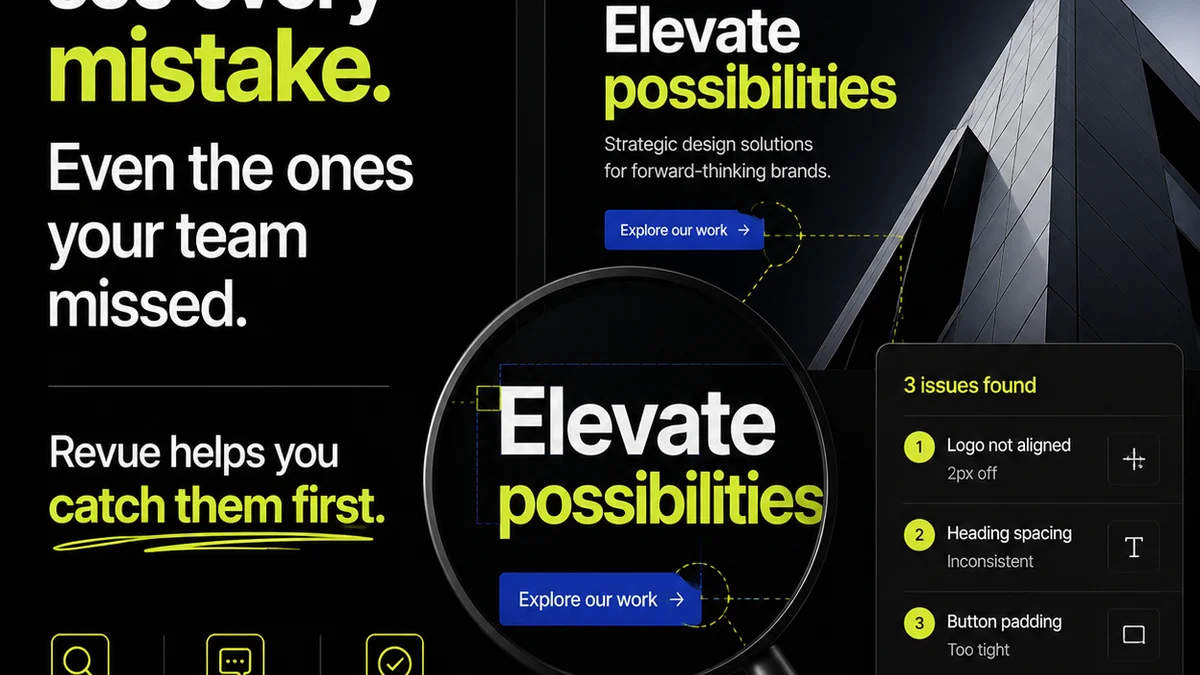
Effective brand positioning in 2026 hinges on operational excellence and consistent delivery. This is where a centralized feedback and approval platform like Revue becomes critical.
If your brand promise is about "clarity" or "efficiency," but your client feedback process is a tangled mess of emails and scattered comments, your positioning is undermined.
Revue helps bridge the gap between your aspirational brand positioning and your day-to-day reality by:
- Centralizing feedback: All client comments and stakeholder input live in one place, ensuring nothing gets lost and everyone is on the same page. This directly supports positioning built on clear communication.
- Streamlining revisions and approvals: Visual annotation and clear version control mean fewer misunderstandings and faster sign-offs. This supports positioning built on efficiency and agility.
- Providing visibility and audit trails: Track every decision, every revision, and every approval. This transparency is key for positioning built on integrity and accountability.
- Ensuring quality checks: Integrated checklists and review stages help maintain consistent quality, upholding positioning built on excellence.
By bringing order to the chaos of creative feedback and approvals, Revue empowers agencies and creative teams to consistently deliver on their brand promise, strengthening their market position through reliable execution.
Final Thought
Is your brand positioning a carefully crafted facade, or is it the authentic reflection of your operational reality? In 2026, the teams that thrive will be those whose "how" perfectly matches their "what." The question is: are you building your brand from the inside out?
Frequently asked questions
What is the biggest shift in brand positioning for 2026?
The biggest shift is moving from focusing solely on 'what' a brand says (its message, USP) to 'how' it operates and consistently delivers on its promises. Operational alignment and authentic execution are becoming the primary differentiators.
How does operational alignment impact brand positioning?
Operational alignment ensures that a brand's internal processes, team behaviors, and client interactions directly reflect and support its stated positioning. Inconsistency between the two erodes trust and weakens the brand's market standing.
Why is specialization becoming more important for brand positioning?
Specialization allows brands to build deeper expertise, craft more targeted messaging, command higher perceived value, and streamline operations. Dominating a specific niche makes a brand stand out more effectively than trying to appeal broadly.
What does 'profound simplicity' mean in brand positioning?
Profound simplicity refers to clarity and ease that comes from deep understanding and mastery, not from a lack of detail. It involves cutting through noise, creating intuitive experiences, and communicating concisely to make the brand accessible and desirable.