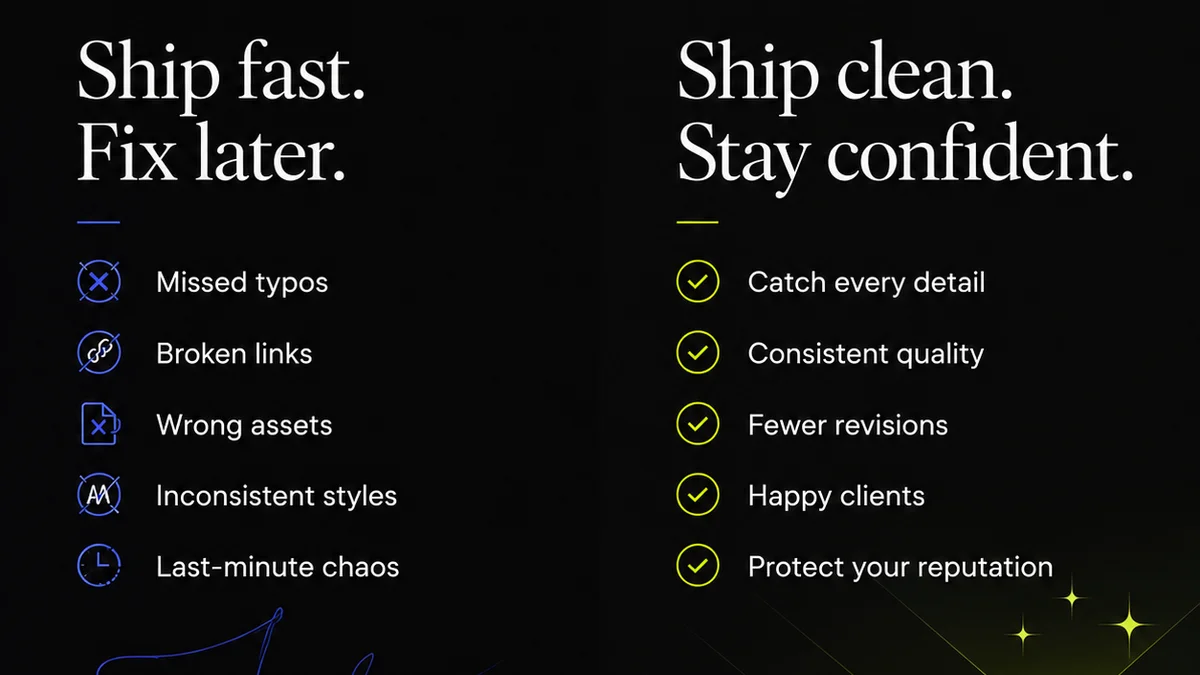
Everyone knows brand reviews are important. They’re the final gate before launch, the last chance to catch a stray pixel or a misspelled tagline. You probably have a checklist, a process, maybe even a dedicated brand review meeting.
None of that is wrong. But it’s incomplete.
The real problem isn't usually a missed typo. It's the systemic breakdown that allows significant issues to even reach the review stage. Brand reviews aren't just a final sniff test; they're a symptom of your entire creative workflow. And if they’re failing, the rot goes deeper.
1. Treating Brand Review as a Final Inspection, Not a Process Step
Many teams see brand review as the end of the line. A quality check. A rubber stamp.
This is a massive mistake. It turns the review into a bottleneck and a potential point of conflict, rather than a collaborative checkpoint.
The deeper truth? Effective brand review is an ongoing, integrated part of the creative process, not a tacked-on formality.
The False Economy of Late-Stage Catch-Ups
When you only review at the very end, you’re setting yourself up for:
- Massive, last-minute revisions that blow budgets and timelines.
- Frustration and defensiveness from the creative team.
- Client dissatisfaction because they feel unheard or that the project is unstable.
- The temptation to “let it slide” because it’s too late to fix properly.
This isn't quality control; it's damage control.
Integrate Feedback Loops Early and Often
Instead of one big final review, build in smaller, more frequent review moments. Think:
- Concept review with the client.
- Mid-fidelity mock-up review.
- Pre-production review of final assets.
This allows issues to be identified and addressed when they are small and easy to fix. It keeps everyone aligned and builds confidence as the project progresses.
2. Vague or Subjective Review Criteria
What does “looks good” even mean?
If your brand review criteria are fuzzy, you’re inviting chaos. You might think you're being flexible, but you're actually being unclear. This leads to inconsistent feedback and endless rounds of subjective tweaks.
The Danger of the “Gut Feeling” Review
Relying purely on subjective feelings during a brand review is a recipe for disaster. It means:
- Feedback is hard to quantify and track.
- Different reviewers have wildly different standards.
- The client can feel like they're just guessing what the agency wants.
- It’s impossible to objectively measure whether the brand guidelines are being met.
This is not a professional way to manage creative output.
Define Objective Standards
Your brand review process needs clear, measurable criteria. These should align directly with the project brief and the established brand guidelines.
Consider:
- Brand Consistency: Are logos, colors, typography, and tone of voice used correctly and consistently?
- Technical Accuracy: Are there any technical errors (e.g., broken links, incorrect image resolutions, accessibility issues)?
- Brief Adherence: Does the final output directly address the objectives and requirements outlined in the brief?
- Usability/Functionality: For digital products, is the user experience intuitive and error-free?
These objective points provide a solid foundation for feedback, making it more constructive and less personal.
3. Lack of Clear Ownership and Accountability
Who is actually responsible for signing off on a brand review?
If the answer is “everyone” or “it depends,” you have a problem.
A brand review without clear ownership is a review that won't truly happen. It’s a courtesy, not a commitment.
The Diffusion of Responsibility
When no single person or small group is accountable for the final sign-off, several things happen:
- Minor issues get overlooked because no one feels the ultimate responsibility.
- Conflicting feedback from different stakeholders goes unresolved.
- The review process can drag on indefinitely.
- The client might feel they can keep pushing for changes indefinitely, as there's no definitive
Frequently asked questions
What is the most common brand review mistake?
The most common mistake is treating brand review as a final inspection rather than an integrated, ongoing process. This leads to late-stage issues, scope creep, and client frustration.
How can I make brand reviews more objective?
Define clear, measurable criteria based on the project brief and brand guidelines. Focus on consistency, technical accuracy, brief adherence, and functionality, rather than purely subjective aesthetics.
Who should be responsible for brand review sign-off?
There should be a designated individual or a small, empowered group responsible for final sign-off. This ensures accountability and streamlines the decision-making process.
How often should brand reviews occur?
Instead of one large final review, integrate smaller, frequent review checkpoints throughout the creative process. This allows for early identification and resolution of issues.