Everyone talks about brand reviews. They’re essential, right? You need to check the work against the brief, ensure it aligns with brand guidelines, and make sure clients sign off.
None of that is wrong. But it’s incomplete.
The hard truth is that most brand review processes are more about *checking boxes* than *driving better creative*. They become bottlenecks, sources of frustration, and often, a place where good ideas go to die a slow, agonizing death by committee. The real goal isn't just to review; it's to build a process that actively improves the work, satisfies stakeholders, and gets projects shipped faster.
1. The Myth of the ‘Final’ Review
The biggest assumption? That there’s one magical ‘final’ review where everything gets signed off.
This is where most agencies trip up. They treat the review as a gate, not a guide.
The Bottleneck Effect
When you cram all feedback into one or two points, you create a massive bottleneck. Stakeholders feel pressure to find *all* the issues at once, leading to:
- Overly critical, nitpicky feedback.
- Conflicting opinions that are impossible to reconcile.
- Missed critical strategic issues because everyone’s focused on tiny details.
- Endless revision cycles that drain time and budget.
The Iterative Imperative
Great creative work isn't born perfect. It’s sculpted. It evolves. This means feedback needs to be integrated earlier and more often.
Think of it like building a house. You wouldn’t wait until the whole thing is built to ask if the foundation is right. You check the foundation, then the framing, then the plumbing, and so on.
A brand review process should mirror this iterative approach. It needs to be a continuous thread, not a single hurdle.
2. Define What ‘Brand Alignment’ Actually Means
What does it *really* mean for a piece of creative to be ‘on brand’?
Most agencies have brand guidelines, but these are often treated as static documents rather than living frameworks.
Beyond the Logo and Color Palette
Sure, the logo needs to be present and correct. Colors need to be right. But brand alignment goes deeper:
- Tone of Voice: Does the copy sound like the brand? Is it confident, playful, authoritative?
- Visual Language: Does the photography style, illustration, or typography fit the brand’s personality and industry?
- Strategic Intent: Does the creative solve the problem it was designed to solve? Does it speak to the target audience?
- Emotional Resonance: Does it evoke the intended feeling or connection with the audience?
Your review process needs clear criteria for *all* these aspects, not just the superficial ones.
Develop a Brand Review Checklist
Create a standardized checklist that covers these deeper elements. This isn't just for internal use; it can be a collaborative tool with clients.
A good checklist ensures consistency and forces reviewers to think critically about more than just aesthetics.
3. Segment Your Reviewers and Feedback
Not all feedback is created equal. And not all reviewers have the same role or expertise.
The common mistake is sending everything to everyone and expecting coherent, actionable feedback.
The Stakeholder Spectrum
Think about who needs to review what:
- Creative Team: Focus on execution, craft, and adherence to the creative brief.
- Account Management: Focus on client objectives, strategic alignment, and budget.
- Client (Key Decision-Maker): Focus on strategic fit, marketability, and overall brand resonance.
- Client (Subject Matter Expert): Focus on factual accuracy, industry relevance, or specific product details.
Each group needs a slightly different lens and often, a different stage in the process.
Phased Feedback for Clarity
Instead of one big review, structure feedback into phases:
- Internal Creative Review: The team vets the work first.
- Internal Strategy/Account Review: Check against objectives and client needs.
- Client ‘First Look’ (Optional): A high-level check-in on direction before deep revisions.
- Client Detailed Review: Focused feedback on the refined creative.
- Final Approval: Sign-off on the completed asset.
This segmentation prevents overwhelming any single party and ensures the right eyes are on the right details at the right time.
4. Establish Clear Communication Channels
How is feedback given? How is it tracked? How are revisions managed?
A chaotic feedback loop is the enemy of efficient creative production.
The Perils of Email Chains and Spreadsheets
Email threads get lost. Spreadsheets become outdated. Documenting feedback this way is a recipe for disaster.
You end up with:
- Conflicting instructions from different emails.
- Missing feedback that was buried in a long thread.
- Difficulty in tracking which version is the latest.
- Arguments over what was *actually* said.
Centralized Feedback is Non-Negotiable
You need a single source of truth for all creative assets and feedback.
This isn't just about convenience; it's about accuracy and accountability. When feedback is centralized, everyone is looking at the same information, reducing misinterpretation and speeding up decision-making.
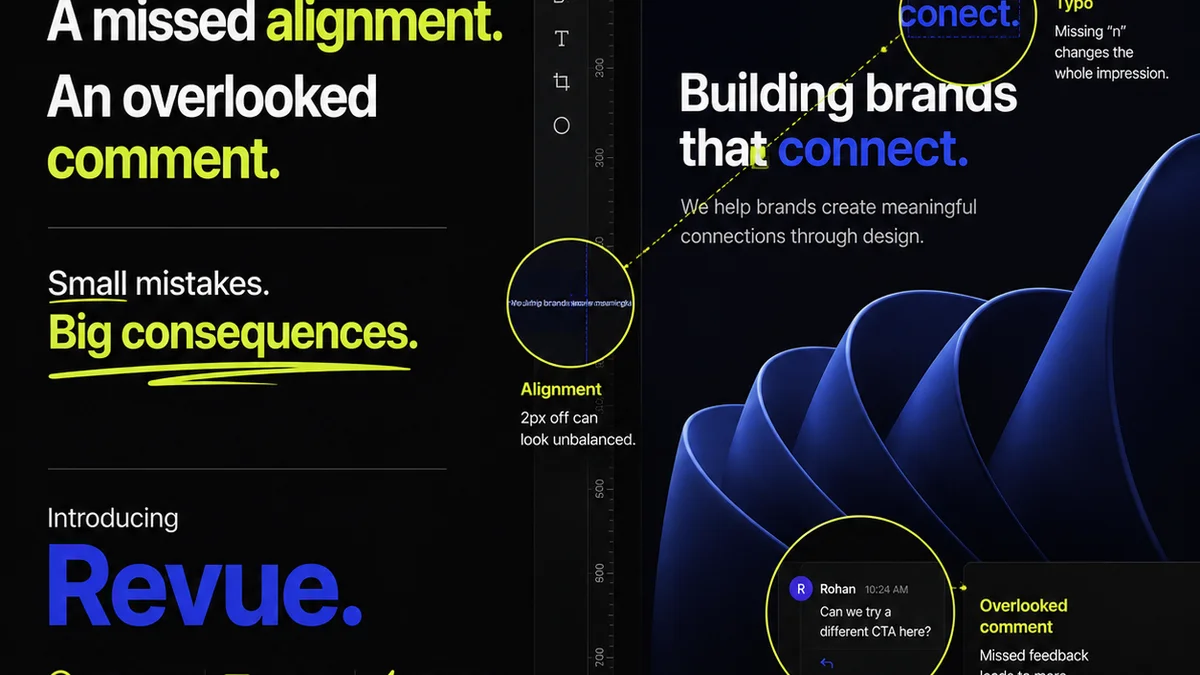
Where Revue Fits In
This is precisely why tools like Revue were built. The goal is to move beyond fragmented communication and create a structured, transparent workflow.
Revue provides a central hub for all your creative projects. Instead of juggling emails, cloud storage links, and endless chat messages, you can:
- Upload and Organize Assets: Keep all versions of your creative work in one place, easily accessible.
- Centralize Client Feedback: Allow clients and internal teams to leave comments directly on the creative, with clear annotation tools. No more digging through email chains.
- Manage Revisions and Approvals: Track the progress of each revision, see who has approved what, and maintain a clear audit trail. This visibility is crucial for managing client expectations and internal accountability.
- Run Quality Checks: Ensure that feedback is addressed, revisions are implemented correctly, and the final output meets all requirements before final sign-off.
By streamlining these core aspects of the brand review process, Revue helps agencies move faster, reduce errors, and deliver better work with less friction.
5. Define Revision Scope and Limits
How many rounds of revisions are included? What constitutes a ‘major’ versus a ‘minor’ revision?
Ambiguity here is a guaranteed way to inflate project timelines and costs.
The Scope Creep Culprit
Without clear boundaries, clients (and sometimes internal teams) can push for endless tweaks that go beyond the original agreement.
This isn't malicious; it’s often a result of:
- New ideas surfacing late in the process.
- Misunderstanding the original scope.
- Not having a clear point person for consolidated feedback.
Setting Expectations Upfront
Your contract and project kickoff are the places to define this:
- Clearly state the number of revision rounds included.
- Define what constitutes a revision round (e.g., consolidated feedback from all key stakeholders).
- Specify what falls outside the scope (e.g., significant strategic shifts, adding new elements not in the original brief).
- Outline the process and cost for out-of-scope requests.
This clarity protects both the agency and the client, ensuring the project stays focused and efficient.
6. Integrate Quality Assurance (QA) Rigorously
The final stage of the brand review is often a rushed QA check, if it happens at all.
This is a mistake. QA isn't an afterthought; it's an integral part of the review process.
The Cost of Skipping QA
Skipping or rushing QA leads to:
- Technical errors (e.g., broken links, incorrect formatting).
- Inconsistent application of brand elements across different assets.
- Typos and grammatical errors that undermine credibility.
- Assets that don't meet technical specifications for their intended platforms.
These errors damage the brand’s reputation and can require costly rework.
Build QA into Your Workflow
QA should happen at multiple points:
- During development: Regular checks by the creative team.
- Post-revision: Verifying that all requested changes have been implemented correctly.
- Pre-approval: A final, systematic check against the brief, brand guidelines, and technical specs.
A dedicated QA checklist, ideally integrated with your feedback and approval tool, ensures nothing slips through the cracks.
Final Thought
A brand review process isn't just a gatekeeper; it's a quality engine. It should be designed to elevate creative, not just to approve it.
Are your reviews a bottleneck, or are they a catalyst for better work?
Frequently asked questions
What are the key components of an effective brand review process?
An effective brand review process includes clear definitions of brand alignment, segmented reviewers, phased feedback, centralized communication channels, defined revision scopes, and rigorous quality assurance.
How can I prevent scope creep during brand reviews?
Prevent scope creep by clearly defining the project scope, number of revision rounds, and what constitutes out-of-scope requests in your contract and during the project kickoff. Use a centralized tool to track feedback and approvals.
What's the difference between a brand review and a quality assurance (QA) check?
A brand review focuses on strategic and creative alignment with the brand's identity and objectives. Quality assurance (QA) focuses on technical accuracy, correctness of implementation, and adherence to specifications (e.g., no typos, correct links, proper formatting).
How does centralized feedback help in the brand review process?
Centralized feedback ensures all stakeholders are working from the same information, reduces miscommunication, provides a clear audit trail, and speeds up decision-making by eliminating the need to dig through scattered emails or documents.