Everyone talks about brand strategy. They talk about mission statements, vision, values, and target personas. They pull out fancy mood boards and color palettes.
None of that is wrong. But it’s incomplete. It's like showing up to a construction site with a beautiful rendering but no blueprints.
The Hard Truth: Strategy Isn't Just About 'Feeling Right'
A brand strategy is a functional document. It’s the operational bedrock for every marketing decision you make. If it doesn't translate into tangible actions and measurable outcomes, it's just pretty words.
This isn't about creative flair; it's about disciplined execution. Your brand strategy needs to be a checklist, a set of rules, a guide for consistent, effective communication and product development. It’s the difference between a brand that's memorable and one that's just *there*.
1. Defining Your Core Identity (Beyond Buzzwords)
This is where most teams get stuck in the abstract. You need to move from vague statements to concrete differentiators.
Purpose: Why Do You Exist?
This isn't about making the world a better place, though that's nice. It's about the fundamental problem you solve for your customers. What is the core need you fulfill that no one else can, or does, in quite the same way?
Mission: What Do You Do?
This is your operational mandate. It should be clear, concise, and action-oriented. Who do you serve? What do you provide? How do you do it?
Vision: Where Are You Going?
This is the aspirational future. It should inspire but also be grounded in reality. What does success look like in 5, 10, 20 years? What impact will you have made?
Values: How Do You Behave?
These are your non-negotiables. Not just platitudes like 'integrity' or 'innovation,' but specific behaviors that guide decision-making, especially when things get tough. What principles will you *never* compromise?
Unique Value Proposition (UVP): What Makes You Different?
This is critical. What single, clear benefit do you offer that your competitors don't? It must be specific to your audience and address a pain point they care about.
- Assumption: A good UVP is just a catchy slogan.
- Reality: A good UVP is a verifiable promise backed by your product or service.
Think about how these elements differentiate you. If your 'purpose' could apply to three other companies in your space, it’s not specific enough.
2. Understanding Your Audience (Deeply)
You've probably got buyer personas. Great. Now, let's make them real. Personas are starting points, not endpoints.
Demographics are Not Destiny
Age, location, income – these are basic filters. What matters more is psychographics: their motivations, fears, aspirations, and daily struggles. What keeps them up at night, related to what you do?
Behavioral Insights
How do they actually behave? Where do they get their information? What influences their purchasing decisions? What are their existing biases or assumptions about your industry?
The 'Jobs To Be Done' Framework
People don't buy products; they hire them to do a job. What is the job your customer is trying to get done? Understanding this reveals unmet needs and opportunities.
- Example: Someone doesn't buy a drill; they hire it to make a hole. What *kind* of hole? For what purpose? This shifts focus to outcomes.
Your brand strategy must be built around solving *their* problems, not just promoting your features.
3. Competitive Analysis (Beyond Surface Level)
You know who your competitors are. But do you know their strategy? Their weaknesses? Their vulnerabilities?
Direct vs. Indirect Competitors
Direct competitors offer similar products/services. Indirect competitors solve the same customer problem, just differently. Don't ignore the indirect – they often represent innovation and changing customer expectations.
Strategic Positioning
Where do your competitors sit in the market? What are their claimed strengths? What do customers *actually* perceive as their strengths and weaknesses?
Communication Channels and Messaging
Where are they active? What are they saying? How are they saying it? Look for gaps or over-saturated channels.
SWOT Analysis (Done Right)
Strengths, Weaknesses, Opportunities, Threats. But go deeper. Strengths and weaknesses should be relative to competitors. Opportunities and threats should be informed by market trends and competitor actions.
- Common Mistake: Treating SWOT as a static list. It's a dynamic tool.
Your analysis should inform your differentiation. Where can you win by being different, better, or by serving an overlooked niche?
4. Messaging and Positioning Strategy
This is where strategy meets communication. How do you talk about yourself to your audience?
Brand Voice and Tone
Is your brand witty, serious, authoritative, friendly? This must be consistent across all touchpoints. It’s not just *what* you say, but *how* you say it.
Key Messaging Pillars
What are the 3-5 core messages you want your audience to understand and remember about your brand? These should directly stem from your UVP and audience needs.
Positioning Statement
A concise internal statement that defines your target audience, your market category, your key benefit, and your primary differentiator. It's your north star for all external communications.
For [target audience], [brand name] is the [market category] that provides [key benefit/UVP] because [reason to believe/differentiator].
This statement forces clarity and ensures everyone on the team is aligned.
Content Strategy Alignment
Every piece of content – blog post, social media update, ad – should ladder up to your core messages and positioning. Does it serve the audience? Does it reinforce your brand? Does it have a clear call to action or purpose?
5. Visual Identity System
This is more than a logo. It's the entire visual language of your brand.
Logo and Variations
Primary logo, secondary logos, icons, favicons. Ensure they work across different applications and sizes.
Color Palette
Primary, secondary, and accent colors. Define their usage and accessibility standards. Check contrast ratios against WCAG guidelines.
Typography
Primary and secondary typefaces. Define usage for headlines, body copy, captions. Specify weights and sizes.
Imagery and Iconography
Style guidelines for photography, illustration, and icon usage. What mood should images convey? What subjects are appropriate?
Layout and Grid Systems
Establish consistent layouts for web, print, and other media. This ensures visual coherence and predictability.
- Checklist Item: Does every visual asset feel like it belongs to the same brand?
A strong visual system reinforces brand recognition and trust. It makes your brand instantly identifiable.
6. Brand Governance and Guidelines
A strategy is useless if it's not followed. This is where you enforce consistency.
Brand Guidelines Document
A comprehensive resource detailing all aspects of your brand strategy and execution. This should be easily accessible to everyone who creates content or represents the brand.
Usage Rules
Clear do's and don'ts for logo usage, color application, typography, and messaging. This prevents misuse and dilution.
Review and Approval Process
How is brand compliance checked? Who has the final say? This needs to be a defined workflow.
- Symptom of Weak Governance: Inconsistent branding across different departments or projects.
- Symptom of Weak Governance: Marketing materials that don't align with product UI.
Good governance ensures your brand remains strong and unified over time.
Where Revue Fits In
Managing a brand strategy requires clarity and control over creative output. This is where a centralized feedback and approval platform like Revue becomes essential.
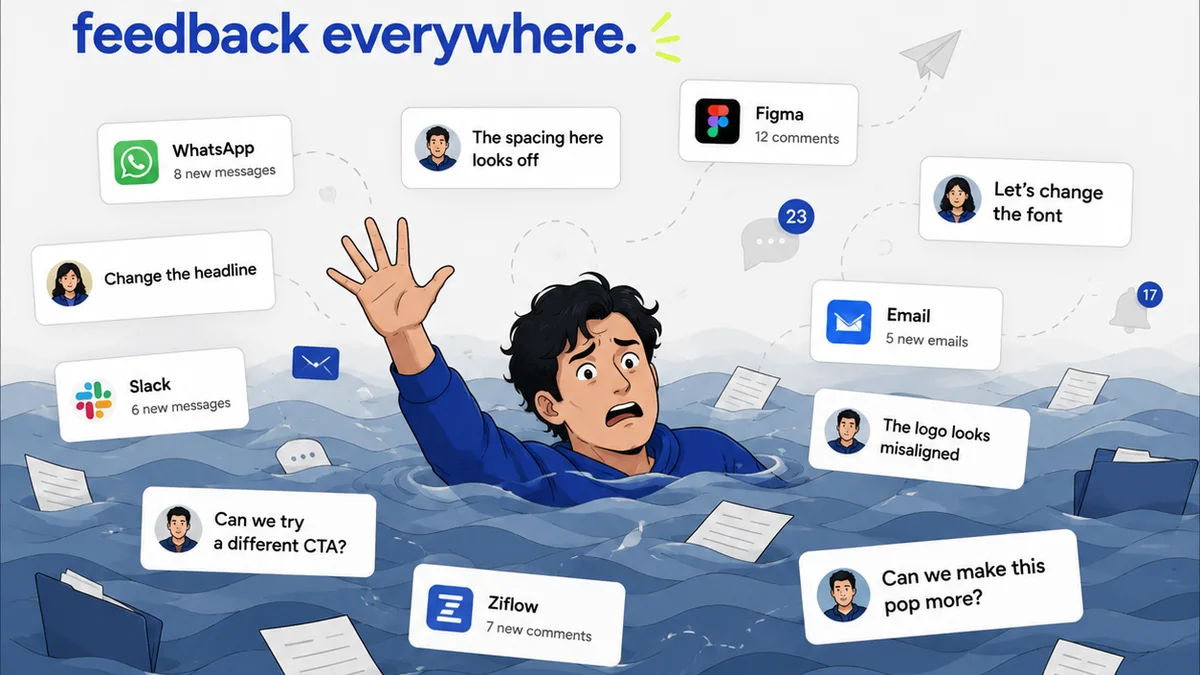
Instead of scattered email threads and endless revision rounds, Revue provides a single source of truth for creative assets. You can:
- Centralize Feedback: All stakeholders comment directly on the creative, eliminating miscommunication and lost feedback.
- Manage Revisions: Track every version of a design, ensuring everyone is working from the latest approved asset.
- Streamline Approvals: Clearly see who has approved what, and when, providing an auditable trail.
- Ensure Quality Checks: Integrate brand guidelines and checklists directly into the review process, making compliance easier.
When your brand strategy is operationalized through a tool designed for creative workflows, consistency isn't an accident; it's the standard.
Final Thought
Is your brand strategy a living, breathing operational guide, or is it gathering dust on a shelf? The real test of a brand strategy isn't how good it sounds, but how well it's executed, day in and day out. Are you building a brand, or just making noise?
Frequently asked questions
What's the difference between brand strategy and brand identity?
Brand strategy is the 'why' and 'how' – the plan and principles behind your brand. Brand identity is the 'what' – the visual and verbal elements (logo, colors, voice) that represent the strategy.
How often should I revisit my brand strategy?
While core elements might remain stable, market conditions and audience needs change. It's wise to review and potentially update your strategy at least annually, or whenever significant market shifts occur.
Can a small business use a brand strategy checklist?
Absolutely. A checklist is even more crucial for small businesses to ensure they are building a strong foundation from the start. It helps prioritize efforts and maintain consistency, even with limited resources.
What if my team disagrees on brand strategy elements?
Disagreement often stems from unclear objectives or different interpretations. A well-defined process, clear documentation (like the points in this checklist), and strong leadership are key to aligning the team. Focus on data and audience needs to guide decisions.