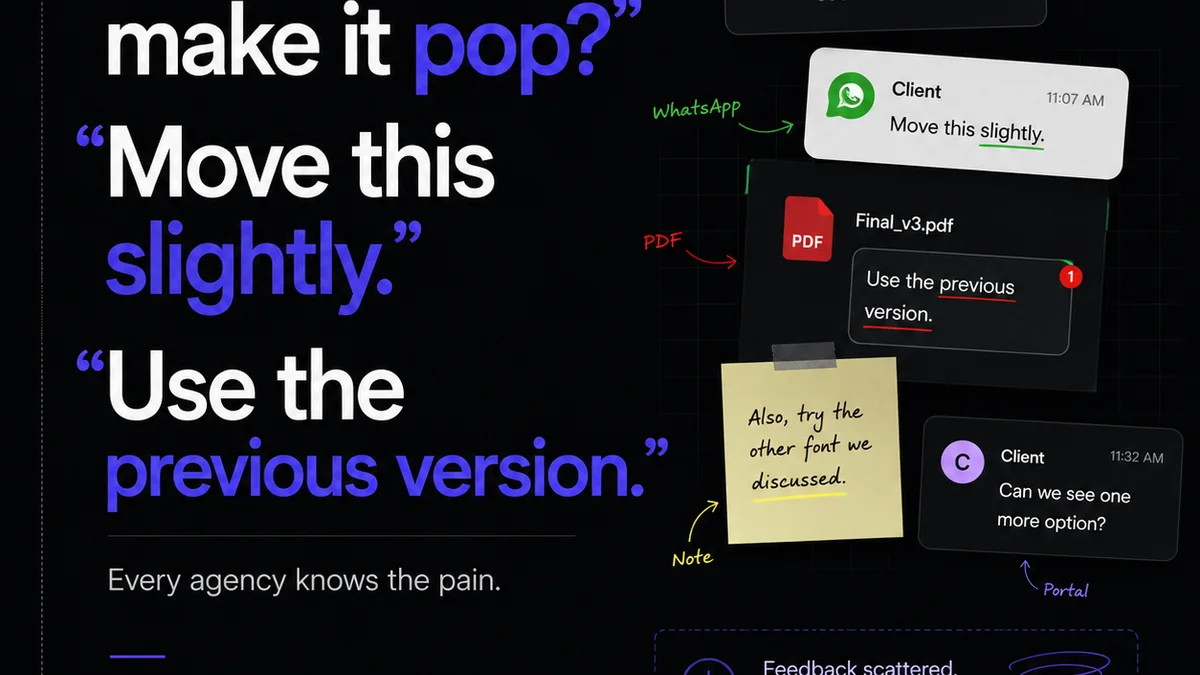
Everyone agrees that campaign QA is crucial. It's the last line of defense before your agency's work goes live. You’ve probably seen endless checklists, buzzwords about 'thorough reviews,' and maybe even a dedicated QA person.
None of that is wrong. But it’s incomplete.
The hard truth is that robust campaign quality assurance isn't a final step; it’s a continuous process woven into the fabric of your agency’s operations. It’s less about finding mistakes and more about preventing them by building a system that inherently produces quality.
1. The Illusion of the Final Check
Most agencies treat QA like a gatekeeper at the end of the production line. The campaign is built, assets are rendered, copy is written, and then—then—someone looks it over.
This approach is fundamentally flawed for several reasons:
- It creates bottlenecks.
- It’s reactive, not proactive.
- It places undue pressure on the QA reviewer.
- It often leads to last-minute, rushed fixes that introduce new errors.
- It assumes all prior steps were perfect.
This final-only QA model is a relic of simpler production workflows. Modern campaigns are complex, multi-platform, and iterate rapidly. Relying solely on a final check is like expecting a security guard to catch every single problem at the exit without anyone checking the doors or windows on the way in.
2. Defining Quality in Campaign Delivery
Before we can assure quality, we need to define what it means for your agency and your clients. Campaign QA encompasses far more than just spotting typos.
Consider these dimensions:
Brand Consistency
Does the campaign adhere to brand guidelines? Are logos, colors, typography, and tone of voice applied correctly across all assets?
Technical Accuracy
This is where many campaigns falter. Are all links working? Are tracking parameters correct? Do ad specs meet platform requirements (e.g., file size, dimensions, formats)? Is the code clean and efficient?
Creative Integrity
Does the final output match the approved brief and creative concept? Has anything been misinterpreted or lost in translation during production?
Platform Compliance
Does the campaign meet the specific technical and policy requirements of each distribution platform (e.g., Facebook, Google Ads, TikTok)? This includes ad policies, aspect ratios, and character limits.
Accessibility
Is the creative accessible to all users? For digital assets, this means considering things like color contrast, alt text for images, and keyboard navigation if applicable. While not always part of standard campaign QA, it’s a critical component of responsible design and development. You can find guidance on web accessibility standards from the Web Content Accessibility Guidelines (WCAG).
Client Requirements
Did we deliver exactly what the client asked for and signed off on?
A comprehensive QA process addresses all these areas, not just the most obvious ones.
3. Building Quality In: The Proactive Approach
The real power in campaign QA comes from embedding quality checks throughout the entire workflow, not just at the end. This shifts the focus from finding errors to preventing them.
Briefing and Kick-off
Ensure the brief is crystal clear and all stakeholders understand the objectives, target audience, key messaging, and technical specifications. Ambiguity here is the root of many downstream errors.
Creative Development
Implement internal reviews at key stages. A quick check by a peer or a senior creative before a deliverable is finalized can catch issues early. For digital, this means developers testing components as they build them, not waiting for a final UAT.
Asset Production
For static or motion graphics, establish clear templates and style guides. Automate checks where possible. For example, use scripts to verify file naming conventions or dimensions.
Copywriting and Content
Have copywriters use spell-check and grammar tools. Implement a peer review process for all client-facing copy. Ensure legal and compliance reviews are part of the workflow, not an afterthought.
Development and Implementation
For websites or interactive campaigns, conduct ongoing testing. Developers should perform unit tests, and a separate testing phase (User Acceptance Testing or UAT) should be planned and executed before launch.
Pre-Launch Checks
This is where the *final* final check happens, but it’s a culmination, not the start. This stage is about verifying that all the integrated pieces are working together as intended, based on the prior embedded checks.
4. The Role of Technology in Campaign QA
Manual QA is essential, but it’s prone to human error and can be inefficient. Technology can significantly enhance your QA process.
Project Management Tools
Tools that track tasks, deadlines, and approvals provide visibility and accountability. They help ensure no step is missed and that feedback is logged systematically.
Version Control
For code and design files, version control systems prevent accidental overwrites and allow you to revert to previous states if issues arise. Platforms like GitHub or Figma’s built-in version history are invaluable.
Automated Testing Tools
For web development, tools can automatically check for broken links, test performance, and ensure cross-browser compatibility. For ad creative, scripts can verify file specs and naming conventions.
Proofing and Annotation Software
Specialized tools allow stakeholders to provide feedback directly on creative assets, reducing ambiguity and streamlining the review process. This is critical for managing client feedback effectively.
Content Management Systems (CMS)
A well-configured CMS can enforce content standards and simplify the review and publishing process, reducing manual checks.
5. Where Revue Fits In
Managing complex campaigns with multiple stakeholders and deliverables across various platforms can quickly become chaotic. This is where a centralized platform like Revue becomes indispensable for effective campaign QA.
Revue helps by:
- Centralizing Feedback: All client and internal feedback on creative assets is captured in one place, tied to specific versions. No more hunting through email chains or Slack messages. This ensures all comments are visible and auditable.
- Streamlining Revisions: When feedback is consolidated, revisions are clearer. Designers and developers know exactly what needs to be changed, reducing misinterpretations that lead to new errors.
- Managing Approvals: Clear approval workflows ensure that each stage is signed off by the right people. This visibility prevents work from moving forward without necessary buy-in, a common source of last-minute issues.
- Facilitating Quality Checks: By having a clear history of feedback and revisions, the final QA step becomes a verification of completed tasks rather than a discovery mission for overlooked problems. It provides a documented trail for every decision made.
Revue doesn't replace human judgment or technical testing, but it provides the essential operational framework to make those activities more efficient and effective, ensuring quality is built-in and easily verified.
6. Common Pitfalls in Campaign QA
Even with the best intentions, agencies stumble. Here are common mistakes to watch out for:
- Assuming
Frequently asked questions
What is the primary goal of campaign QA?
The primary goal of campaign QA is to ensure that all creative assets and campaign elements meet predefined quality standards, brand guidelines, technical specifications, and client requirements before launch. It aims to prevent errors, maintain brand consistency, and deliver a flawless user experience.
How can agencies improve their campaign QA process?
Agencies can improve campaign QA by embedding checks throughout the workflow, not just at the end. This includes clear briefing, peer reviews during development, utilizing technology for automated checks and feedback centralization, and establishing clear approval processes.
What are the key areas to check during campaign QA?
Key areas include brand consistency (logos, colors, tone), technical accuracy (links, tracking, specs), creative integrity (adherence to concept), platform compliance (ad policies, formats), accessibility, and ensuring all client requirements are met.
How does technology help with campaign QA?
Technology aids campaign QA through project management tools for tracking, version control for asset history, automated testing for technical checks, and proofing software for centralized feedback, making the process more efficient and less prone to human error.