Everyone nods when you say campaign quality assurance (QA) is important. It’s the final check before launch, right? The last hurdle to clear. None of that is wrong. But it’s incomplete.
The real value of campaign QA isn't just catching typos. It’s about protecting your reputation, ensuring client satisfaction, and ultimately, safeguarding your agency’s bottom line. Think of it less as a final step and more as an ongoing commitment baked into your entire workflow.
1. The High Cost of Cutting Corners
What happens when QA is treated as an afterthought? Mistakes slip through. These aren't just embarrassing; they're expensive.
Broken links lead to lost traffic and conversions. Incorrect targeting means wasted ad spend. Off-brand messaging erodes client confidence. Inaccurate data reporting can lead to client disputes and churn.
These aren't isolated incidents. They’re symptoms of a deeper problem: a failure to prioritize quality throughout the campaign lifecycle.
The Ripple Effect of Small Errors
A single misplaced decimal in a bid price can cost thousands. A misspelled client name on a landing page feels unprofessional. A CTA button that doesn't work means a lost lead. These aren't just minor glitches; they’re small fires that require immediate, often costly, attention.
Your team scrambles to fix them, pulling resources from other critical tasks. The client is frustrated, questioning your attention to detail.
Reputation Is Everything
In the agency world, your reputation is your currency. A history of sloppy execution, even if unintentional, damages that currency. Clients talk. Potential clients do their due diligence.
A strong QA process signals professionalism and reliability. It tells clients you respect their brand and their investment.
2. Defining True Campaign Quality Assurance
Campaign QA isn't just about proofreading copy or checking if an ad loads. It’s a systematic process designed to ensure every element of a campaign functions as intended and aligns with strategic goals.
This means verifying:
- Strategic alignment: Does the creative meet the brief?
- Technical functionality: Do all links, forms, and assets work?
- Brand consistency: Is the messaging and visual identity on-brand?
- Performance metrics: Are tracking codes implemented correctly?
- Compliance: Does it meet legal and platform requirements?
Beyond the Obvious: What to Actually Check
Think beyond the surface. A comprehensive QA checklist includes:
- Adherence to Brief: Does the final output match the approved strategy, target audience, and key messaging?
- Creative Accuracy: Is the copy free of typos and grammatical errors? Are images and videos high-resolution and correctly formatted?
- Functional Testing: Do all URLs, buttons, forms, and interactive elements work across intended devices and browsers?
- Tracking and Analytics: Are UTM parameters correct? Are conversion pixels firing? Is event tracking set up properly?
- Platform Compliance: Does the creative meet the specific ad platform guidelines (e.g., Facebook, Google Ads, LinkedIn)?
- Legal and Brand Guidelines: Are disclaimers, terms, and conditions present and correct? Is the brand logo and color palette used appropriately?
- Landing Page Experience: Does the landing page load quickly? Is the content consistent with the ad? Is the user experience smooth?
The Human Element vs. Automation
While automation can catch many technical issues (like broken links or pixel firing), it can't replace human judgment. A human reviewer can assess:
- Tone of voice
- Brand perception
- Subtle errors in logic or messaging
- Overall user experience
The most robust QA integrates both automated checks and thorough human review.
3. Integrating QA into Your Workflow, Not Just the End
The biggest mistake agencies make is treating QA as a final gate. It’s a process that should be woven into every stage of campaign development.
Think about it: if you wait until the end to check strategy alignment, you’re likely to find major issues that require costly rework.
Early Checks, Big Savings
QA should start with the brief itself. Does it clearly define objectives, KPIs, and target audiences? Is it realistic?
During creative development, regular check-ins ensure the work stays on track. This prevents divergence from the strategy before significant time is invested.
Mid-Campaign Monitoring
QA doesn't stop at launch. Continuous monitoring is crucial.
Are ads performing as expected? Are there any sudden drops in conversion rates? Are users reporting issues?
This ongoing QA allows for rapid adjustments, optimizing performance and preventing small issues from snowballing.
The Role of Project Management
Effective project management is key to embedding QA. This means:
- Building QA steps into project timelines.
- Assigning clear ownership for QA tasks.
- Ensuring clear communication channels for reporting and resolving issues.
- Using tools that facilitate tracking and accountability.
4. Where Revue Fits In
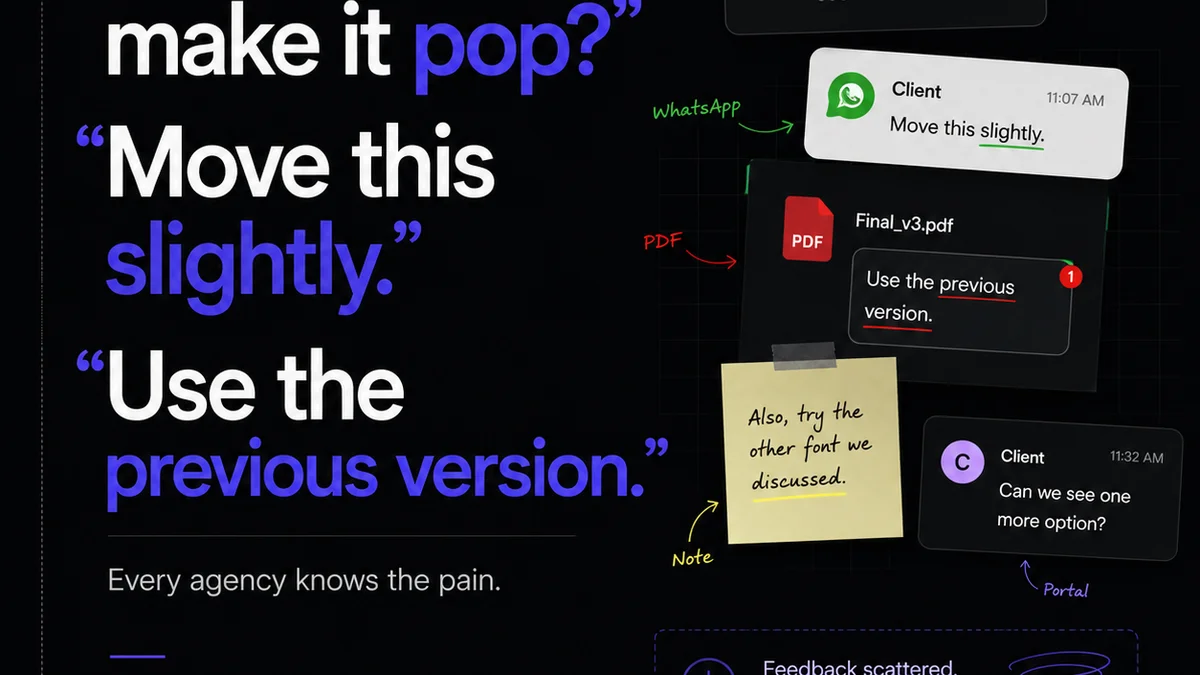
Managing client feedback, revisions, and approvals can be a labyrinth. Without a centralized system, crucial details get lost, leading to misunderstandings and errors that QA later has to catch.
Revue helps streamline this chaotic process, making robust campaign QA more achievable.
Centralized Feedback: All client comments and stakeholder input live in one place. No more sifting through endless email threads or Slack messages. This clarity reduces misinterpretations that can lead to QA failures.
Revision Visibility: Track every change made and by whom. This audit trail is invaluable for understanding the evolution of a creative asset and ensuring no intended revisions were missed or incorrectly implemented.
Clear Approval Flows: Define and manage clear approval stages. This ensures that only finalized, reviewed assets move forward, minimizing the risk of unapproved or incomplete work entering the campaign.
Integrated Quality Checks: While Revue isn't a QA automation tool, its structured workflow supports rigorous quality checks. By ensuring all feedback is captured, all revisions are logged, and all approvals are documented, it provides a solid foundation for your QA team to build upon.
This structured approach drastically reduces the likelihood of errors stemming from miscommunication or lost feedback, making your final QA phase smoother and more effective.
5. Building a Culture of Quality
Ultimately, effective campaign QA is less about a process and more about a mindset.
It requires buy-in from every team member, from account managers to designers to strategists.
Empower Your Team
Give your team the training and tools they need to identify potential issues. Foster an environment where raising concerns about quality is encouraged, not penalized.
Learn from Mistakes
When errors do occur, conduct post-mortems. Understand the root cause and implement changes to prevent recurrence. This isn't about blame; it's about continuous improvement.
Client Collaboration
Involve clients in the QA process where appropriate. Educate them on what you’re checking and why. This builds trust and ensures shared understanding of quality standards.
Final Thought
Is meticulous campaign QA just busywork before launch, or is it the invisible engine that drives client success and agency profitability? The answer depends on whether you see it as a hurdle or a foundation.
Frequently asked questions
What is the primary goal of campaign QA?
The primary goal of campaign QA is to ensure that all campaign elements function correctly, align with strategic objectives, maintain brand consistency, and meet client expectations before launch and throughout the campaign lifecycle. It aims to prevent errors that can damage reputation, waste resources, and decrease ROI.
How can agencies improve their campaign QA process?
Agencies can improve campaign QA by integrating checks throughout the workflow, not just at the end. This includes establishing clear checklists, utilizing both automated tools and human review, fostering a culture of quality, providing team training, and using centralized feedback and approval platforms like Revue to minimize miscommunication.
What are the consequences of poor campaign QA?
Poor campaign QA can lead to significant negative consequences, including wasted ad spend, lost leads or sales, damage to brand reputation, client dissatisfaction and churn, legal issues due to non-compliance, and internal team stress from constant firefighting and rework.
Can automation fully replace human review in campaign QA?
No, automation can effectively handle technical checks like broken links or pixel firing, but it cannot replace human judgment. Human reviewers are essential for assessing tone of voice, brand perception, strategic alignment, subtle errors, and the overall user experience, which are critical for effective campaign QA.