Everyone knows you need to review creative work before it goes live. It’s a basic step. A checkmark on the project plan. But if that’s the extent of your campaign review strategy, you’re leaving massive value on the table.
The hard truth? Most campaign reviews are a superficial exercise in getting a sign-off, not a deep dive into strategic alignment and creative excellence. This isn’t just about catching typos; it’s about ensuring the campaign actually works.
1. Define the 'Why' Behind Every Review
Before you even look at a draft, clarify the objective of the review. Is it for strategic alignment? Technical feasibility? Brand consistency? Client satisfaction?
Too often, reviews are a muddled mess of conflicting feedback because no one agreed on what success looks like *for that specific stage*.
Strategic Alignment Check
Does the creative concept directly address the brief? Are the key messages clear? Does it align with the overall campaign goals and target audience?
Tactical Execution Review
Is the copy error-free? Are the visuals high-resolution and correctly formatted? Does it meet platform specifications (e.g., social media dimensions, video lengths)?
Brand Consistency Audit
Does the creative adhere to brand guidelines? Is the tone of voice consistent? Are logos and colors used correctly?
2. Structure for Clarity, Not Chaos
A chaotic review process breeds chaotic feedback. Implement a structured approach to gather and manage input.
Assign Roles and Responsibilities
Who is responsible for providing feedback at each stage? Who is the ultimate approver? Avoid a free-for-all where everyone with a pulse weighs in without context.
- Client Stakeholders: Focus on strategic alignment, core messaging, and overall impact.
- Internal Creative Team: Focus on execution, brand adherence, and technical specs.
- Legal/Compliance: Focus on regulatory adherence and risk mitigation.
- Project Manager: Facilitates the process, tracks feedback, and ensures deadlines are met.
Standardize Feedback Capture
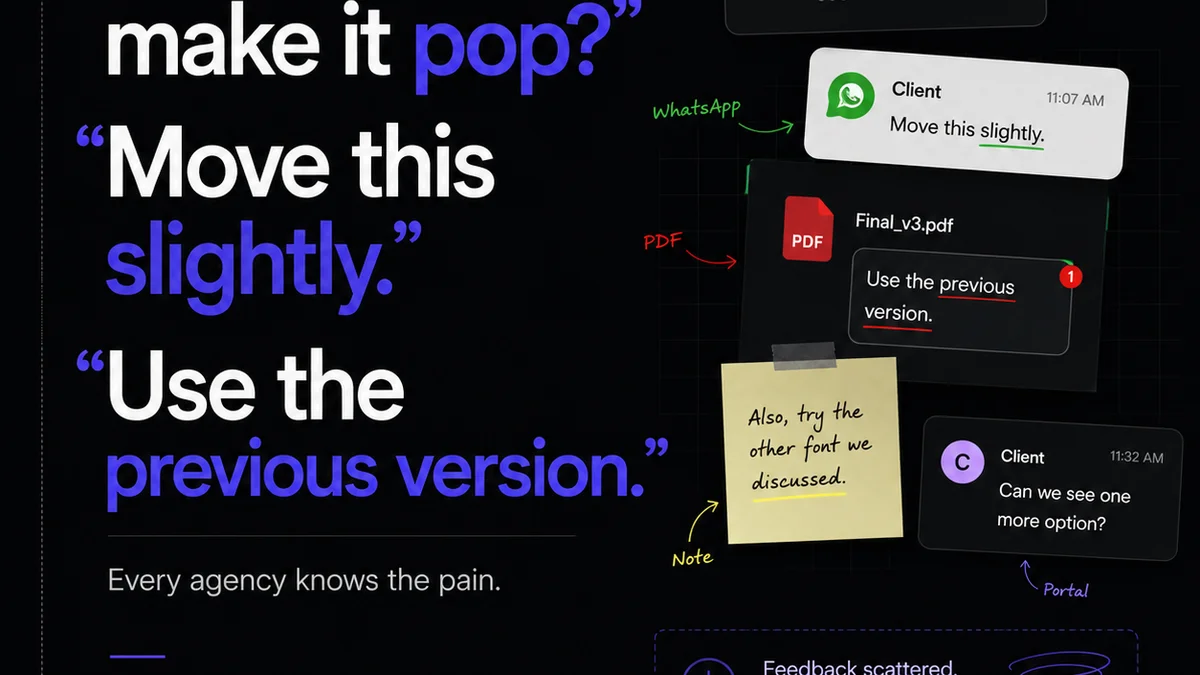
Ad-hoc emails, scattered Slack messages, and scribbled notes on PDFs are a recipe for disaster. Use a centralized system that captures feedback directly on the creative asset.
This ensures context is never lost and makes it easy to track what’s been addressed.
Establish Review Cadence and Gates
Define clear stages for review (e.g., concept, draft, final). Each stage should have specific deliverables and a defined set of feedback criteria.
This prevents major issues from surfacing late in the game, when they’re most expensive to fix.
3. Master the Art of Constructive Feedback
Feedback is only valuable if it’s actionable and delivered with intent. Generic comments like “I don’t like it” are useless.
Be Specific and Objective
Instead of “Make it pop,” try “The headline could be more prominent. Let’s explore increasing its font size by 20% or using a bolder weight.”
Anchor feedback to the brief or strategic goals whenever possible.
Focus on the Work, Not the Person
Frame comments around the creative asset itself. “This logo placement feels a bit cramped” is better than “You put the logo in the wrong place.”
Prioritize and Categorize
Not all feedback is created equal. Differentiate between critical issues that *must* be addressed and suggestions that are optional or stylistic preferences.
- Must-haves: Issues that directly impact the campaign's effectiveness or compliance.
- Nice-to-haves: Minor tweaks that could enhance the work but aren't essential.
- Questions: Points that require clarification rather than immediate change.
Allow for Disagreement (and Resolution)
Sometimes, different stakeholders will have conflicting feedback. The review process needs a mechanism for resolving these disagreements, ideally before revisions begin.
4. Embrace Iteration, Not Perfectionism
Creative work is rarely perfect on the first try. The review process should facilitate healthy iteration, not demand unattainable perfection from the outset.
Set Realistic Expectations
Clients and internal teams need to understand that multiple rounds of revisions are normal. The goal is to arrive at the best possible outcome through collaboration.
Time-Box Revisions
Unfettered revision cycles can derail projects. Set clear time limits for each round of revisions and define what constitutes a
Frequently asked questions
What is the primary goal of a campaign review?
The primary goal of a campaign review is to ensure the creative work aligns with strategic objectives, meets brand standards, is technically sound, and resonates with the target audience before final deployment. It's a quality control and strategic alignment checkpoint.
How can I make client feedback more constructive?
Encourage clients to be specific, objective, and tie feedback back to the campaign brief or goals. Define clear roles for who provides what type of feedback and use a centralized platform to capture it, reducing ambiguity and misinterpretation.
What are the key stages of a campaign review process?
Key stages typically include concept review, draft review, and final review. Each stage should have defined deliverables, specific feedback criteria, and clear approval gates to ensure progress and prevent late-stage issues.
How can technology improve campaign reviews?
Centralized feedback platforms streamline the entire process. They allow for contextual comments directly on assets, version control, clear audit trails, and automated notifications, reducing miscommunication and speeding up approvals.