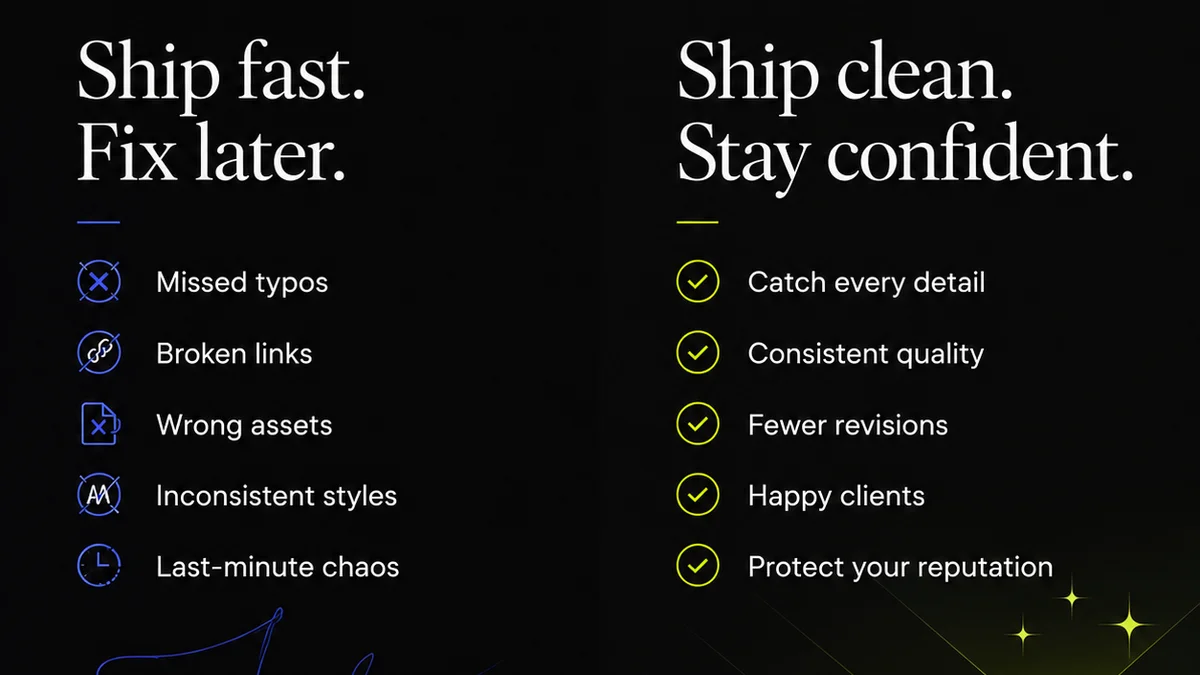
Everyone agrees that effective campaign review is crucial for creative agency success. It’s the gatekeeper of quality, the bridge between concept and client approval. You’ve probably heard advice about clear briefs, defined stakeholders, and timely feedback. None of that is wrong. But it’s incomplete.
The hard truth is, most agencies treat campaign reviews as a necessary evil, a step to be rushed through. This mindset creates a cascade of operational drag, stifles creative iteration, and erodes client trust. It’s not just about getting a sign-off; it’s about how you get there.
1. The 'Big Bang' Review
Many teams lump all feedback into one massive, end-of-phase review. They gather everything – copy edits, design tweaks, strategic questions – and dump it on the client in one go. This feels efficient on the surface: fewer meetings, less back-and-forth, right?
Wrong.
This approach guarantees a bloated, overwhelming feedback session. Clients, faced with too much to digest, either skim or get bogged down in minor details, missing the strategic points. It’s like trying to drink from a firehose.
Consequences of the 'Big Bang':
- Missed strategic feedback
- Focus on superficial changes
- Extended revision cycles
- Client fatigue and frustration
- Increased risk of scope creep
Instead, break down reviews into smaller, focused touchpoints. Review strategy first, then creative execution, then final polish. This allows for deeper engagement and more impactful feedback at each stage.
2. Ambiguous Stakeholder Roles
Who is actually responsible for the final approval? Too often, the answer is vague. Is it the marketing manager? The brand director? The legal department? Everyone and no one?
When roles aren’t crystal clear, feedback becomes a tangled mess. You get conflicting opinions, delayed decisions, and the dreaded “I thought *they* were handling that” moments. This ambiguity kills momentum faster than a bad client brief.
Identifying Ambiguity:
- Multiple people providing feedback without clear hierarchy.
- Feedback arriving piecemeal from different channels.
- Confusion over who has the ultimate 'yes' or 'no'.
- Constant requests for clarification on who to listen to.
Define your core review stakeholders upfront. Assign primary decision-makers and secondary reviewers. Ensure everyone understands their role and the process for consolidating feedback.
3. The 'Email Black Hole' Feedback Loop
Email is the default for feedback. It’s familiar, accessible, and seems straightforward. Send a draft, get comments back. Simple.
It’s anything but simple. Emails get lost, buried, or misinterpreted. Feedback is scattered across dozens of threads, making it impossible to track revisions or understand the full context of a decision. You end up with version control nightmares and endless searching for that one crucial comment.
This chaos isn't just inefficient; it breeds errors.
Symptoms of the Email Black Hole:
- Endless searches for past feedback.
Frequently asked questions
What is the biggest mistake agencies make in campaign reviews?
The biggest mistake is treating campaign reviews as a single, monolithic event ('Big Bang' review) rather than a series of focused, iterative touchpoints. This leads to overwhelming clients, missed strategic feedback, and extended revision cycles.
How can I ensure clear roles during campaign reviews?
Clearly define primary decision-makers and secondary reviewers at the outset of each project. Document these roles and communicate them to both the internal team and the client to avoid confusion and conflicting feedback.
Why is using email for feedback problematic?
Email creates an 'email black hole' where feedback gets lost, buried, or misinterpreted. It leads to scattered comments, version control issues, and difficulty tracking revisions, ultimately slowing down the process and increasing errors.
How does centralized feedback help avoid review mistakes?
Centralized feedback systems consolidate all comments and revisions in one place, providing a clear audit trail. This eliminates ambiguity, ensures everyone sees the same information, and makes it easier to track progress, preventing many common review mistakes.