Everyone thinks choosing a brand guidelines agency is about aesthetics. Pick a firm with a slick portfolio and a good vibe, and you’re set. That’s the common wisdom. It’s not wrong. But it’s incomplete.
Especially in cybersecurity, where your brand isn’t just about looking good. It’s about trust. It’s about clarity in a complex, often frightening, landscape. A misstep in branding can have far more severe consequences than a slightly off-color logo.
1. Beyond the Buzzwords: Vetting Real Cybersecurity Expertise
Cybersecurity is a minefield of jargon and fear. Your brand guidelines agency needs to navigate this with precision. They can’t just *say* they understand cybersecurity; they need to demonstrate it.
What does that look like in practice? It means they understand the nuances of your audience. Are you talking to CISOs, everyday users, or regulators? The language, the tone, the visual representation of threats and solutions – it all changes.
Audience Segmentation and Tone of Voice
A good agency will press you on this. They’ll ask:
- Who are your primary and secondary audiences?
- What are their biggest pain points regarding cybersecurity?
- What is their existing level of technical understanding?
- What emotional response do you want your brand to evoke (e.g., confidence, security, empowerment)?
If they gloss over this, run.
Visual Language for Security Concepts
How do you visually represent abstract concepts like 'threat intelligence,' 'zero trust,' or 'data encryption' without resorting to clichés? Clichés erode trust.
Look for an agency that can present a case study or a hypothetical where they've tackled complex security visuals. Do they rely on generic locks and shields, or do they develop unique, illustrative systems that convey meaning effectively and elegantly?
Compliance and Regulatory Awareness
While brand guidelines aren't legal documents, an agency that understands the regulatory environment (like GDPR, CCPA, HIPAA, or industry-specific standards) will build guidelines that are inherently more responsible. They’ll know when to be cautious with claims and how to frame technical capabilities clearly.
2. The 'Why' Behind the 'What': Strategic Brand Foundation
A brand guideline document is not a style guide. It’s a strategic tool. A great agency understands this and builds from a solid foundation.
Mission, Vision, Values Alignment
Before a single pixel is designed, the agency must understand your core mission, vision, and values. How does your cybersecurity offering uniquely contribute to the world? How do your internal values manifest externally?
Your brand guidelines should be the operationalization of these principles. If an agency starts with color palettes and typography without this context, they’re building on sand.
Competitive Landscape Analysis
Understanding your competitors isn't just about differentiation. It’s about understanding the established visual language in your space and deciding whether to align, contrast, or carve out a completely new territory. A strong agency will guide this strategic decision.
Unique Value Proposition (UVP) Translation
What makes you different? What’s your UVP? A top-tier agency will work with you to distill this into a clear, resonant brand message that then informs all visual and verbal communication. This is the soul of your brand guidelines.
3. The Practicalities: Workflow, Deliverables, and Collaboration
Even the most strategically brilliant agency is useless if they can’t deliver effectively and work well with your team.
Clear Deliverable Structure
What exactly will you receive? A comprehensive brand guidelines document is essential, but what else? Will they provide logo variations, iconography sets, templates for common assets (presentations, social media posts), or a digital style guide?
Ensure the deliverables are practical for your day-to-day operations. A beautiful PDF that’s impossible to implement is a failure.
Collaboration and Feedback Loops
How will the agency work with your internal team? Cybersecurity often involves input from technical experts, legal, marketing, and sales. The agency needs a process that can accommodate and synthesize this diverse feedback without becoming a bottleneck.
Look for a structured approach to feedback, with clear points of contact and efficient review cycles. This is where tools for managing feedback, like Revue, become invaluable for streamlining communication.
Scalability and Future-Proofing
Your brand will evolve. Your cybersecurity solutions will evolve. Will the guidelines be flexible enough to accommodate future growth and changes? A forward-thinking agency will build in that adaptability.
This might mean modular guidelines, clear rules for extending the system, or training for your internal team on how to maintain and evolve the brand.
4. Red Flags: What to Watch Out For
Not all agencies are created equal. Some common pitfalls can derail even the most promising engagement.
- Over-reliance on generic templates: If their portfolio looks like a Mad Libs of client logos, they’re likely not doing custom strategic work.
- Lack of probing questions: If they’re happy to just take your brief and start designing without asking deep questions about your business, audience, and goals, they’re not strategists.
- Poor communication: Unresponsive emails, missed deadlines, or vague answers are clear warning signs.
- Inability to explain their process: If they can’t articulate *why* they made certain design decisions, they’re likely operating on gut feel rather than strategic intent.
- Ignoring the 'cybersecurity' context: If their approach is identical to how they’d brand a coffee shop, they don’t grasp the unique challenges and opportunities of your industry.
Where Revue Fits In
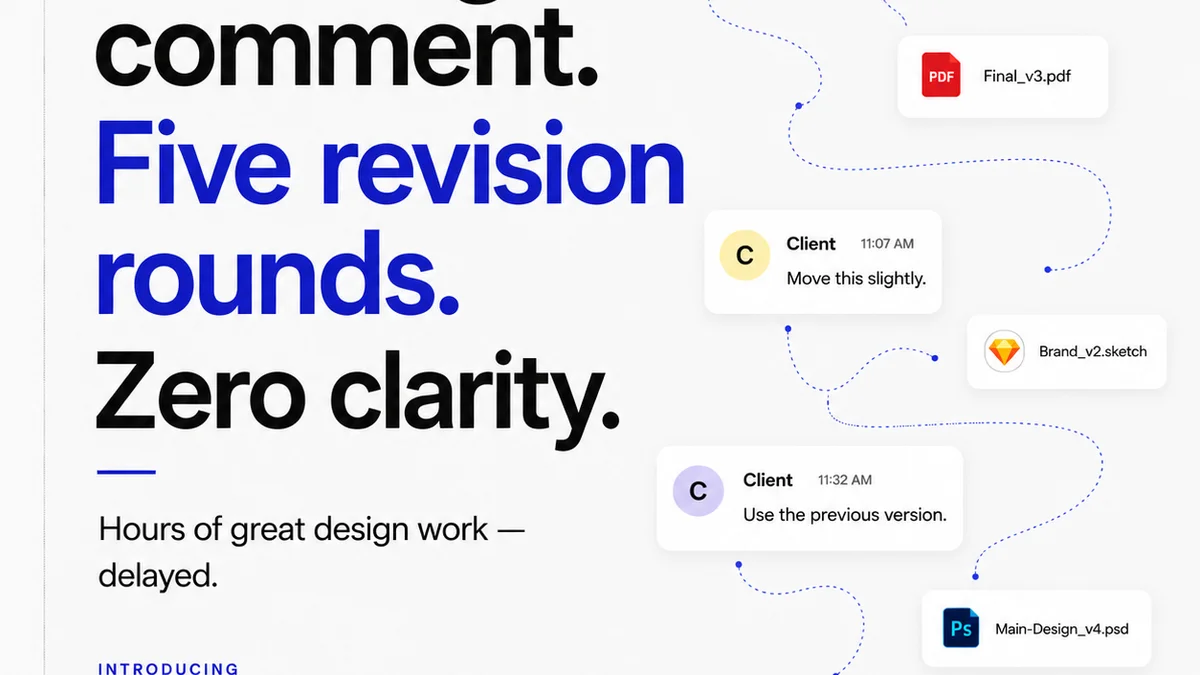
Managing the feedback and approval process for brand guidelines, especially with input from technical and legal teams, can be chaotic. This is where a platform like Revue can make a significant difference.
Instead of endless email chains and scattered comments, Revue provides a centralized hub for all feedback on creative assets. Your team can comment directly on specific elements, track revisions, and ensure approvals are clearly documented. This visibility is crucial for maintaining brand consistency and ensuring the final guidelines are robust and well-vetted.
Final Thought
Choosing a brand guidelines agency for cybersecurity is about more than just visual appeal. It’s about finding a partner who understands the high stakes of your industry, can translate complex technical concepts into clear communication, and build a brand that fosters trust and authority. Are you prioritizing strategic depth or just a pretty face?
Frequently asked questions
What's the difference between brand guidelines and a style guide?
A style guide typically focuses on the visual elements like logos, colors, and typography. Brand guidelines are broader, encompassing the 'why' behind the brand – its mission, values, voice, and strategic positioning – in addition to the visual elements. For cybersecurity, the strategic component is paramount for building trust.
How important is an agency's understanding of cybersecurity jargon?
It's crucial. While they don't need to be technical experts, they must understand the language and concepts well enough to represent them accurately and clearly to your target audience. Misrepresenting technical capabilities or using jargon incorrectly can severely damage credibility.
What are the key deliverables I should expect from a brand guidelines agency?
At a minimum, you should expect a comprehensive brand guidelines document (often a PDF and/or a digital portal). Beyond that, look for logo variations, iconography systems, color palettes, typography sets, imagery direction, and potentially templates for common assets like presentations or social media graphics.
How can I ensure the agency's work aligns with our company's core values?
During the vetting process, ask them how they approach understanding a client's mission, vision, and values. A good agency will dedicate time to this discovery phase, integrating these principles into the strategic foundation of the brand guidelines, not just the visual execution.