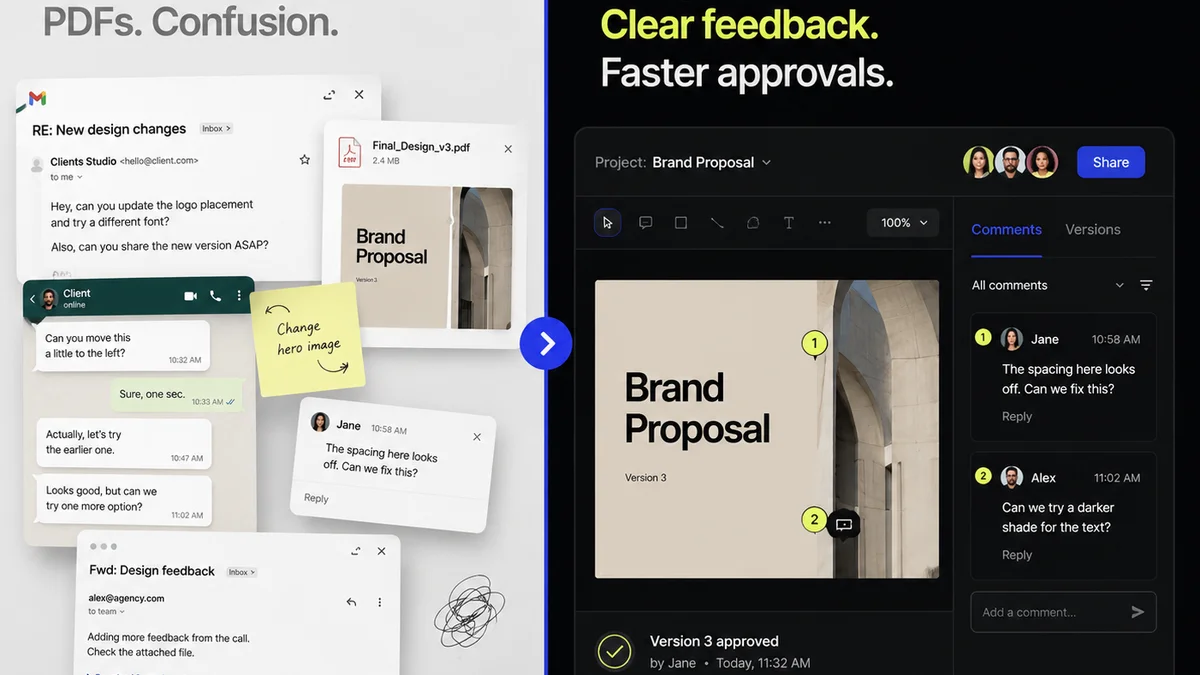
Everyone thinks choosing a creative operations agency is about finding the best software or the most features. None of that is wrong. But it’s incomplete.
The hard truth? You’re not just buying a tool; you’re hiring a partner. And the wrong partner can cripple your agency’s workflow, not fix it.
Picking the right creative operations agency means looking beyond the shiny demos and focusing on how a solution integrates with your actual day-to-day. It’s about how it handles feedback, streamlines revisions, and ensures quality before anything hits the client.
1. Define Your Core Problems First
Before you even look at vendors, map out your agency’s biggest operational bottlenecks. What’s actively costing you time, money, or client satisfaction?
Is it:
- Disorganized client feedback scattered across emails and Slack?
- Endless revision cycles with unclear direction?
- Difficulty tracking project progress and approvals?
- Manual quality assurance processes that miss errors?
- Onboarding new team members to complex workflows?
Be brutally honest. The more specific you are, the better you can evaluate potential solutions.
The Cost of Inaction
Ignoring these issues isn’t free. It leads to:
- Missed deadlines
- Budget overruns
- Team burnout
- Damaged client relationships
- Reduced profitability
Your agency’s operational health is directly tied to its bottom line.
2. Understand the
Frequently asked questions
What exactly is creative operations?
Creative operations refers to the systems, processes, and tools that enable creative teams to produce high-quality work efficiently and at scale. It bridges the gap between creative strategy and execution.
What are the signs my agency needs a creative operations solution?
Common signs include inconsistent project delivery, client feedback getting lost, frequent missed deadlines, team burnout due to inefficient workflows, and difficulty scaling operations.
Should I choose a software-only solution or an agency that offers services?
This depends on your internal resources. Software-only solutions require internal expertise to implement and manage. Agencies offering services can provide implementation, training, and ongoing support, which is ideal if you lack dedicated ops personnel.
How important is integration with existing tools?
Crucial. A new system that doesn't integrate with your existing stack (e.g., project management, design software, communication tools) creates more silos and inefficiency, defeating the purpose.