Everyone says you need a product discovery agency. They talk about user research, market analysis, and prototyping. They say it’s about de-risking innovation.
None of that is wrong. But it’s incomplete.
The hard truth? Most agencies treat discovery as a checklist. They deliver a report, collect a check, and move on. That’s not discovery; that’s a deliverable.
True product discovery is an ongoing, iterative process. It’s about building a shared understanding and a clear path forward. It requires deep collaboration, not just a handoff.
So, how do you find an agency that gets it? You look beyond the buzzwords and focus on their operational DNA.
1. They Prioritize Strategic Alignment Over Process Fixation
A good agency doesn’t just ask, “What do you want to build?” They ask, “What problem are you trying to solve for your business and your users?”
This is critical. Without understanding the strategic ‘why,’ even the most thorough research can lead you down the wrong path. You might build something users *want*, but that doesn’t serve your business goals.
Look for questions like:
- What does success look like for this initiative, and how will we measure it?
- What are the core business objectives driving this project?
- What are the biggest risks we need to mitigate?
- Who are the key stakeholders, and what are their perspectives?
If an agency jumps straight into user interviews or feature mapping without this context, be wary. They might be good at following a script, but not at strategic problem-solving.
2. Their Process Is Adaptive, Not Rigid
Product discovery isn’t a linear path. It’s messy. You’ll uncover assumptions, test hypotheses, and pivot based on new information.
An agency that rigidly adheres to a predefined, multi-week sprint for discovery might be setting you up for failure. What happens when a key assumption is invalidated on day three?
The best agencies build flexibility into their discovery frameworks. They understand that the process must serve the learning, not the other way around.
Key indicators of an adaptive process:
- Clear criteria for when to pivot vs. persevere.
- Mechanisms for incorporating feedback *during* the discovery phase, not just at the end.
- A willingness to adjust scope or timelines based on emergent insights.
- Tools and techniques that facilitate rapid iteration and learning.
Ask them: “What happens when our initial hypotheses are wrong?” Their answer reveals a lot.
3. They Focus on Actionable Insights, Not Just Data Dumps
You’ll get plenty of data from user interviews, surveys, and market research. The real value is in translating that data into clear, actionable insights.
An agency that delivers a 100-page PDF filled with raw interview transcripts, heatmaps, and competitor analysis is missing the point. That’s homework for *you*.
Your agency should synthesize findings into:
- Prioritized user needs.
- Validated problem statements.
- Clear opportunities for solutions.
- Testable hypotheses for the next phase.
The output should be a roadmap, not a research paper. It should tell you what to build next, and why.
4. They Champion User Empathy and Business Viability
Product discovery sits at the intersection of user needs, business goals, and technical feasibility.
Some agencies lean heavily into user research, creating beautifully designed products that nobody will pay for or that don't align with business strategy.
Others focus on business metrics and ROI, potentially building something that solves a business problem but alienates users.
The right agency balances these forces. They champion the user while remaining grounded in business realities and technical constraints.
Look for evidence of:
- Cross-functional teams that include strategists, researchers, designers, and sometimes even engineers.
- A balanced approach to validating both desirability (user need) and viability (business value).
- Discussions about market opportunity and competitive landscape alongside user pain points.
They help you build products that are loved by users *and* make business sense.
5. They See Discovery as a Foundation, Not a Finish Line
This is where most engagements fall short. Discovery is often treated as a distinct phase, separate from design and development.
The problem? Insights gathered in isolation quickly become outdated. Market conditions shift, user behaviors evolve, and new competitors emerge.
A truly valuable product discovery agency embeds discovery principles into the entire product lifecycle.
They help you build a culture of continuous learning and adaptation.
This means they:
- Help you establish ongoing user feedback loops.
- Advise on how to track key metrics post-launch to inform future iterations.
- Integrate discovery practices into your agile development process.
- Empower your internal team to continue the discovery mindset.
They aren’t just building a product; they’re helping you build a better product development engine.
Where Revue Fits In
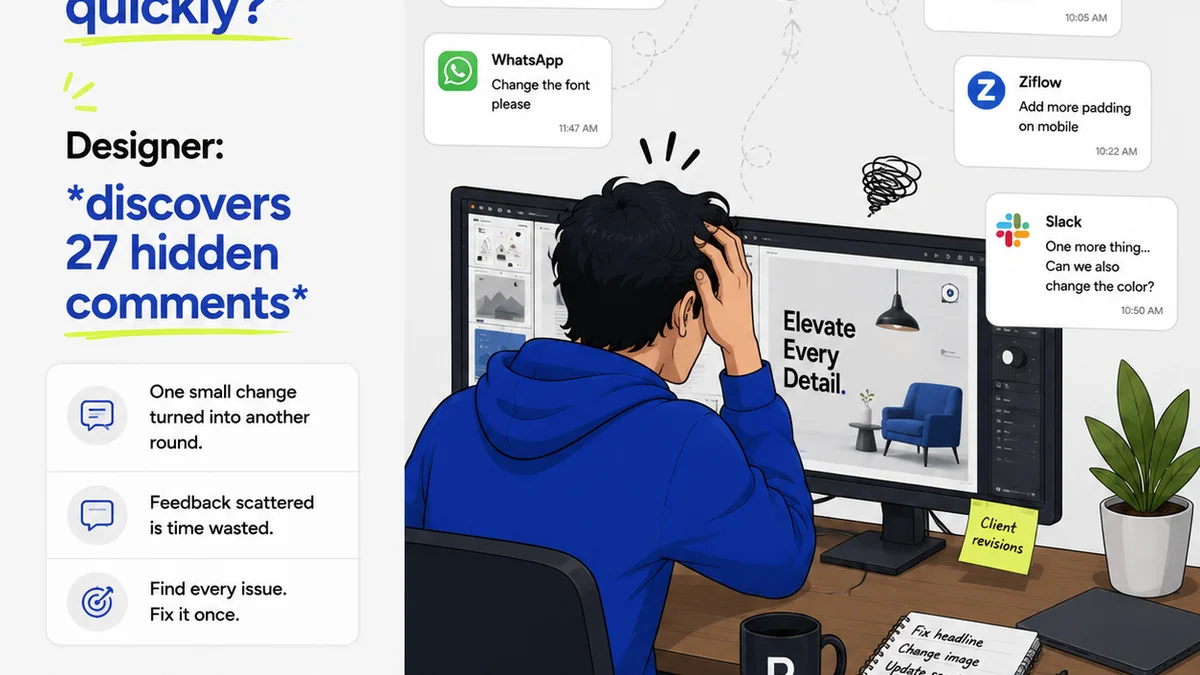
Even with the best product discovery, managing the subsequent stages of design, development, and client feedback can become chaotic. This is where a tool like Revue becomes essential.
As your product evolves from discovery into design and beyond, centralized feedback becomes paramount. Revue provides a single source of truth for all client comments, revision requests, and approvals.
Imagine stakeholders providing feedback directly on design mockups or development builds within Revue. No more sifting through endless email threads or scattered Slack messages.
This visibility streamlines revisions, ensures everyone is aligned on the latest iteration, and helps maintain the integrity of the original discovery insights. It supports the continuous learning loop by making feedback actionable and trackable, directly informing the next steps in your product journey.
Final Thought
Choosing a product discovery agency is about selecting a strategic partner. Are you looking for a vendor to hand off a project to, or a collaborator to help you navigate uncertainty and build something truly impactful?
Focus on their ability to align strategy, adapt their process, deliver actionable insights, balance user needs with business viability, and foster a continuous discovery mindset. The right agency won't just help you find product-market fit; they'll help you sustain it.
Frequently asked questions
What is the primary goal of product discovery?
The primary goal of product discovery is to reduce the risk of building the wrong product by validating assumptions about user needs, market viability, and business objectives before significant development investment.
How much does a product discovery agency typically cost?
Costs vary widely based on the agency's size, location, reputation, and the scope of work. Engagements can range from a few thousand dollars for a focused audit to tens or hundreds of thousands for comprehensive discovery sprints. Focus on the value and ROI, not just the price tag.
What are the key deliverables from a product discovery engagement?
Key deliverables often include validated user personas, prioritized user needs, clear problem statements, tested value propositions, refined business cases, product strategy recommendations, and an initial product roadmap or backlog.
Can product discovery be done internally?
Yes, product discovery can be done internally if the team has the right skills, methodologies, and capacity. However, external agencies often bring fresh perspectives, specialized expertise, and an objective viewpoint that can accelerate the process and uncover blind spots.