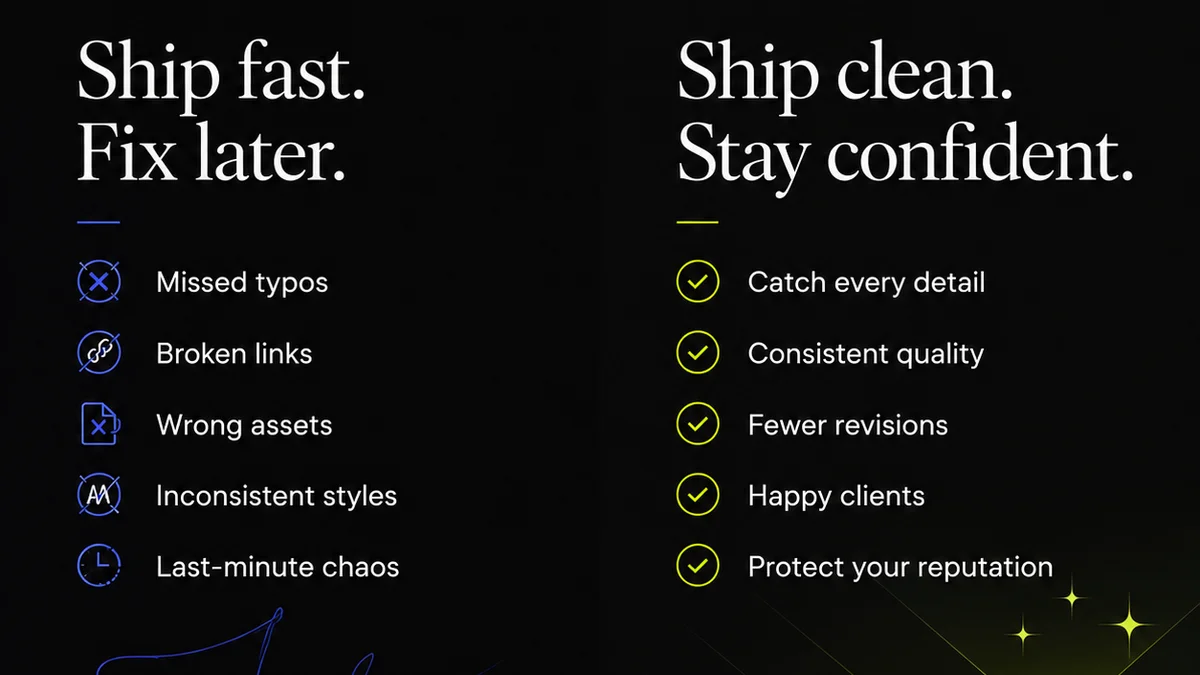
Everyone talks about client design review as a necessary evil. A hurdle to jump. A necessary bottleneck before launch.
None of that is wrong. But it’s incomplete.
The hard truth is that client design review is a critical juncture where your agency’s operational maturity—or lack thereof—is laid bare. It’s not just about getting sign-off. It’s about proving your process, managing expectations, and demonstrating value.
1. The Illusion of 'One More Thing'
The most common mistake? Treating client feedback as a discrete, isolated event. You send a design. You wait. You get feedback. You implement. Repeat.
This linear thinking ignores the inherent messiness of creative collaboration. Feedback rarely arrives clean. It’s often vague, contradictory, or based on personal preference rather than strategic goals.
The Symptoms of a Broken Review Cycle
- Endless email chains with buried feedback.
- Slack messages that get lost in the noise.
- Client confusion about what’s been revised and what hasn’t.
- Designers guessing at intent.
- Project managers drowning in version control.
- Late-stage scope creep disguised as minor tweaks.
This isn't just annoying; it’s expensive. Every extra revision cycle costs time, drains resources, and erodes client trust.
2. Shifting from Reaction to Direction
The real goal of client design review isn't just to *receive* feedback. It's to *guide* it. To shape it into actionable insights that move the project forward, strategically.
This requires a fundamental shift: from being a passive recipient of notes to an active director of the conversation.
Establishing a Clear Review Framework
Your agency needs a defined process. Not just for your team, but for the client. This framework should cover:
- When reviews happen (milestones, not ad-hoc).
- What is being reviewed (specific deliverables, not the whole project).
- How feedback should be provided (structured comments, annotated visuals).
- Who provides feedback (key stakeholders, not the entire client org).
- What happens next (your team’s revision process, timelines).
This isn't about being rigid. It's about providing structure in a fluid process. It sets clear expectations and minimizes ambiguity.
The Power of Visual Annotation
Text-based feedback is notoriously open to misinterpretation. A simple phrase like “make this pop more” can mean a dozen different things.
Tools that allow clients to directly annotate designs—clicking on a specific element and leaving a comment—cut through the noise. This is crucial for accurate, actionable feedback.
It ensures your team is addressing the exact point the client is concerned about, not a guessed interpretation.
3. The Art of the Briefed Client
Your client isn't a designer. They don't speak the same language. Expecting them to provide perfect feedback is unrealistic.
The best agencies don't just *ask* for feedback; they *prepare* their clients to give it.
Pre-Review Briefings
Before any major review, schedule a brief call or send a concise document:
- Remind them of the project goals.
- Highlight the specific objectives of this review phase.
- Explain what kind of feedback is most helpful (e.g., strategic alignment, usability concerns, not subjective aesthetic preferences unless that's the defined scope).
- Reiterate the review process and timeline.
This small step can prevent hours of wasted time and frustration down the line. It educates the client on how to best help you help them.
Defining Stakeholders and Decision-Makers
Who gets a say? This is a constant battle. Ambiguity here breeds chaos.
Work with your client upfront to identify the primary stakeholders for feedback and, crucially, the ultimate decision-maker. This prevents conflicting opinions from derailing progress.
It’s not about shutting people out; it’s about having a clear channel for consolidated, prioritized feedback.
4. Managing Revisions Like a Pro
Once feedback is collected, the real work begins. This is where many agencies stumble, letting revisions spiral out of control.
Structured Revision Cycles
Define the scope of each revision round. Are you addressing critical issues, or making aesthetic refinements? Be explicit.
If feedback falls outside the agreed scope, it needs to be flagged. This is where scope creep often hides.
“Can you just change this one little thing?” often turns into a significant time sink. Your process needs to account for this.
Clear Version Control
This is non-negotiable. Every iteration needs a clear version number or identifier. No more “final_v3_really_final.jpg”.
When feedback is tied to a specific version, there’s no confusion about what’s being discussed. It creates an objective record.
This prevents the dreaded “I thought we were talking about version 2!”
Communicating Changes
After revisions are made, present them clearly. Don’t just send the new file.
Highlight what changed based on the feedback. Show the client you listened and acted. This builds confidence and streamlines the next review cycle.
Where Revue Fits In
Managing client design review effectively requires robust systems. Trying to wrangle feedback through disparate tools—email, Slack, shared docs—is a recipe for disaster.
Revue is built to solve this. It centralizes client feedback directly on your creative assets. No more hunting through inboxes.
You can set up clear review stages, ensuring feedback is gathered at the right time and in the right context. Stakeholders can leave comments directly on designs, whether it’s a wireframe, mockup, or video.
This visual annotation and centralized discussion thread drastically reduces misinterpretation and speeds up the revision process. You get clear, actionable feedback, and your team has a single source of truth for revisions and approvals. It brings order to the chaos, turning client review from a pain point into a streamlined part of your workflow.
5. The Post-Review Debrief
The project is launched. Hooray. But the learning doesn't stop there.
What went well during the review process? What were the friction points? Where did the client struggle? Where did your team struggle?
Internal Post-Mortems
Hold brief internal debriefs after major projects or particularly challenging review cycles. Identify lessons learned.
Was the initial brief clear enough? Were the review milestones appropriate? Did the feedback tool work as expected? Were there scope creep issues?
This reflective practice is how agencies mature. It’s how you stop repeating the same mistakes.
Client Feedback on the Process
If appropriate, ask your client for feedback on the review process itself. They might offer insights you hadn’t considered.
This shows a commitment to continuous improvement and strengthens the client relationship.
Final Thought
Client design review is more than a checkbox. It’s a strategic interaction that defines your agency’s professionalism and efficiency. Are you merely enduring it, or are you mastering it?
Frequently asked questions
How can I get better feedback from clients?
Prepare your clients by briefing them on project goals and the type of feedback that's most helpful. Use visual annotation tools so they can comment directly on specific design elements, reducing ambiguity. Clearly define stakeholders and decision-makers to avoid conflicting input.
What's the best way to handle design revisions?
Establish structured revision cycles with clear scopes. Implement rigorous version control to track changes and avoid confusion. Always communicate what has been changed based on feedback, highlighting progress to build client confidence.
How do I prevent scope creep during client review?
Define the scope of each review phase clearly upfront. When feedback falls outside this scope, flag it as a potential change request. Educate your client on the impact of out-of-scope revisions on timelines and budget.
Why is centralized feedback important for design reviews?
Centralized feedback tools consolidate all comments and discussions onto the design itself, eliminating the need to hunt through emails or Slack. This reduces misinterpretation, ensures everyone is working from the same information, and speeds up the entire review and revision process.