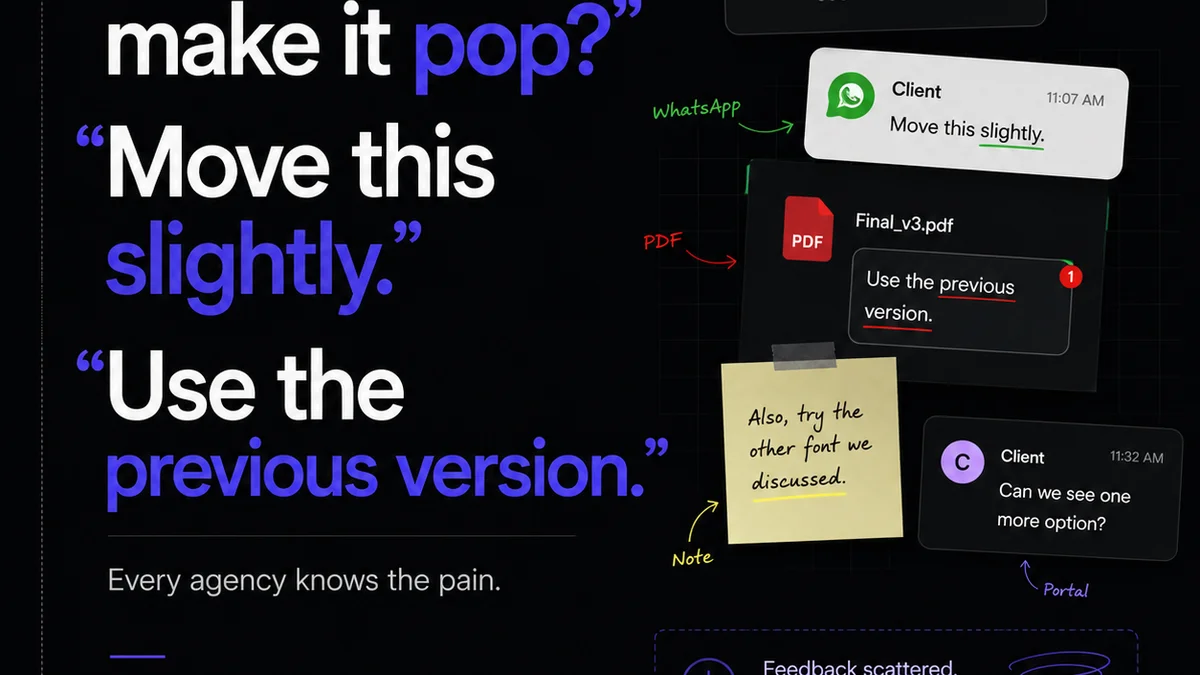
Everyone says client feedback is crucial. That getting it right is key to successful projects. And that clients know what they want.
None of that is wrong. But it’s incomplete.
The hard truth? Most agencies treat client design review as a necessary evil. A hoop to jump through. A place to collect vague, often contradictory, requests. This approach breeds frustration, scope creep, and mediocre work.
But what if client review was different? What if it was a strategic tool, not just a data-collection exercise? What if it actually improved the creative, strengthened the client relationship, and protected your agency’s bottom line?
It can. But only if you rethink the entire process. Here’s how.
1. The Myth of the 'Good' Client Review
The assumption is that a client review happens, feedback is given, revisions are made, and the project moves on. Simple.
In reality, it’s often a chaotic exchange. Emails get lost. Different stakeholders provide conflicting input. The original brief is forgotten. The designer feels like they're playing telephone with a blindfold on.
This isn't just bad process; it's bad business. It leads to:
- Endless, unproductive revision cycles.
- Scope creep that erodes profitability.
- Designer burnout and demotivation.
- Clients who feel unheard or, worse, that their input wasn't valued.
- Final work that misses the strategic mark.
This isn't about blaming clients. It’s about acknowledging that the *system* for collecting and acting on feedback is often broken. And that the responsibility for fixing it lies with us, the agency.
2. Shifting from Passive Collection to Active Collaboration
The biggest mistake is treating client design review as a passive receptacle for opinions. You send a draft, they send comments. End of story.
This passive approach invites ambiguity. Vague comments like “I don’t like it” or “Make it pop more” are useless without context. They’re symptoms of a deeper issue: a lack of shared understanding.
The goal isn't to gather every whim. It's to facilitate a structured conversation that surfaces actionable insights.
Structure the Feedback Session
Don't just dump a PDF and hope for the best. Set expectations. Schedule a dedicated review session.
During this session, guide the client. Ask clarifying questions. Frame feedback around project goals, not just aesthetic preferences.
Instead of:
- “What do you think of this?”
Try:
- “Does this layout effectively guide the user towards the primary call to action, based on our conversion goals?”
- “How does this visual hierarchy align with the brand messaging we established in the brief?”
- “Considering the target audience, does this tone of voice feel authentic and persuasive?”
This isn't about being difficult; it's about being strategic. It forces both sides to connect the creative output back to the business objectives.
Define Reviewers and Roles
Who is actually authorized to give feedback? Is it one point person, or a committee? Clarify this upfront.
A common pitfall is allowing multiple, uncoordinated stakeholders to chime in, each with their own agenda. This is a recipe for conflicting feedback and scope creep.
Establish a clear feedback loop. Designate a primary point of contact for consolidated feedback. This streamlines the process and ensures consistency.
Establish Clear Decision Criteria
What does
Frequently asked questions
What is the most common mistake agencies make in client design review?
The most common mistake is treating client design review as a passive data collection exercise rather than an active, structured collaboration. This often leads to vague feedback, endless revisions, and scope creep.
How can I get more specific feedback from clients?
Guide clients by framing feedback around project goals and objectives. Ask clarifying questions that connect the creative to business outcomes, rather than just asking 'What do you think?'
How do I manage conflicting feedback from multiple client stakeholders?
Establish a clear feedback process upfront, designating a primary point of contact for consolidated feedback. This ensures that input is organized and reduces the chances of conflicting requests derailing the project.
Why is a clear approval process important in design review?
A clear approval process prevents ambiguity about project sign-off, avoids scope creep by defining when a project is officially 'done,' and protects agency profitability by ensuring all work is accounted for.