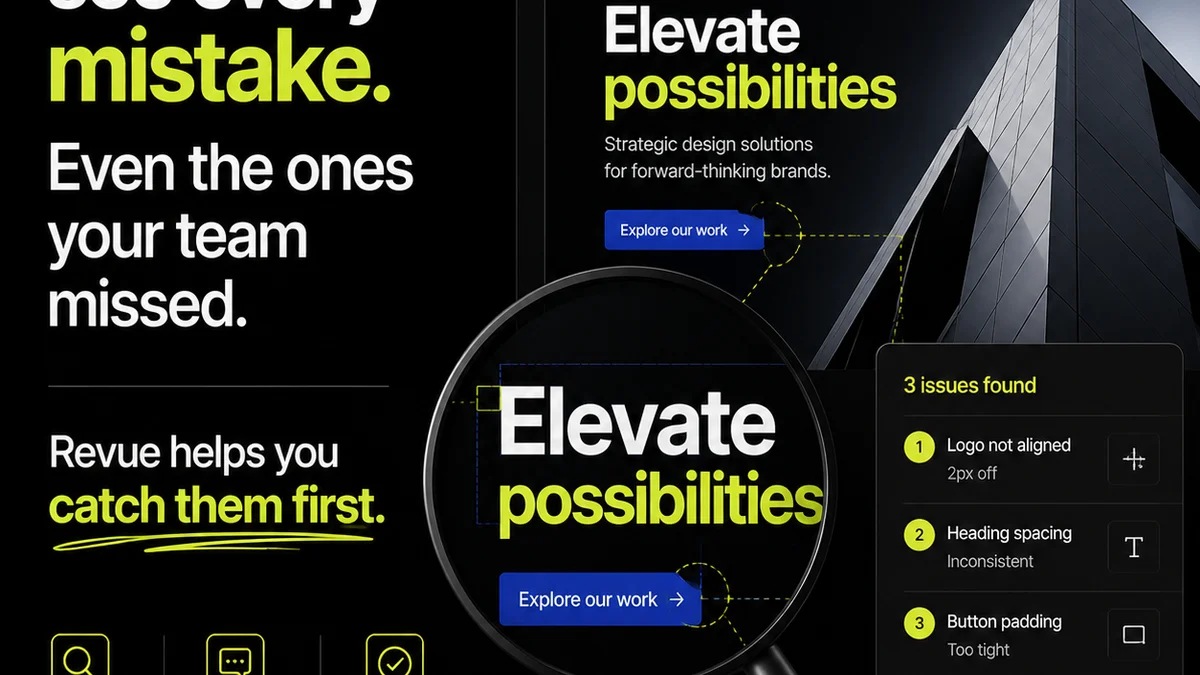
Everyone agrees that good client design review software is essential for creative agencies. It’s the digital handshake that keeps projects moving, feedback clear, and clients happy. Most assume that any tool with a comment box and a share link will do the job. None of that is wrong. But it’s incomplete.
The hard truth is that most off-the-shelf solutions create more friction than they solve. They fragment communication, obscure revision history, and turn what should be a smooth process into a bureaucratic maze.
1. Beyond Static Annotations: True Collaboration
The basic function of design review software is to let clients mark up designs. Simple enough. But this often leads to a chaotic mess of red lines, vague comments, and conflicting instructions.
The real need isn't just annotation; it's structured, actionable feedback.
Context is King
Clients don't think in terms of layers or specific hex codes. They think about the message, the emotion, the overall impact. Your software needs to bridge that gap.
- Look for tools that allow contextual comments tied to specific elements, not just a general area.
- Ensure the system can handle different file types seamlessly—from static mockups to interactive prototypes.
- Prioritize visual clarity. Can clients easily see what's changed from one version to the next?
Static markups are a starting point. Dynamic, contextual feedback is what drives progress.
Version Control That Doesn't Lie
How many times has a client approved a version, only to later insist they meant a different one? Version history needs to be more than just a timestamp; it needs to be an irrefutable record.
Your software should clearly delineate versions and, crucially, tie feedback and approvals directly to them. No more
Frequently asked questions
What's the difference between basic annotation and true collaboration in design review software?
Basic annotation just lets users mark up images. True collaboration involves contextual comments tied to specific design elements, clear version tracking, and streamlined approval workflows, making feedback actionable and traceable.
Why is version control so critical in client design review?
Robust version control prevents misunderstandings by clearly showing what was reviewed and approved at each stage. It creates an irrefutable record, avoiding disputes about which version was greenlit and reducing scope creep.
How can design review software improve client communication?
By centralizing all feedback and revisions in one place, it reduces fragmented email chains and miscommunications. Clear visual annotations and structured comments ensure clients and creatives are on the same page, leading to faster approvals.
What types of creative assets can most design review software handle?
Most modern tools support a wide range of static assets like images (JPG, PNG, PSD) and PDFs. Advanced platforms also handle interactive prototypes (Figma, Sketch, Adobe XD links) and even video or motion graphics.