Everyone thinks they have a handle on client feedback. You send a brief, you get a brief back, you do the work, you get feedback. Rinse and repeat. It seems straightforward.
None of that is wrong. But it’s incomplete.
The hard truth? A flimsy feedback process breaks good creative work. It’s not about getting *any* feedback; it’s about getting *effective* feedback. And that requires more than just a shared document or a hurried email chain.
1. The Myth of the Perfect Brief
We often assume that if the initial brief is crystal clear, feedback will flow smoothly. We expect clients to articulate their needs perfectly, and for their feedback to be equally precise.
This is rarely the case.
Why Briefs Fall Short
- Clients often don't know what they want until they see it.
- Internal stakeholder alignment is often missing before the brief is even finalized.
- The brief itself can be ambiguous, even with the best intentions.
This initial ambiguity is the first hurdle. If you’re not set up to clarify and iterate on the brief itself, you’re building on shaky ground.
2. Deconstructing Feedback: What Are They *Really* Saying?
Client feedback often comes in a raw, unrefined state. It’s a mix of subjective opinions, actionable insights, and sometimes, outright confusion.
Your job isn’t just to collect it; it’s to translate it.
Common Feedback Pitfalls
- Vague statements: “I don’t like it,” “Make it pop,” “It feels off.”
- Conflicting directives: Two stakeholders saying opposite things.
- Focus on aesthetics over strategy: Feedback on colors when the core message isn’t landing.
- Scope creep disguised as feedback: Requests that go beyond the original project goals.
A good feedback process includes a mechanism for probing these vague statements. Ask clarifying questions. Push for specifics. Understand the *why* behind the feedback, not just the *what*.
3. The Feedback Loop: From Collection to Action
Collecting feedback is only step one. The real challenge is integrating it into your workflow efficiently and effectively.
This is where most agencies stumble.
Key Stages of the Feedback Loop
- Collection: Gathering input from all relevant stakeholders.
- Consolidation: Bringing all feedback into one place, identifying overlaps and conflicts.
- Clarification: Reaching out to clients for more detail on ambiguous points.
- Prioritization: Deciding which feedback points are critical, important, or can be deferred.
- Implementation: Making the necessary revisions based on prioritized feedback.
- Approval: Getting final sign-off on the revised work.
Each of these stages is a potential bottleneck. If feedback isn’t centralized, you’re chasing emails and messages. If it isn’t clarified, you’re guessing. If it isn’t prioritized, you’re spinning your wheels.
4. Building Your Client Feedback Checklist (The Right Way)
Forget the simple Word doc template. A real client feedback checklist is a system. It’s a framework for ensuring clarity, consistency, and quality at every stage of the creative process.
It’s about process, not just paper.
Essential Components of a Robust Checklist
- Project Context: A clear, concise reminder of the project goals, target audience, and key deliverables.
- Scope of Work: A direct link or summary of what was agreed upon.
- Feedback Type: Clearly delineate between strategic, functional, and aesthetic feedback.
- Specific Questions: Prompt clients with targeted questions that encourage detailed responses. (e.g., “Does this headline clearly communicate the main benefit?” instead of “What do you think of the headline?”)
- Actionable Items: A section for the agency team to log specific revisions required, who is responsible, and the estimated effort.
- Decision Maker Confirmation: A clear point where the primary decision-maker signs off.
- Revision History: A log of all feedback rounds and the changes made.
This isn’t just a document to send *to* the client. It’s a tool for guiding the *entire* conversation.
5. Where Revue Fits In
Managing client feedback effectively requires structure. It demands a central hub where all communication, revisions, and approvals live.
This is precisely why Revue was built.
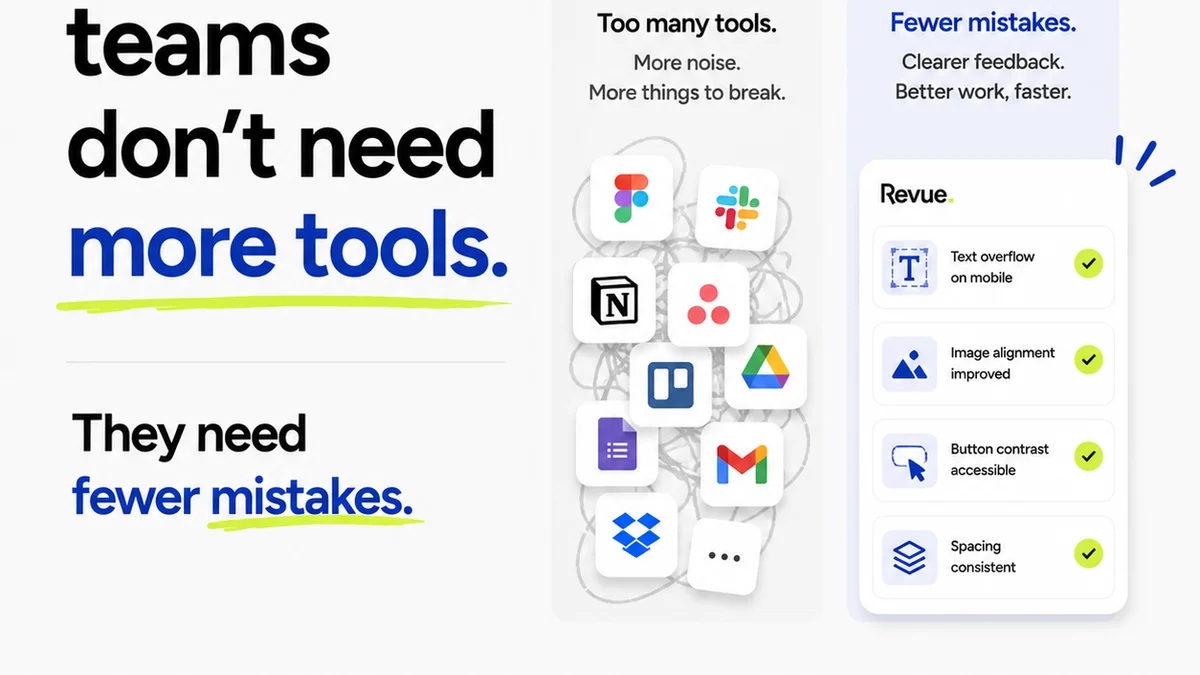
Instead of scattered email threads, lost Slack messages, and confusing version control, Revue provides a single source of truth.
- Centralized Feedback: All client comments and stakeholder input are logged in one place, linked directly to the creative asset. No more hunting for feedback.
- Revision Management: Track every version of a design, video, or document. See exactly what changed and why, with clear audit trails.
- Approval Workflows: Streamline the sign-off process. Ensure the right people are approving the right assets, on time.
- Quality Assurance: Use the structured feedback and revision history to ensure all client requests have been addressed and approved before final delivery.
Revue transforms the chaotic feedback process into a manageable, transparent workflow. It helps your team understand client needs deeply and respond with precision.
6. The Cost of Poor Feedback Management
Let’s be blunt: ineffective feedback loops kill profitability. They drain time, erode client relationships, and lead to subpar creative output.
Think about the wasted hours.
- Hours spent deciphering vague comments.
- Hours spent redoing work because feedback was missed or misunderstood.
- Hours spent in endless revision meetings.
- Hours spent arguing about scope.
This isn’t just an operational headache; it’s a direct hit to your bottom line. Projects that drag on, miss deadlines, and require excessive revisions are projects that lose money.
7. Final Thought
Is your client feedback process a tool for clarity and progress, or a source of friction and frustration? The difference isn't in the tools you use, but in the rigor of the process you build around them. A true client feedback checklist isn't a document; it's a discipline.
Frequently asked questions
What is the most common mistake agencies make with client feedback?
The most common mistake is treating client feedback as a simple collection task rather than a strategic process. Agencies often fail to probe for clarity, consolidate conflicting input effectively, or integrate feedback systematically into their workflow, leading to confusion, rework, and decreased profitability.
How can I ensure client feedback is actionable?
To make feedback actionable, you need to move beyond vague statements. Implement a process that prompts clients with specific questions about strategy, functionality, and aesthetics. When vague feedback is received, proactively ask clarifying questions to understand the underlying reasons and desired outcomes before making revisions.
What's the difference between a simple feedback form and a robust feedback process?
A simple feedback form is a static document. A robust feedback process is a dynamic system that includes structured collection, consolidation, clarification, prioritization, and implementation of feedback. It ensures all stakeholders are aligned, feedback is understood, and revisions are tracked meticulously, often supported by specialized tools.
How does centralized feedback help with quality assurance?
Centralized feedback, like that managed in Revue, provides a clear audit trail of all comments, revisions, and approvals. This makes it easy to verify that all client requests have been addressed and signed off on before final delivery, significantly reducing the risk of errors or missed requirements and ensuring the final output meets expectations.