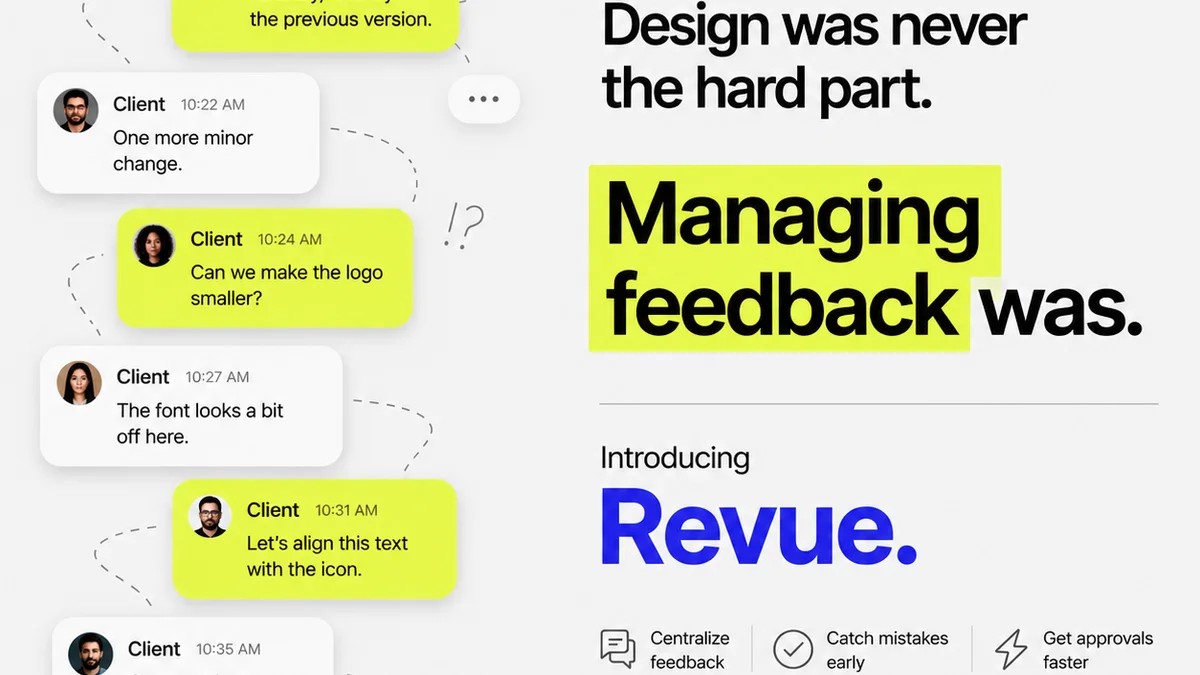
Everyone talks about client feedback. They say you need to listen. You need to be responsive. You need to incorporate their thoughts.
None of that is wrong. But it’s incomplete.
The hard truth is that most creative agencies and in-house teams treat client feedback like a reactive task, not a strategic process. This leads to endless revision cycles, miscommunication, and a general sense of frustration on both sides. You’re not just collecting feedback; you’re failing to build a feedback loop.
1. The Myth of "Just Send It Over"
The most common assumption is that feedback happens *after* the work is done. A client reviews a deliverable, sends back an email or a PDF with comments, and the team makes the changes.
This is not a loop. This is a transaction.
A true feedback loop is a continuous, integrated system designed to improve the outcome. It starts before the first pixel is designed and continues long after launch.
The Symptoms of a Broken Loop
- Endless rounds of revisions with no clear end in sight.
- Clients feeling unheard or that their feedback was ignored.
- Creative teams feeling demoralized by constant, vague, or contradictory requests.
- Projects running over budget and behind schedule due to scope creep disguised as feedback.
- A general lack of clarity on what
Frequently asked questions
What is a client feedback loop?
A client feedback loop is a continuous process for collecting, analyzing, and acting on client input throughout a project lifecycle. It's designed to improve the final deliverable and ensure client satisfaction by integrating their perspective at multiple stages, not just at the end.
How can I get more specific feedback from clients?
Provide clear context for the feedback. Ask targeted questions. Use visual aids or annotation tools to pinpoint areas. Set clear expectations for what kind of feedback you're looking for at each stage (e.g., strategic alignment vs. aesthetic preference).
What are the key stages of a client feedback loop?
Key stages often include: initial brief alignment, concept/strategy review, design/prototype review, content review, pre-launch review, and post-launch analysis. The specific stages will vary by project type.
How does technology help with client feedback loops?
Tools like Revue centralize feedback, provide version control, track revisions, and offer clear audit trails. This eliminates scattered emails and spreadsheets, making the process more efficient and transparent for both the agency and the client.