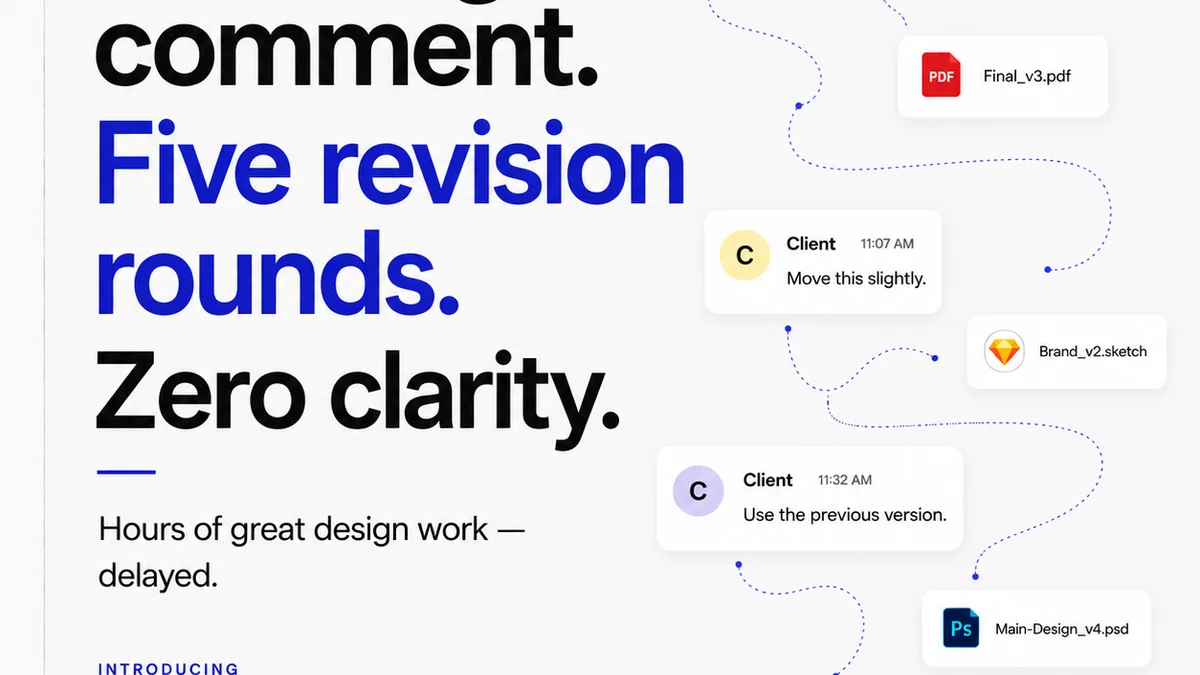
Everyone knows client feedback is a necessary evil. You get it, you process it, you make the changes. It's a simple back-and-forth. Or so the story goes.
None of that is wrong. But it’s incomplete. Treating feedback as a simple transaction misses the real opportunity.
The hard truth? The client feedback process isn't just about making changes; it's a critical juncture for alignment, strategic refinement, and building trust. Mishandled, it breeds resentment and scope creep. Mastered, it elevates your work and your client relationship.
1. The Illusion of Clarity: Why Feedback Gets Muddled
Clients often struggle to articulate what they *really* want. They might focus on surface-level aesthetics because they lack the language or context to describe deeper strategic needs. This isn't a failing on their part; it's a communication gap.
This leads to feedback that is:
- Vague: "Make it pop."
- Contradictory: "More energy, but also calmer."
- Actionable-but-Wrong: "Change the blue to green" when the real issue is the overall tone.
- Unfocused: Feedback on everything from the kerning to the existential meaning of the logo.
Your job isn't just to *receive* this feedback. It's to *decode* it.
The Role of Context
Without understanding the 'why' behind the project – the business goals, the target audience, the competitive landscape – feedback becomes guesswork. You're trying to hit a target you can't see.
This is why a robust creative brief is non-negotiable. It’s your North Star. Without it, every piece of feedback is subject to interpretation.
2. The Cost of Inefficiency: Time, Money, and Morale
Every hour spent deciphering unclear feedback, making unnecessary revisions, or chasing down clarification is an hour lost to billable work, strategic thinking, or business development. This isn't just about hitting deadlines; it's about profitability and team sanity.
Consider the ripple effects:
- Scope Creep: Uncontrolled feedback cycles bleed into new requests, expanding the project beyond its original agreement.
- Team Burnout: Constantly redoing work based on shifting, ill-defined demands crushes morale.
- Client Frustration: They feel their input isn't understood, leading to a breakdown in trust.
- Financial Drain: Extra hours mean reduced profit margins or the painful necessity of charging for overages.
This isn't just bad project management. It's a direct threat to your agency's bottom line and its reputation.
The Email Avalanche
The most common symptom? Feedback scattered across dozens of email threads, Slack messages, and even verbal conversations. Finding the latest instruction, or the original rationale, becomes an archaeological dig.
This fragmentation makes it impossible to track decisions, understand the evolution of the project, or even prove what was agreed upon. It’s a recipe for disaster.
3. Building a Better Feedback Framework
Improving the client feedback process requires more than just asking clients to be clearer. It demands a structured approach that guides both sides toward productive outcomes.
Establish Clear Communication Channels
Centralize all feedback. Use a single platform where comments, annotations, and approvals live. This eliminates the 'email avalanche' and creates a clear audit trail.
Define Feedback Stages and Cadence
When will feedback be collected? Who provides it? What constitutes a 'round' of feedback? Setting expectations upfront prevents endless, ad-hoc critiques.
For example:
- Initial concepts presented.
- One round of consolidated feedback from key stakeholders.
- Revisions based on feedback.
- Final review and approval.
This structured approach ensures feedback is timely, relevant, and manageable.
Request Specific, Actionable Input
Train yourself (and your team) to ask clarifying questions. Instead of "Okay, noted," try:
- "Can you help me understand what specific aspect of the headline isn't working for you?"
- "What business goal is this particular change intended to support?"
- "If we change the color, what alternative are you envisioning, and why?"
Guide the client toward articulating the *problem* feedback solves, not just a *solution* they've imagined.
Educate Your Clients (Gently)
Clients aren't designers or strategists. They might not realize that minor tweaks can have significant downstream effects, or that their subjective preferences might conflict with strategic objectives. A little education goes a long way.
Brief them on your process. Explain why you need certain information. Frame feedback not as criticism, but as collaboration toward a shared goal.
4. Where Revue Fits In
The entire process of managing client feedback, from initial review to final sign-off, is where specialized tools make a world of difference. Trying to manage this via email and spreadsheets is like trying to build a skyscraper with hand tools.
Revue is built for this exact challenge. It provides a single source of truth for all creative assets and client interactions.
- Centralized Feedback: All comments, annotations, and discussions happen in one place, attached directly to the creative asset. No more hunting through email chains.
- Revision Visibility: Track every version, every change, and link it back to specific feedback. This clarity prevents 'scope creep' and ensures everyone is working from the latest iteration.
- Streamlined Approvals: Formalize the sign-off process. Clients can clearly approve or reject, creating an undeniable record of agreement. This cuts down on "Did we ever actually approve that?" conversations.
- Quality Assurance: Beyond client feedback, Revue helps ensure your team's internal quality checks are logged and visible, maintaining standards before work ever reaches the client.
By bringing structure and visibility to the feedback loop, tools like Revue transform a potential pain point into a streamlined, collaborative workflow.
5. The Strategic Advantage of Good Feedback
When you move beyond simply *processing* feedback to actively *managing* and *interpreting* it, you unlock significant advantages.
You become a better strategic partner. You anticipate needs. You guide clients toward decisions that serve their business, not just their immediate aesthetic whims.
This leads to:
- Better Creative Outcomes: Work that is strategically sound and creatively compelling.
- Stronger Client Relationships: Built on trust, clear communication, and shared success.
- Increased Efficiency: Less time wasted, more time spent on high-value work.
- Reduced Risk: Clear approvals and documented feedback minimize disputes and scope creep.
This isn't about being difficult; it's about being professional. It's about delivering exceptional value.
Final Thought
Is your client feedback process a bottleneck or a bridge? Are you simply reacting to requests, or are you proactively guiding the project toward its strategic goals? The way you handle feedback speaks volumes about your agency's maturity and your commitment to client success.
Frequently asked questions
How can I get clearer feedback from clients?
Establish clear communication channels, define feedback stages, and ask specific, actionable questions. Guide clients to articulate the 'why' behind their requests, not just surface-level changes.
What is the biggest mistake agencies make with client feedback?
Treating feedback as a simple transaction rather than a strategic opportunity. This often leads to unclear communication, scope creep, and team burnout.
How do I avoid scope creep caused by client feedback?
Define feedback stages and cadence upfront. Use a centralized platform for all communication and approvals to create a clear audit trail. Gently educate clients on the impact of changes.
Can technology really help manage client feedback?
Yes. Tools designed for creative workflows, like Revue, centralize feedback, track revisions, and streamline approvals, eliminating confusion and saving significant time and resources.