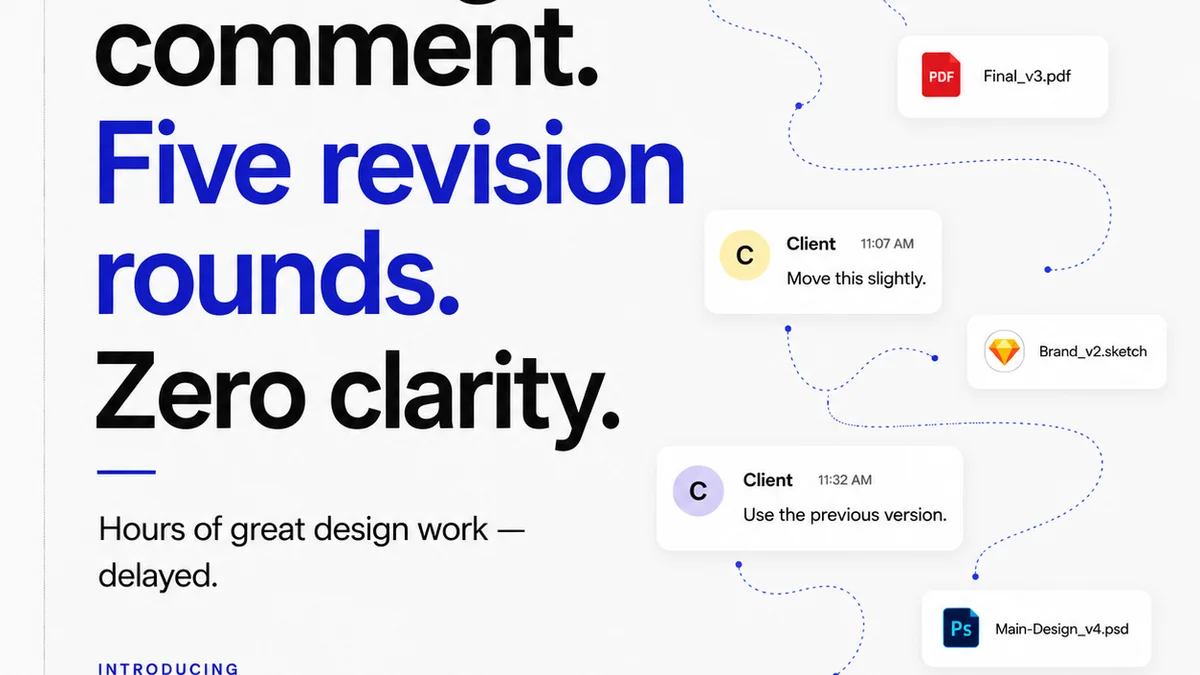
Every agency owner, creative director, and project manager has heard it: “Just a few more tweaks,” or “Can we make the logo bigger?” It’s the soundtrack to creative production. You probably think you’re doing a good job managing client feedback. You’re responsive, you document requests, you try to clarify. None of that is wrong. But it’s incomplete.
The hard truth is that most agencies treat client feedback as a reactive process, a series of individual requests to be managed. The real problem isn’t just *how* you handle individual comments; it’s the lack of a strategic framework that prevents feedback from becoming a chaotic, time-sucking drain on your resources and creative output. This leads to scope creep, missed deadlines, and frustrated teams.
1. The Assumption: Feedback is Linear
We often assume feedback follows a clean, logical path. Client sees design, client comments, designer revises, repeat. Simple, right?
Wrong. Feedback is rarely linear. It’s emotional, subjective, and often contradictory, even within a single client stakeholder group.
The Deeper Truth: Feedback is a Negotiation.
Every comment, every revision request, is a negotiation. It’s a dance between the client’s vision (or lack thereof), your creative expertise, and the project’s constraints (time, budget, strategy).
- Clients might not know what they want, but they know what they *don’t* want.
- Their subjective reactions are valid to them, even if they can’t articulate the ‘why.’
- Internal client politics can influence feedback, leading to conflicting opinions.
Your job isn't just to implement changes; it's to guide this negotiation toward a successful outcome. This requires more than just a ticketing system.
2. The Assumption: More Feedback is Better
A common misconception is that the more feedback you solicit, the closer you’ll get to the client’s ideal outcome. More eyes on the work, more chances to catch issues.
This sounds logical. It’s also a fast track to scope creep and diluted creative vision.
The Deeper Truth: Unstructured Feedback is Noise.
Volume of feedback doesn't guarantee quality. In fact, a flood of unstructured, unprioritized comments can paralyze a project. It becomes impossible to discern critical issues from minor preferences.
Think about it:
- Are all comments coming from authorized stakeholders?
- Are the comments actionable and specific, or vague suggestions?
- Is there a clear hierarchy of feedback importance?
Without a system to filter and prioritize, you end up chasing every minor whim, burning billable hours on revisions that don’t move the needle strategically. This is the enemy of efficient creative work.
3. The Assumption: Documentation is Enough
Many agencies diligently log every comment in spreadsheets or project management tools. They have a record. They can prove what was asked for.
This is a good start. It’s essential for accountability. But it’s not a strategy.
The Deeper Truth: Context and Clarity are King.
A comment logged is not a comment understood. Without context, a request can be misinterpreted. Without clarity, it can be impossible to execute effectively.
Consider these scenarios:
- A client says, “Make it pop more.” What does that even mean?
- Another client requests a change that directly contradicts a previously approved strategic direction.
- Feedback comes in dribs and drabs from multiple email threads, Slack channels, and even phone calls.
This scattered approach breeds confusion. It leads to back-and-forth clarification that eats up time. It increases the chance of errors and the likelihood of the client feeling unheard.
A truly effective system doesn’t just *store* feedback; it *clarifies* and *organizes* it, ensuring everyone understands the 'what,' 'why,' and 'how' before revisions begin.
4. The Assumption: Revisions are a Necessary Evil
Revisions are often seen as a cost of doing business, an unavoidable part of the creative process. They’re painful, they’re time-consuming, and they erode profit margins.
This resignation is common. It’s also a sign of an underlying workflow problem.
The Deeper Truth: Revisions Should Be Controlled and Strategic.
While some revisions are inevitable, excessive or mismanaged revisions point to systemic issues. They stem from a lack of upfront alignment, unclear scope, or poor feedback management.
Think about the root causes:
- Was the initial brief comprehensive and agreed upon?
- Were there clear milestones for feedback and approval?
- Did the client understand the impact of requested changes on timeline and budget?
When revisions become a black hole of endless tweaks, it’s not just about the extra work. It’s about the impact on team morale, project momentum, and client relationships. A controlled revision process is one where changes are understood, approved, and tracked, not just endlessly applied.
5. The Assumption: The Client Always Knows Best
It’s tempting to defer to the client’s opinion, especially when they’re paying the bills. “The client is always right,” after all.
This deference can feel like good client service. In reality, it can be detrimental to the project and the client’s own business goals.
The Deeper Truth: You Are the Expert. Guide Them.
Clients hire you for your expertise, your strategic thinking, and your creative execution. Blindly accepting every request, even if it’s technically feasible, isn't serving them. It’s enabling potentially bad decisions.
Your role includes:
- Educating the client on best practices in design, UX, or marketing.
- Challenging assumptions that don't align with project goals or user needs.
- Proposing solutions based on your experience, not just reacting to their immediate desires.
- Maintaining strategic integrity, ensuring the final output serves the original objectives.
This doesn't mean being confrontational. It means having confident, data-informed conversations that steer the project toward success, even when the client isn't sure what success looks like.
Where Revue Fits In
Managing client feedback effectively isn't about avoiding revisions; it's about making the process transparent, efficient, and strategic. It’s about moving from a reactive, chaotic system to a proactive, controlled workflow.
This is where a centralized platform like Revue becomes invaluable.
Revue helps you centralize all client feedback in one place. No more digging through email chains or Slack messages. Every comment, every annotation, is logged against the specific creative asset.
It provides clear visibility into the revision and approval process. Stakeholders can see what feedback has been addressed, what’s pending, and who is responsible for the next step. This transparency reduces confusion and manages expectations.
Furthermore, Revue aids in quality checks by ensuring that all feedback is captured, reviewed, and actioned before final sign-off. This structured approach minimizes the risk of overlooked issues and ensures that the final deliverable meets both client expectations and strategic objectives.
Final Thought
The way you handle client feedback is a direct reflection of your agency's operational maturity. Are you merely reacting to requests, or are you proactively guiding the creative process?
Shifting your perspective from managing comments to managing a negotiation requires a fundamental change in your workflow. It demands clarity, structure, and a commitment to strategic guidance.
What if the next time a client asks for
Frequently asked questions
What are the most common client feedback mistakes agencies make?
Common mistakes include treating feedback as linear instead of a negotiation, valuing quantity over quality of feedback, relying solely on documentation without ensuring clarity, viewing revisions as unavoidable rather than controllable, and deferring to client opinions without offering expert guidance.
How can I make client feedback more actionable?
Encourage clients to be specific about their needs and provide the 'why' behind their requests. Use a centralized platform to log feedback, which helps maintain context. Schedule brief clarification calls when feedback is vague, and ensure all feedback is reviewed and prioritized against project goals before revisions begin.
What's the difference between managing feedback and managing a negotiation?
Managing feedback often means simply recording and implementing comments. Managing feedback as a negotiation involves understanding the client's underlying needs, leveraging your expertise to guide decisions, balancing subjective preferences with strategic objectives, and proactively managing scope and expectations throughout the process.
How can a centralized tool help with client feedback?
A centralized tool like Revue consolidates all feedback in one place, eliminating confusion from scattered communications. It provides a clear audit trail, improves transparency on revision status, facilitates faster approvals, and helps ensure that all necessary feedback is addressed before final delivery, ultimately saving time and reducing errors.