Most agencies think client onboarding is about getting the contract signed and collecting the retainer. It’s a necessary evil, a hoop to jump through before the *real* work begins.
None of that is wrong. But it’s incomplete.
The hard truth? Your client onboarding process is the single biggest driver of profitability in your agency. It’s not a cost center; it’s your profit engine.
1. The Hidden Cost of Poor Onboarding
We all know the signs of a bad onboarding. A client who’s unclear on scope. A team that doesn’t know who to talk to. Deliverables that miss the mark from day one.
This isn't just annoying. It’s expensive.
Every hour spent clarifying misunderstandings is an hour not spent on billable work. Every revision cycle born from unclear expectations eats into your margins.
Think about it:
- Scope creep that isn’t caught early
- Miscommunication leading to rework
- Team members working in silos
- Delayed approvals because the client doesn’t know the process
- Frustration on both sides, impacting morale and future work
These aren’t minor hiccups. They’re profit leaks.
2. Onboarding as a Profit Multiplier
Conversely, a *great* onboarding process sets the stage for a profitable engagement. It’s not just about setting expectations; it’s about building a foundation of trust and clarity.
When onboarding is done right, you:
- Establish clear project goals and KPIs from the start.
- Define roles and responsibilities for both the client and your team.
- Set a transparent communication cadence.
- Align on what success looks like.
- Empower your team with all necessary information and access.
This proactive approach dramatically reduces friction. It means less reactive firefighting and more focused execution.
The Financial Impact
A well-onboarded client is more likely to:
- Approve work faster.
- Provide clear, actionable feedback.
- Stick to the agreed-upon scope.
- Be open to future upsells or retainer extensions.
- Become a referral source.
Each of these directly impacts your bottom line. Faster approvals mean quicker project completion and faster invoicing. Clear feedback reduces costly revisions. Scope adherence protects your margins.
3. Elements of a High-ROI Onboarding Process
What does a profit-driving onboarding process actually look like? It’s more than a checklist.
a. Pre-Contract Clarity
Before the ink is dry, ensure absolute alignment. This means detailed discovery calls, thorough questionnaires, and a clear Statement of Work (SOW) that leaves no room for interpretation.
Define:
- Project objectives and desired outcomes.
- Target audience and key messaging.
- Deliverables and timelines.
- Client responsibilities (e.g., providing assets, timely feedback).
- Communication channels and key stakeholders.
If there’s ambiguity here, you’ve already started losing money.
b. The Kick-Off Meeting
This is where the partnership truly begins. It’s not just a formality.
Use the kick-off to:
- Formally introduce the core teams.
- Reiterate project goals and scope.
- Walk through the communication plan and approval process.
- Set immediate next steps and assign ownership.
- Establish a shared understanding of success metrics.
This meeting should leave everyone feeling confident and aligned.
c. Centralized Information Hub
Where does all the project information live? Where do clients go for updates? Where does your team track progress?
A lack of a central hub is a recipe for chaos. Emails get lost. Files are scattered. Version control becomes a nightmare.
You need a single source of truth for:
- Project briefs and SOWs.
- Brand guidelines and assets.
- Meeting notes and action items.
- Feedback and revision history.
- Final deliverables.
This hub ensures everyone is working from the same playbook.
d. Defined Feedback & Approval Workflows
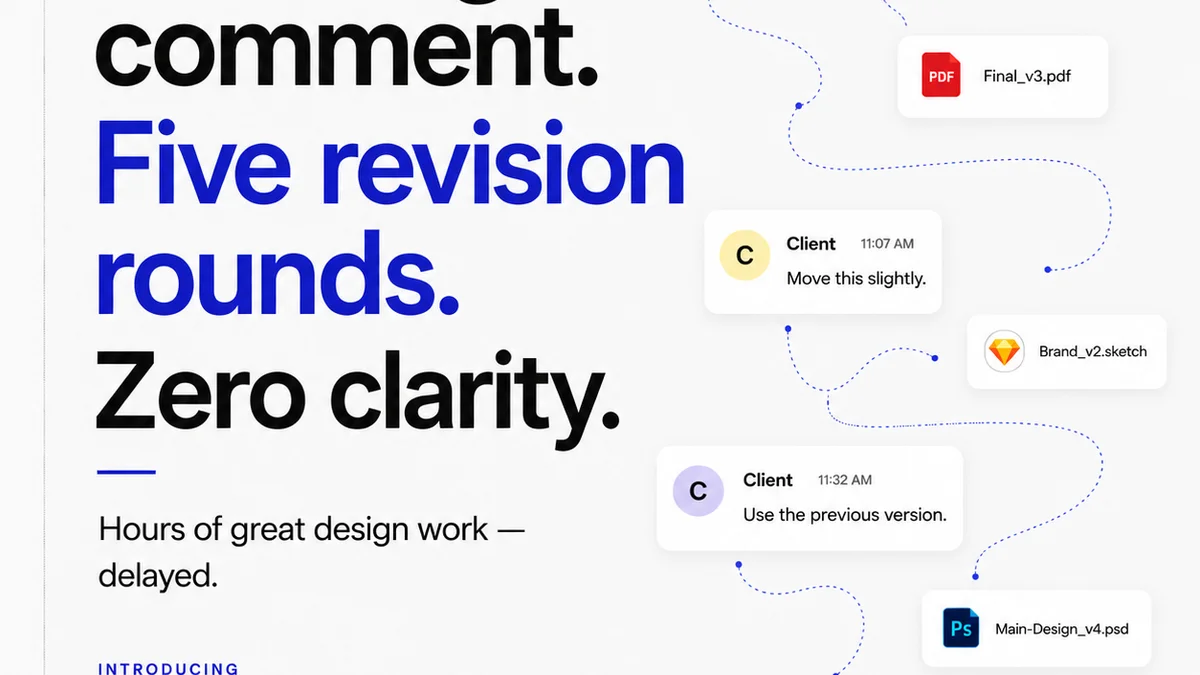
This is often the biggest bottleneck. Clients say “I don’t like it” without explaining why. Or they provide feedback via Slack, email, and a carrier pigeon, making it impossible to track.
Your onboarding must clearly outline:
- How feedback should be submitted (e.g., specific tool, format).
- Who is responsible for providing feedback and approvals.
- Turnaround times for feedback and approvals.
- The number of revision rounds included in the scope.
Ambiguity here guarantees scope creep and delayed projects.
e. Proactive Communication & Reporting
Don’t wait for the client to ask for an update. Establish a regular reporting cadence during onboarding.
This could be:
- Weekly status emails.
- Bi-weekly check-in calls.
- Monthly performance reports.
The key is consistency and transparency. Show progress, highlight challenges (and how you’re addressing them), and reinforce the value you’re delivering.
4. Where Revue Fits In
Managing client feedback, revisions, and approvals can quickly derail even the best-laid onboarding plans. This is where a dedicated platform becomes essential for maintaining profitability.
Revue helps streamline these critical post-onboarding phases by providing:
- Centralized Feedback: All client comments and annotations live in one place, directly on the creative asset. No more digging through emails or Slack threads.
- Version Control & Revision Tracking: Easily manage multiple versions of a design or document. Clients and your team can see the evolution of the work and the history of feedback.
- Clear Approval Workflows: Define and track the approval process. Stakeholders can mark assets as approved, rejected, or request revisions, providing clear audit trails.
- Quality Assurance Checklists: Build and run custom checklists to ensure all project requirements and client specifications are met before final delivery, preventing costly errors downstream.
By integrating Revue into your workflow post-onboarding, you maintain the clarity and control established during the initial phase, directly protecting your project margins and client satisfaction.
5. Measuring Onboarding ROI
How do you know if your onboarding is actually driving profit? You need to measure it.
Track key metrics:
- Project Profitability: Compare the final project profit against the initial forecast. Did strong onboarding lead to better adherence to budget?
- Revision Cycles: How many revision rounds did a project typically require compared to the SOW?
- Approval Timeliness: How long, on average, does it take for clients to provide feedback and approvals?
- Client Lifetime Value (CLV): Are clients who went through your refined onboarding process more likely to return or expand their services?
- Team Efficiency: Are your project managers and creatives spending less time chasing down information or clarifying scope?
Use this data to continuously refine your onboarding process. Treat it not as a static step, but as an evolving system.
Final Thought
Is your agency treating client onboarding as a necessary administrative task, or as the strategic profit-driving engine it truly is? The difference isn't just about smoother projects; it's about a healthier, more profitable business.
Frequently asked questions
What is Client Onboarding ROI?
Client Onboarding ROI refers to the return on investment generated by optimizing the process of bringing new clients into your agency. A high ROI means the time and resources spent on effective onboarding directly lead to increased project profitability, reduced costs, and greater client retention.
How does onboarding impact agency profitability?
Effective onboarding sets clear expectations, defines scope, and establishes communication protocols. This drastically reduces misunderstandings, scope creep, and costly rework, all of which eat into project margins. A well-onboarded client also leads to faster approvals and a smoother project lifecycle, directly boosting profitability.
What are the key elements of a profitable onboarding process?
Key elements include pre-contract clarity on scope and deliverables, a structured kick-off meeting, a centralized information hub, defined feedback and approval workflows, and proactive communication. Each element aims to minimize ambiguity and maximize efficiency.
How can a tool like Revue help with client onboarding ROI?
While Revue is primarily used post-onboarding, it solidifies the ROI by providing centralized feedback, version control, clear approval workflows, and QA checklists. This maintains the clarity established during onboarding, preventing costly errors and delays that erode profitability.
How do I measure the ROI of my onboarding process?
Measure ROI by tracking project profitability against forecasts, the number of revision cycles, approval timeliness, client lifetime value, and team efficiency. Comparing metrics before and after process improvements will reveal the impact of your onboarding strategy.