Everyone talks about client onboarding. They focus on the initial handshake, the welcome packet, the kickoff call. It’s all about making a good first impression.
None of that is wrong. But it’s incomplete. Especially for retail agencies navigating the hyper-competitive landscape of 2026.
The hard truth? True client onboarding isn’t a single event. It’s an ongoing process of deep integration, clear communication, and proactive value delivery that starts before the contract is even signed and continues long after the first campaign launches.
1. Beyond the Kickoff: The Era of Pre-Boarding
The traditional kickoff meeting is dead. Or at least, it’s been demoted. In 2026, successful retail client onboarding begins with a robust pre-boarding phase.
This isn’t just about sending a questionnaire. It’s about deep-diving into the client’s business before they officially hand over the keys.
Understanding the Retail Ecosystem
For retail clients, this means understanding their entire value chain:
- Supply chain logistics and inventory management
- Point-of-sale (POS) systems and data
- E-commerce platforms and their integrations
- Customer relationship management (CRM) tools
- In-store experience and merchandising
- Competitive landscape and market positioning
Agencies that don’t grasp this intricate web are flying blind. They’re designing campaigns in a vacuum, disconnected from the client’s operational reality.
Proactive Data Integration
The most forward-thinking agencies aren’t waiting for clients to send reports. They’re setting up secure data feeds from day one.
This allows for:
- Real-time performance analysis
- Predictive modeling for campaign adjustments
- Identification of untapped opportunities
- Seamless integration with the client’s existing tech stack
This deep technical integration is the new standard. It’s not just about onboarding; it’s about becoming an extension of their team.
2. Continuous Alignment: From Project to Partnership
Onboarding shouldn’t stop after the first campaign. The most successful retail agencies foster continuous alignment, turning initial projects into long-term, strategic partnerships.
This shift requires a fundamental change in how agencies think about client relationships.
The Illusion of Project-Based Work
Many agencies operate on a project-by-project basis. This is a relic of a bygone era. Retail moves too fast for that.
Clients expect:
- Agility and rapid response
- Proactive strategy adjustments
- Integrated campaign management across channels
- A partner who understands their evolving business needs
Treating each new campaign as a fresh start is inefficient and signals a lack of deep understanding. It’s a missed opportunity for deeper collaboration.
Establishing Feedback Loops
Continuous alignment hinges on robust feedback loops. This isn't just about collecting client approvals; it's about structured, ongoing dialogue.
Key elements include:
- Regular, concise performance reviews
- Joint strategy sessions that go beyond campaign specifics
- Shared dashboards for transparency
- Post-campaign retrospectives focused on strategic learnings
This iterative process ensures both agency and client are constantly learning and adapting. It’s how you build trust and demonstrate ongoing value.
3. Seamless Collaboration: The Tech Stack Advantage
The tools you use for onboarding and ongoing collaboration can make or break the client experience. For retail, where speed and precision are paramount, a fragmented tech stack is a death knell.
Clients are increasingly demanding integrated workflows.
The Problem with Scattered Communication
Think about the typical retail agency workflow:
- Emails for initial briefs
- Slack messages for quick questions
- Multiple cloud storage links for assets
- Separate platforms for approvals and feedback
- Spreadsheets for tracking revisions
This creates silos. It leads to version control nightmares, missed feedback, and wasted time. Clients see this disorganization and question your competence.
Centralized Feedback and Approval Workflows
The future of collaboration is centralized. Tools that aggregate communication, asset management, and approval tracking are no longer a luxury; they are a necessity.
This means:
- Having a single source of truth for all creative assets and feedback
- Streamlining the revision and approval process
- Providing clear visibility into project status for all stakeholders
- Reducing the back-and-forth that plagues creative workflows
When onboarding is smooth and collaboration is frictionless, clients feel confident. They trust that their projects are in capable hands.
4. Measuring What Matters: Beyond Vanity Metrics
For retail clients, the bottom line is everything. Your onboarding process and ongoing strategy must directly address their business objectives.
This means shifting focus from superficial metrics to tangible business outcomes.
The Trap of Engagement Metrics
Likes, shares, and even click-through rates can be deceiving. While important, they don’t always translate to sales or customer loyalty.
Retail clients are looking for:
- Customer acquisition cost (CAC)
- Customer lifetime value (CLTV)
- Return on ad spend (ROAS)
- Sales conversion rates
- Inventory turnover
- Average order value (AOV)
Your onboarding should immediately establish which of these metrics are critical for the client and how your work will impact them.
Data-Driven Strategy and Reporting
The most effective onboarding includes a clear plan for how you’ll track and report on these key performance indicators (KPIs).
This involves:
- Defining baseline metrics during pre-boarding
- Setting realistic, measurable goals
- Implementing robust tracking mechanisms
- Providing clear, concise reports that tie creative efforts to business results
Demonstrating a direct impact on revenue and profitability is the ultimate proof of value. It’s the strongest form of client retention.
Where Revue Fits In
Effectively managing these evolving client onboarding and collaboration trends requires the right tools. The complexity of modern retail marketing demands a centralized platform.
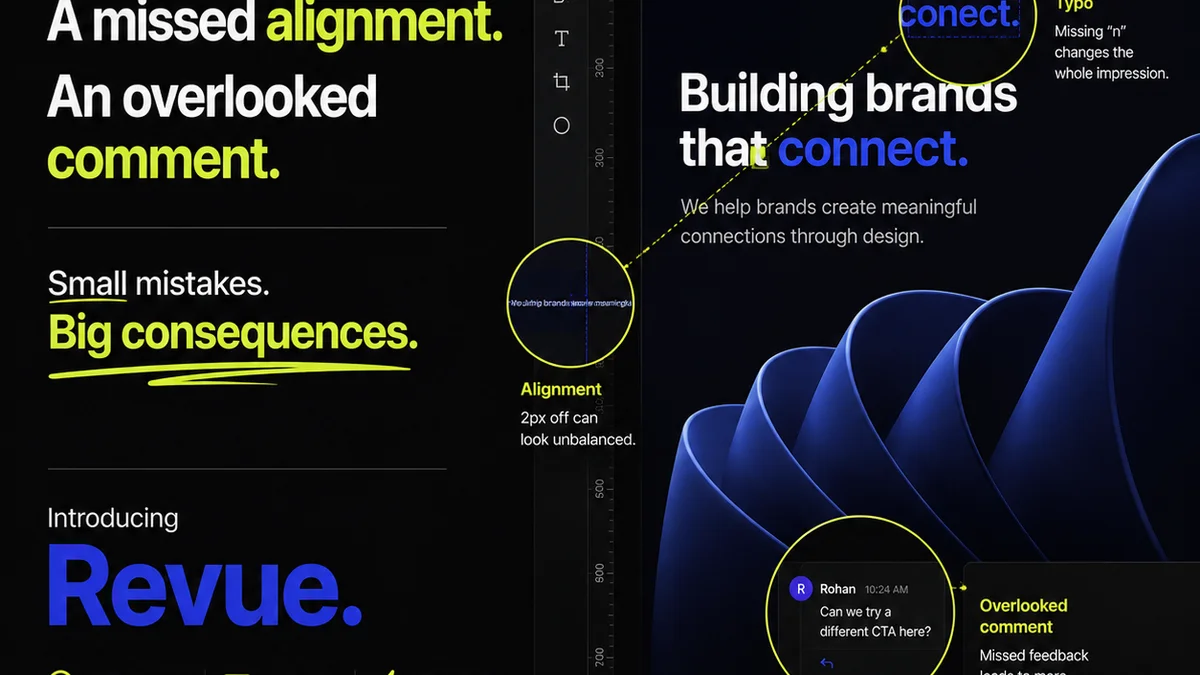
Revue helps agencies streamline the entire creative lifecycle. From initial feedback on campaign concepts to final asset approvals and quality checks, Revue provides a single source of truth.
This means:
- Centralized Feedback: All client comments and stakeholder input live in one place, eliminating scattered emails and missed messages.
- Revision and Approval Visibility: Track every version, every change, and every approval, ensuring transparency and accountability.
- Quality Checks: Implement standardized checklists to ensure creative output meets brand guidelines and campaign objectives before final delivery.
By bringing structure to creative workflows, Revue empowers agencies to deliver a more professional, efficient, and value-driven client experience. This is crucial for meeting the demands of retail clients in 2026 and beyond.
Final Thought
Are you still treating client onboarding as a checklist to get through? Or are you building a continuous, integrated partnership that drives measurable business results?
The agencies that thrive in 2026 won’t just deliver great creative. They'll deliver integrated, data-driven, and friction-free client experiences from day one—and every day after.
Frequently asked questions
What is pre-boarding in client onboarding?
Pre-boarding is the phase of client onboarding that occurs before the formal kickoff. It involves deep-diving into the client's business, understanding their operational ecosystem, and potentially setting up initial data integrations to ensure a proactive start.
How important are data integrations for retail client onboarding?
Data integrations are crucial for retail clients. They enable real-time performance analysis, predictive modeling, and seamless integration with the client's existing tech stack, allowing agencies to make data-driven decisions and demonstrate tangible business impact.
What are the key performance indicators (KPIs) retail clients care about most?
Retail clients prioritize KPIs that directly impact their bottom line, such as Customer Acquisition Cost (CAC), Customer Lifetime Value (CLTV), Return on Ad Spend (ROAS), sales conversion rates, and Average Order Value (AOV). Engagement metrics are secondary to these business outcomes.
How can agencies ensure continuous alignment with retail clients?
Continuous alignment is achieved through robust feedback loops, regular performance reviews, joint strategy sessions, shared dashboards for transparency, and post-campaign retrospectives focused on strategic learnings. It transforms projects into ongoing partnerships.