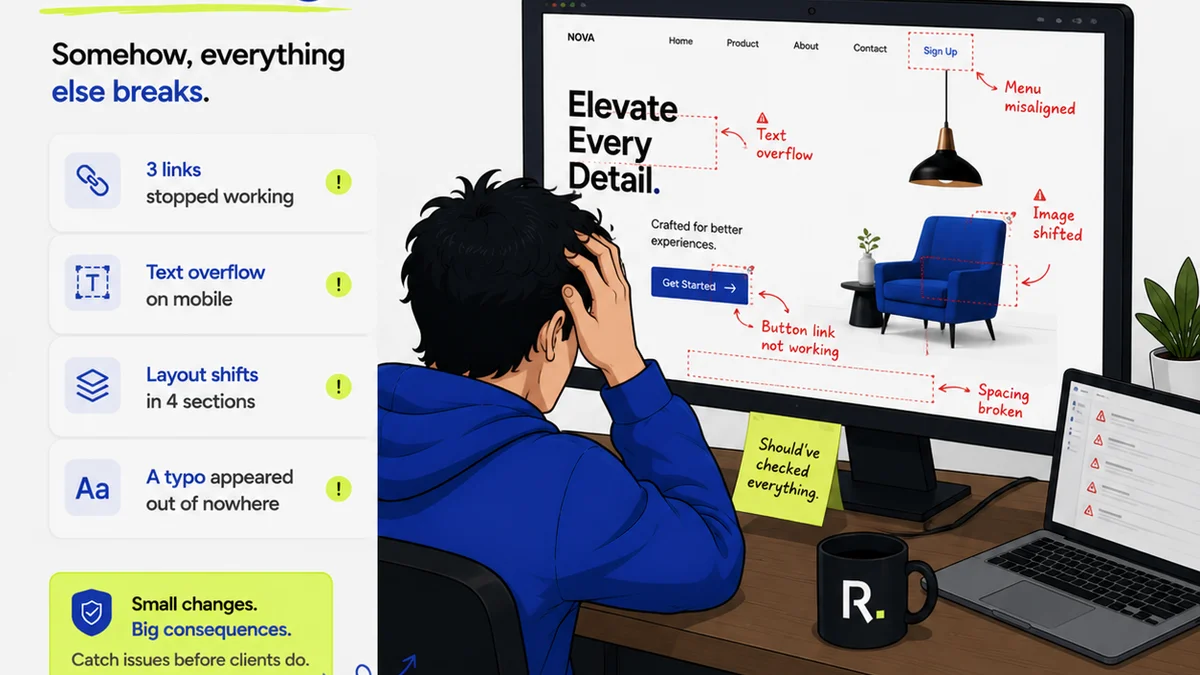
Everyone assumes that getting client revision requests right is about clear communication. You tell them what you need, they tell you what they want, and boom – smooth sailing.
None of that is wrong. But it’s incomplete.
The hard truth? Mastering client revision requests isn’t just about clarity; it’s about process. It’s about building a system that anticipates friction, surfaces ambiguity, and ensures every round of feedback actually improves the work, rather than just changing it.
1. The Assumption: Clients Know What They Want
It’s tempting to believe clients have a crystal-clear vision. They often don’t. They have needs, goals, and a vague sense of what might work. Your job is to help them articulate that.
This isn't about patronizing them. It's about professional expertise.
The Deeper Truth: Clients Know Their Business, You Know Design.
Clients understand their market, their customers, and their business objectives better than anyone. That’s their domain.
Your domain is translating those business needs into effective creative solutions. This requires digging deeper than surface-level requests.
Unpacking the 'Why' Behind the 'What'
When a client says, "I don't like this," or "Make it pop more," that’s not a revision request. That’s a symptom.
Your goal is to find the underlying business problem or opportunity the creative is supposed to address.
- Is the current design not communicating the core value proposition?
- Is it failing to appeal to the target demographic?
- Does it not align with a new strategic direction for the brand?
- Is it a matter of taste, or a functional usability issue?
Ask clarifying questions. Not just about the design itself, but about the intended outcome. What does success look like for this piece of creative?
2. The Assumption: More Feedback is Always Better
The more eyes on the work, the more angles considered, right? Wrong.
Unstructured, excessive feedback is a creativity killer. It leads to muddy concepts and endless, directionless revisions.
The Deeper Truth: Structured, Focused Feedback Drives Progress.
Feedback needs a purpose and a framework. Without it, you’re just collecting opinions, not actionable insights.
Establishing Feedback Gates
Define specific points in the creative process where feedback is solicited and expected. Not before, not after. This prevents premature or irrelevant input.
- Concept Presentation: Focus on strategic alignment and direction. Are we solving the right problem?
- Mid-stage Review: Focus on execution and refinement. Is the visual language working? Is the messaging clear?
- Final Review: Focus on polish and adherence to brief. Are all requirements met? Is it production-ready?
Each stage should have clear objectives for the feedback sought. This keeps the conversation focused and productive.
The 'Single Point of Contact' Rule
Designate one person on the client side who is responsible for consolidating and relaying feedback. This avoids conflicting messages from different stakeholders.
If multiple client stakeholders are involved, they need to align internally before sharing feedback with your team.
3. The Assumption: All Feedback is Equal
The CEO’s gut feeling, the intern’s aesthetic preference, the marketing manager’s data point – they all carry different weights. Treating them equally leads to chaos.
You need a hierarchy of feedback.
The Deeper Truth: Feedback Must Be Evaluated Against the Brief.
Every piece of feedback should be measured against the original project brief, objectives, and target audience. This is your objective yardstick.
Prioritizing Revision Requests
Not all feedback is created equal. Some points are critical, others are nice-to-haves, and some are simply personal preferences that don’t serve the project goals.
- Must-Haves: Issues that directly impact the project's ability to meet its core objectives or violate brand guidelines. These are non-negotiable.
- Should-Haves: Suggestions that could improve the work but aren't essential for success. These are good candidates for discussion and potential compromise.
- Could-Haves: Minor tweaks or personal preferences that don't significantly affect the outcome. These are often the first to be deferred or declined if they derail the project.
This prioritization requires strong project management and a confident creative lead who can guide the client through this evaluation.
The 'Design Decision' Framework
When feedback conflicts, or when a request seems off-brief, frame the discussion around design decisions. Explain why a certain path was chosen, referencing the brief and user needs. This shifts the conversation from subjective opinion to objective rationale.
For example: "We opted for this layout because our user testing indicated that placing the call-to-action higher improved conversion rates by X%. Changing it might negatively impact that key metric."
4. The Assumption: Revisions Are Free and Infinite
This is perhaps the most damaging assumption. It leads to scope creep, burnout, and resentment.
Revision rounds are not an unlimited resource.
The Deeper Truth: Revisions Are Part of the Project Scope and Cost.
Every project should have a clearly defined number of revision rounds included. Anything beyond that is out of scope and should be treated as a new phase or a change order.
Defining Scope in Your Contracts
This starts with your initial proposal and contract. Be explicit:
- Clearly state the number of revision rounds included for each deliverable.
- Define what constitutes a
Frequently asked questions
How many revision rounds should be included in a project?
The number of revision rounds should be clearly defined in your contract and proposal, based on the project's complexity and scope. Typically, 2-3 rounds are standard, but this can vary. Anything beyond the agreed-upon rounds should be treated as out-of-scope work with additional billing.
What's the best way to handle vague feedback like 'make it pop'?
Push for specifics by asking 'why.' Understand the underlying business goal or problem the client is trying to solve. Frame questions around objectives: 'What specific outcome are you hoping to achieve with this change?' or 'Which audience are we trying to appeal to more effectively?'
How can I prevent scope creep from revision requests?
Clearly define the scope of revisions in your contract, including the number of rounds and what constitutes a 'round.' Implement a structured feedback process with defined review stages. Any requests outside the agreed scope should be identified and billed separately as a change order.
Who should be responsible for giving feedback on the client's side?
Ideally, designate a single point of contact on the client's side responsible for consolidating and relaying feedback. This prevents conflicting messages and ensures alignment before feedback reaches your team.